6 min read


© The Indian Express Pvt Ltd



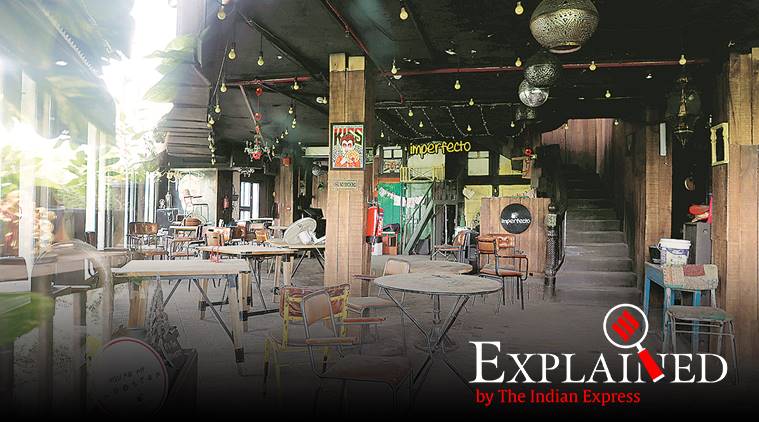 A restaurant in Delhi on June 2. Reuters
On Thursday, the Health Ministry released standard operating procedures to be followed by malls, hotels, restaurants and places of worship when they reopen in phases from June 8. Many of the measures recommended for restaurants — masks for staff and visitors (except when eating), sanitisers, reduced capacity — are being followed by restaurants that have been reopening around the world.
Masks, disinfectants, scans: Around the world, masks are mandatory for staff in most restaurants. Many have installed hand-sanitising stations and thermal scans at entrances as well as tables, and some are posting daily temperatures of staff. In China, where restaurants were reopened in March, one Shanghai restaurant installed a full-body disinfectant station at its entrance.
Physical distancing: Restaurants have redesigned their spaces and reduced their capacities by 50 to 30 per cent. In India, the government has set a 50 per cent limit. Restaurants are reducing the number of tables and placing them farther apart. Many smaller eateries in China have installed cardboard partitions on tables, while larger ones have used glass or plexiglass; ETEN restaurant in Amsterdam has built glass booths or cubicles.
Mannequins, dolls: The Inn, a three-Michelin star restaurant in Virginia, has installed mannequins at some tables; this not only ensures that customers sit at tables sufficiently distant from each other, but also creates the illusion of a full restaurant. Other restaurants have used mannequins, blow-up dolls such as at Open Hearth restaurant in South Carolina, and cardboard cutouts, such as at Five Dock Dining in New South Wales. Maison Saigon, Bangkok, has used stuffed pandas, a photo of which went viral.

Robot staff: To reduce human staff, a McDonald’s outlet in Arnhem, the Netherlands, is using automated wheeled carts to serve customers. The company said in a statement that, if successful, the measure will be implemented in 180 of its biggest outlets around the country. The earliest use of robot staff goes back to 2016 when some restaurants in China employed robots as cooks and waiters; most were eventually “fired” for not being as efficient as humans. Now, some restaurants are looking at them as an option. For example, at The Royal Palace in Renesse, the Netherlands, robots have been employed to greet and serve customers.
Minimum surface contact: Apart from regularly sanitising furniture and glassware (among the SOPs in India), restaurants worldwide are trying to reduce the number of surface objects that customers and staff will come in contact with. While the Indian government has advised use of disposable menus, many restaurants worldwide have done away with physical menus altogether, and are offering scannable codes that open up the menus on customers’ phones. Table-top condiment bottles and dispensers are being replaced with disposable sachets.
No more buffets: NHK, Japan’s national broadcaster, conducted an experiment in May in collaboration with infectious disease experts from St Marianna University School of Medicine in Kawasaki. To show how quickly infection can spread in a buffet, it set up a buffet-style meal for 10 people and painted the hand of one individual with fluorescent paint to simulate infected droplets from a cough. By the end of the meal, black lights revealed that the paint had been transferred onto every individual. Many restaurants are reopening without buffet brunches and other communal meals. In India, the government has advised physical distancing during buffets.
Many restaurants in India have begun to put measures in place. Westlife Development, which runs McDonald’s in the country’s south and west, has come out with a 42-point checklist that includes regular sanitisation, thermal screening, designated distancing markings, and contactless ordering, pick up and takeout.
Some restaurants are planning to livestream their kitchens to reassure customers about hygiene practices. The NCR-based pizza chain Instapizza, for example, implemented this measure a month ago. Others are replacing physical menus with digital menus.
There are four basic measures all restaurants must put in place if they wish to reopen, said Prof D Prabhakaran, Vice President (Research & Policy) and Director, Centre for Control of Chronic Conditions, Public Health Foundation of India. “The first is social or physical distancing, which can be ensured by creating more space between tables or allowing fewer customers. The second is compulsory masks (except when customers are eating). The third is screening; while it is true that even asymptomatic people can be infectious, a large majority of the infections are spread by those who have symptoms, including fever. So in that sense, thermal screening is useful, but even apart from that, customers and staff who show any symptoms must not be allowed in. And finally, frequent handwashing, ideally with soap and water, for servers as well as customers.”
📣 Express Explained is now on Telegram. Click here to join our channel (@ieexplained) and stay updated with the latest
Dr Prabhakaran discouraged the use of aggressive disinfection measures like full-body disinfection stations and tunnels, which could be dangerous to those who may be allergic to the chemicals used.
“I would avoid going to restaurants right now even after they open, but if you do want to go, make sure you take all the precautions… And if you’re over the age of 65 or suffering from additional diseases like diabetes, cancer etc, just avoid it,” he said.


Anil Ravipudi’s action thriller Maha ShankaraVaraprasad Garu, starring Chiranjeevi and Nayanthara, has emerged as the winner among this year’s Sakranthi releases across the Telugu and Tamil film industries. The film’s unconventional release on a Monday, two days before the mid-week festival, has worked in its favour as it crossed the Rs 165 crore mark at the domestic box office.