6 min read

Journalism of Courage



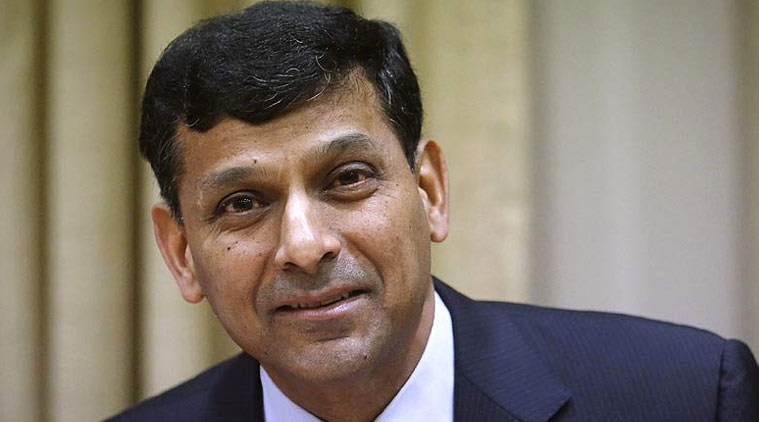 Raghuram Rajan was sounded out for years, and had a short stint as chief economic advisor before he became RBI governor.
A month ago, at an event in Mumbai, Raghuram Rajan said India had “lost a generation of economists”. According to the RBI Governor, the country today lacked economists with good grounding in price theory and general equilibrium analysis that are fundamental to economic policymaking. He may not be off the mark.
From the ’70s through the ’90s, bright, relatively young talent trained abroad joined the government at mid-rung posts in several economic ministries. The political leadership welcomed them, as did the more competent and less insecure bureaucrats at the top, including at the PMO. Over a decade or more of being part of policy making in the Indian context, many of them grew into their jobs, and were well positioned to take on major assignments in the government and the RBI.
Manmohan Singh, for instance, was teaching at the Delhi School of Economics in May 1971 when he was invited to be economic advisor in the Ministry of Foreign Trade, which was then headed by L N Mishra. P N Dhar, a professor at Delhi’s Institute of Economic Growth, had then already joined the PMO as advisor on the invitation of P N Haksar, the influential principal secretary to the prime minister.
Singh soon succeeded Ashok Mitra as chief economic advisor at the Finance Ministry. Another famous economist, I G Patel, was heading the Department of Economic Affairs then.
Towards the end of that decade, Singh was to sound out Montek Singh Ahluwalia, who was then with the World Bank and keen on returning to the country, on an opening in the Ministry of Finance. The UPSC selected Ahluwalia, exempting him from a personal interview after checking his credentials.
Later, in 1986, when he was in the Planning Commission, Singh overcame bureaucratic resistance to bring in Arvind Virmani, who was 36 then, Rakesh Mohan, 35, and Jairam Ramesh, 32, all in the rank of joint secretaries, saying that he needed good people. Jairam, who started with the Advisory Board on Energy, and subsequently at the Ministry of Industry and the Planning Commission, ultimately moved to the PMO.
There were others. Deepak Nayyar left the civil service and joined the Commerce Ministry as economic advisor when Abid Hussain was the secretary, and V P Singh the minister in Udyog Bhawan. Nayyar become chief economic advisor during the V P Singh government, and the early part of the Narasimha Rao government in 1991-92.
Jayanto Roy joined the Commerce Ministry in the run-up to the trade policy reforms. Arjun Sengupta joined the PMO ahead of Ahluwalia when Rajiv Gandhi was prime minister. Shankar Acharya came to the Finance Ministry from the World Bank, and stayed as chief economic advisor through the critical reforms period from 1992-93 to 2000.
Nearly all of them, with the experience of having been trained and worked abroad, acknowledge the roles of their many mentors in the establishment — the encouragement given to them early on by senior policymakers, and the ways in which they were nurtured and groomed in their jobs.
Bimal Jalan, who did a short stint as economic advisor in the Finance Ministry in 1973 and cut his teeth in the Industry Ministry as advisor, was director, economic affairs, in the Commonwealth Secretariat in London when R Venkataraman, who was India’s finance minister in 1980-81, invited him to return and be chief economic advisor. Jalan went on to become banking secretary, secretary to the prime minister’s Economic Advisory Council, finance secretary, and later RBI governor.
The Planning Commission of the ’70s, and especially its Perspective Planning Division, was another great training ground for young economists — Yoginder Alagh, who later became minister of state; Vijay Kelkar, who was advisor in the petroleum ministry and then finance secretary during NDA 1; and Nitin Desai, who was chief economic advisor in the late ’80s. Others such as Ashok Desai were part of the policymaking team in the ’90s.
In the RBI, there was C Rangarajan, who came in laterally as deputy governor after teaching at the Indian Institute of Management, Ahmedabad.
As Montek Singh Ahluwalia was to discover as finance secretary, one of the challenges to building a dedicated cadre of economists in the way the Indian Economic Service was originally envisaged was the absence of a preemptive claim to assignments for members of this service. Without any clear promise or even visible prospects of moving up, few were tempted to join. A determined political leadership can address this — even though the challenges now are completely different, and include the government’s ability and willingness to offer competitive salaries to attract talent.
But there have been changes in recent times. Raghuram Rajan was sounded out for years, and had a short stint as chief economic advisor before he became RBI governor. Arvind Subramanian has been brought in as chief economic advisor, and Arvind Panagariya to head NITI Aayog. And if, as Rajan says, we need a lot of economists in some of India’s big cities to formulate sensible policies, it would be enlightening to know what one top official once told a senior UPA politician. “Tell me,” he said, “with so many economists in the government you worked with, why is the economy in such a bad shape?” This was days after the NDA government took over.
shaji.vikraman@expressindia.com