© The Indian Express Pvt Ltd
Tags:


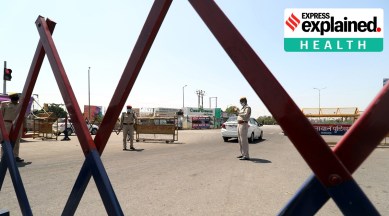
Wednesday, March 24 marks a year of India’s nationwide lockdown. India went in for the strict lockdown when just about 525 positive cases had been detected. But the epidemic was already threatening to spread in an exponential manner. The number of cases had crossed 100 on March 15, 2020, and 1,000 on March 29. Within the next two weeks, by April 13, more than 10,000 cases had been reported. But after that, the lockdown started to have an impact. Although the number of cases continued to increase at a rapid pace, the growth was no longer exponential.
Newsletter | Click to get the day’s best explainers in your inbox

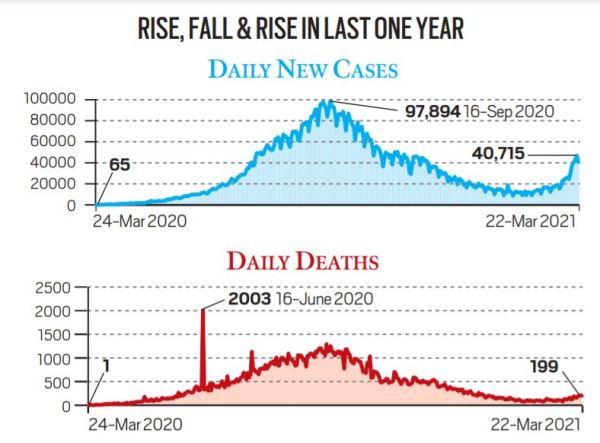

That same committee had also said that there could have been over 26 lakh deaths, if the lockdown had not been imposed. Even if it was imposed with a month’s delay, in May, deaths would have crossed ten lakhs. A year after the lockdown, the total number of deaths in India have been about 1.6 lakh, with the death rate remaining one of the lowest in the world.
The lockdown was imposed in the four phases, with the first two, between March 24 and April 30, having the most severe restrictions. During this time, all road, rail, and air travel had been stopped, and except for healthcare staff and emergency workers, no one was allowed to venture out. Localised lockdowns have been experimented with in many places to curb local surges, most recently in Nagpur and some other places in Maharashtra, but they have not had the kind of impact that the complete national lockdown in March and April last year could deliver.