Premium
This is an archive article published on October 26, 2023

What is the ‘One nation, One Student ID’ initiative of the Union govt?

APAAR, which stands for Automated Permanent Academic Account Registry, is envisioned as a special ID system for all students in India, starting from childhood. What would its implementation look like and why have some concerns been raised around it?


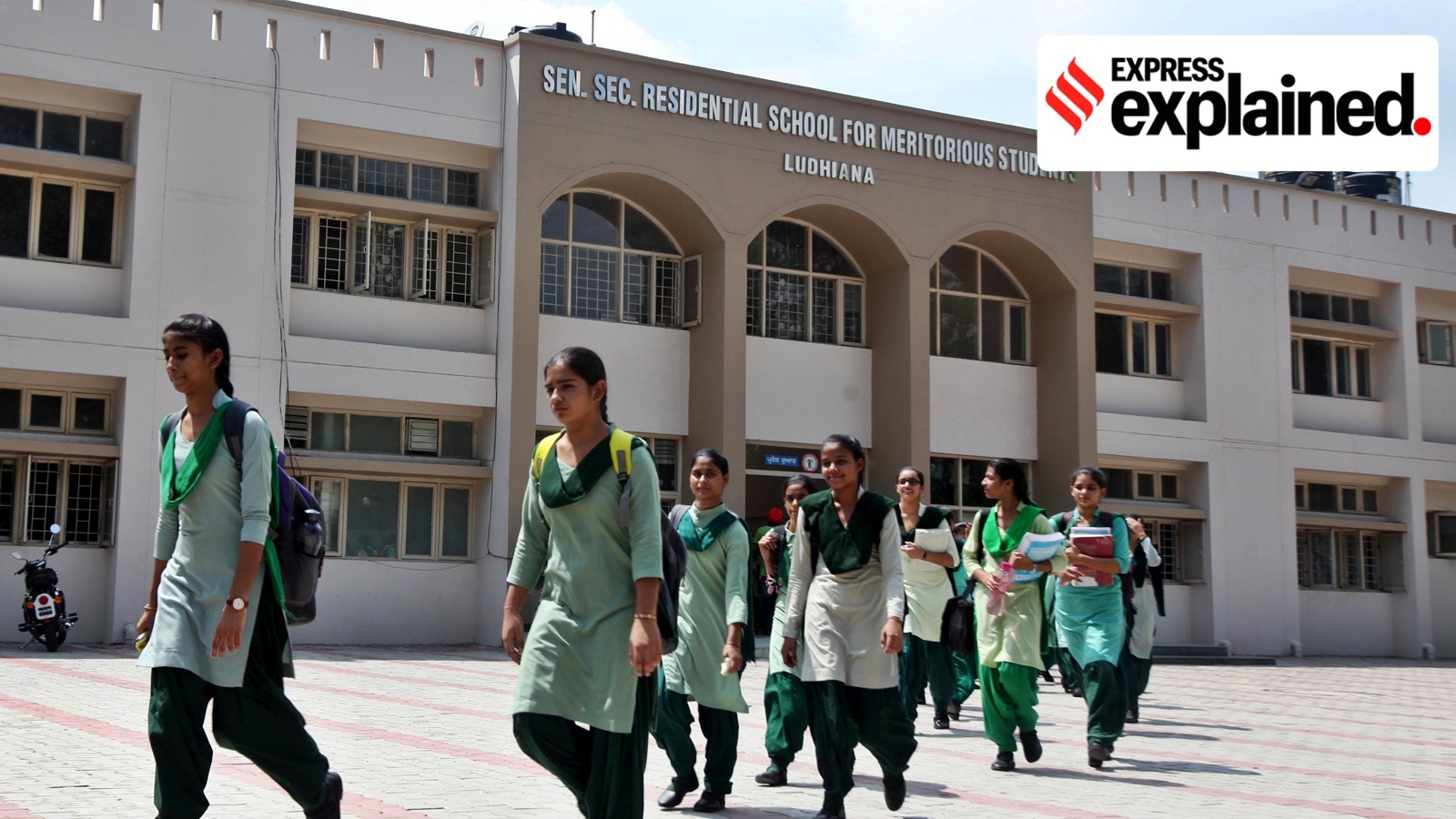
School for Meritorious Students in Ludhiana.For minors, parents will have to sign the consent form, allowing the Ministry to use the student's Aadhar number for authentication with UIDAI. Registration for creating APAAR ID is voluntary, not mandatory. (Express Photo by Gurmeet Singh)
Listen to this article
What is the ‘One nation, One Student ID’ initiative of the Union govt?
x
00:00
1x 1.5x 1.8x

Last week, several state governments requested schools to seek parental consent for the creation of a new student identity card known as the Automated Permanent Academic Account Registry (APAAR). This is part of the ‘One nation, One Student ID’ initiative of the Union government, stemming from the new National Education Policy of 2020.

What is APAAR and what are its implications for students and institutions of learning? We explain.

What is the purpose of APAAR, the ID for students?

APAAR, which stands for Automated Permanent Academic Account Registry, is envisioned as a special ID system for all students in India, starting from childhood. Under the initiative, each student would get a lifelong APAAR ID, making it easy for the learners, schools, and governments to track academic progress from pre-primary education to higher education.

APAAR would also serve as a gateway to Digilocker, a digital system where students can store their important documents and achievements, such as exam results and report cards, digitally, making it easier to access and use them in the future for, say, pursuing higher education or finding a job.

But why introduce it?

The goal behind introducing APAAR is to make education hassle-free and reduce the need for students to carry physical documents. This initiative was launched as part of the National Education Policy 2020 by the Education Ministry.

“The vision is to create a positive change, allowing state governments to track literacy rates, dropout rates, and more, helping them make improvements,” Anil Sahasrabuddhe, Chairman of the National Educational Technology Forum, explained, “It’s about giving states the tools to enhance their performance.”

APAAR also aims to reduce fraud and duplicate educational certificates by providing a single, trusted reference for educational institutions. Only first party sources that issue certificates will be allowed to deposit credits into the system, ensuring authenticity.

Story continues below this ad

How does the government envision APAAR ID to work?

Every individual will have a unique APAAR ID, which will be linked to the Academic Bank Credit (ABC), which is a digital storehouse that contains information of the credits earned by students throughout their learning journey. With the APAAR ID, students would be able to store all their certificates and credits, whether they come from formal education or informal learning. When a student completes a course or achieves something, it’s digitally certified and securely stored in her account by authorised institutions.

If the student changes schools, whether within the state or to another state, all her data in the ABC gets transferred to her new school just by sharing the APAAR ID. She won’t need to provide physical documents or transfer certificates.

What do students have to do to get their single ID created?

To sign up for APAAR, students will have to provide basic information such as name, age, date of birth, gender, and a photograph. This information will be verified using their Aadhar number.

“It’s important to know that the Aadhar number is only used for verification to match the name and date of birth. APAAR won’t use or share these details with anyone else during registration,” said Sahasrabuddhe. Students will need to sign a consent form, and they can choose to either accept or decline sharing their Aadhar number and demographic information with the Ministry of Education for creating the APAAR ID.

Story continues below this ad

For minors, parents will have to sign the consent form, allowing the Ministry to use the student’s Aadhar number for authentication with UIDAI. Registration for creating APAAR ID is voluntary, not mandatory.

What are the concerns surrounding APAAR?

Parents and students have concerns about sharing their Aadhar details because they worry that their personal information could be leaked to outside parties.

The government, however, says that the information shared by students will be kept confidential and will not be shared with any third party except for entities engaged in educational activities, such as the Unified District Information System for Education Plus or the UDISE+ database (the government’s catalogue that contains data related to schools, teachers and students), scholarships, maintenance academic records, educational institutions and recruitment agencies.

At any given time, students have the option to stop sharing their information with the mentioned parties, and their data processing will be halted. However, any personal data already processed will remain unaffected if consent is withdrawn.

Vidheesha Kuntamalla is a Senior Correspondent at The Indian Express, based in New Delhi. She is known for her investigative reporting on higher education policy, international student immigration, and academic freedom on university campuses. Her work consistently connects policy decisions with lived realities, foregrounding how administrative actions, political pressure, and global shifts affect students, faculty, and institutions. Professional Profile Core Beat: Vidheesha covers education in Delhi and nationally, reporting on major public institutions including the University of Delhi (DU), Jawaharlal Nehru University (JNU), Jamia Millia Islamia, the IITs, and the IIMs. She also reports extensively on private and government schools in the National Capital Region. Prior to joining The Indian Express, she worked as a freelance journalist in Telangana and Andhra Pradesh for over a year, covering politics, rural issues, women-centric issues, and social justice. Specialisation: She has developed a strong niche in reporting on the Indian student diaspora, particularly the challenges faced by Indian students and H-1B holders in the United States. Her work examines how geopolitical shifts, immigration policy changes, and campus politics impact global education mobility. She has also reported widely on: * Mental health crises and student suicides at IITs * Policy responses to campus mental health * Academic freedom and institutional clampdowns at JNU, South Asian University (SAU), and Delhi University * Curriculum and syllabus changes under the National Education Policy Her recent reporting has included deeply reported human stories on policy changes during the Trump administration and their consequences for Indian students and researchers in the US. Reporting Style Vidheesha is recognised for a human-centric approach to policy reporting, combining investigative depth with intimate storytelling. Her work often highlights the anxieties of students and faculty navigating bureaucratic uncertainty, legal precarity, and institutional pressure. She regularly works with court records, internal documents, official data, and disciplinary frameworks to expose structural challenges to academic freedom. Recent Notable Articles (Late 2024 & 2025) 1. Express Investigation Series JNU’s fault lines move from campus to court: University fights students and faculty (November 2025) An Indian Express investigation found that since 2011, JNU has appeared in over 600 cases before the Delhi High Court, filed by the administration, faculty, staff, students, and contractual workers across the tenures of three Vice-Chancellors. JNU’s legal wars with students and faculty pile up under 3 V-Cs | Rs 30-lakh fines chill campus dissent (November 2025) The report traced how steep monetary penalties — now codified in the Chief Proctor’s Office Manual — are reshaping dissent and disciplinary action on campus. 2. International Education & Immigration ‘Free for a day. Then came ICE’: Acquitted after 43 years, Indian-origin man faces deportation — to a country he has never known (October 2025) H-1B $100,000 entry fee explained: Who pays, who’s exempt, and what’s still unclear? (September 2025) Khammam to Dallas, Jhansi to Seattle — audacious journeys in pursuit of the American dream after H-1B visa fee hike (September 2025) What a proposed 15% cap on foreign admissions in the US could mean for Indian students (October 2025) Anxiety on campus after Trump says visas of pro-Palestinian protesters will be cancelled (January 2025) ‘I couldn’t believe it’: F-1 status of some Indian students restored after US reverses abrupt visa terminations (April 2025) 3. Academic Freedom & Policy Exclusive: South Asian University fires professor for ‘inciting students’ during stipend protests (September 2025) Exclusive: Ministry seeks explanation from JNU V-C for skipping Centre’s meet, views absence ‘seriously’ (July 2025) SAU rows after Noam Chomsky mentions PM Modi, Lankan scholar resigns, PhD student exits SAU A series of five stories examining shrinking academic freedom at South Asian University after global scholar Noam Chomsky referenced Prime Minister Narendra Modi during an academic interaction, triggering administrative unease and renewed debate over political speech, surveillance, and institutional autonomy on Indian campuses. 4. Mental Health on Campuses In post-pandemic years, counselling rooms at IITs are busier than ever; IIT-wise data shows why (August 2025) Campus suicides: IIT-Delhi panel flags toxic competition, caste bias, burnout (April 2025) 5. Delhi Schools These Delhi government school grads are now success stories. Here’s what worked — and what didn’t (February 2025) ‘Ma’am… may I share something?’ Growing up online and alone, why Delhi’s teens are reaching out (December 2025) ... Read More


Latest Comment
Post Comment
Read Comments
Advertisement
Advertisement
Advertisement
Advertisement