4 min read


© The Indian Express Pvt Ltd



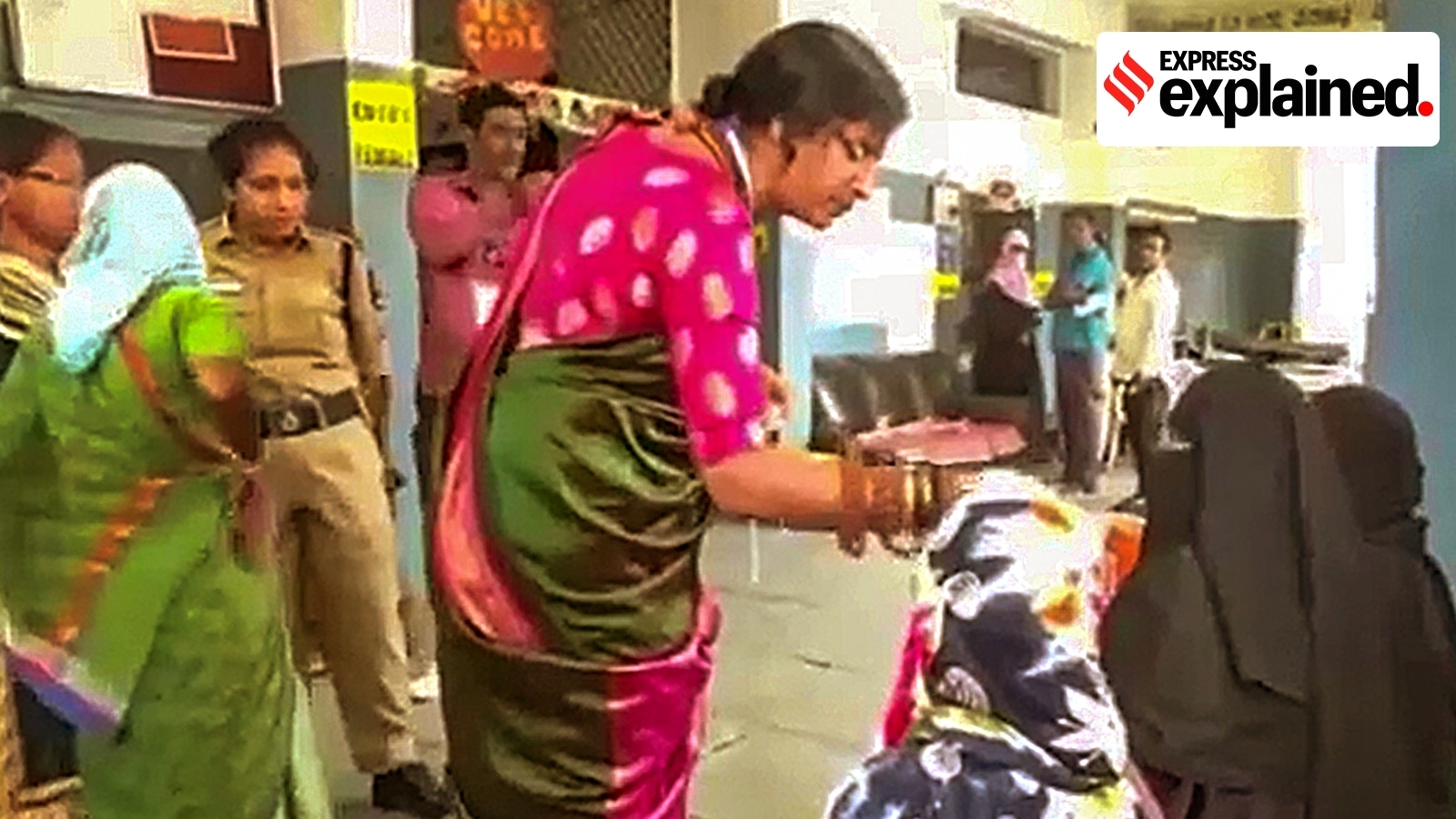 Hyderabad: BJP candidate Madhavi Latha accosts Muslim women at a polling station during the fourth phase of Lok Sabha elections. (PTI Photo)
 As votes were being cast in the fourth phase of the Lok Sabha election on Monday (May 13), the BJP candidate in Hyderabad, Madhavi Latha, was captured on video asking niqab-wearing women voters to remove their face coverings so she could verify their identities.
Hyderabad Police registered an FIR against Latha under IPC sections pertaining to undue influence at an election (171C), obstructing a public servant (186), and intent to incite (505(1)(c)), and Section 132 of The Representation of the People Act, 1951 (misconduct at the polling station).
While face coverings have been increasingly politicised of late, women who wear ghoonghat or niqab have always voted in India’s elections.
Before the first Lok Sabha election in 1951-52, the Election Commission of India (ECI) worked hard to ensure women became full participants in India’s democratic process — however, many women refused to enrol with their names, and instead asked to be identified in relation to a male member of the family, as the mother of so-and-so or wife of so-and-so.
“The reason…was that according to local custom, women in these areas were averse to disclosing their proper names to strangers… Out of a total of nearly 80 million voters in the country, nearly 2.8 million eventually failed to disclose their proper names, and the entries relating to them had to be deleted from the rolls,” Sukumar Sen, the first Chief Election Commissioner, wrote in his report on the election.
Following a sustained campaign by the ECI, the numbers of women increased steadily on voters’ lists. Today, women account for almost 49% of the electorate.
Conducting free and fair elections is the ECI’s mandate, which includes ensuring no bogus votes are cast. Polling officers are required to verify a voter’s appearance against the photo on the voter card, if needed.
To ensure this is done while also protecting the privacy of the woman elector in ghoonghat/ burqa/ niqab, the ECI has issued standing instructions for Returning Officers of constituencies and Presiding Officers of polling stations:
“If sufficiently large number of ‘pardanashin’ (burqa-clad) women electors are assigned to your Polling Station, you should make special arrangements for their identification and application of indelible ink on the left index finger by a lady Polling Officer in a separate enclosure having due regard to privacy, dignity, and decency.”
“For such special enclosure you may use locally available but inexpensive material,” says the ECI’s Handbook for Presiding Officers.
The ECI’s Handbook for Returning Officers says: “The availability of female polling personnel should be examined for appointing Presiding/ Polling Officers in polling stations set up exclusively for female voters or where the number of female voters, especially, pardanashin women is large, there must be at least one lady-polling officer who may facilitate and identify the women electors.”
The responsibility and right to verify the identity of voters lies with the ECI, not a contesting candidate.
Candidates or their polling agents are allowed access to polling stations in the constituency, to ensure that the polling process is conducted without interference. However, they are not permitted to intervene in the voting process.
Madhavi Latha’s action was viewed as interference and, therefore, at the ECI’s behest, she was booked by the police.