Journalism of Courage
Advertisement
Premium

Ladakh through a bifocal lens: a short zoom-in, zoom-out history

Ladakh history: A short primer on the region, its history, and some of the places where Indian soldiers are locked in conflict with the Chinese army.

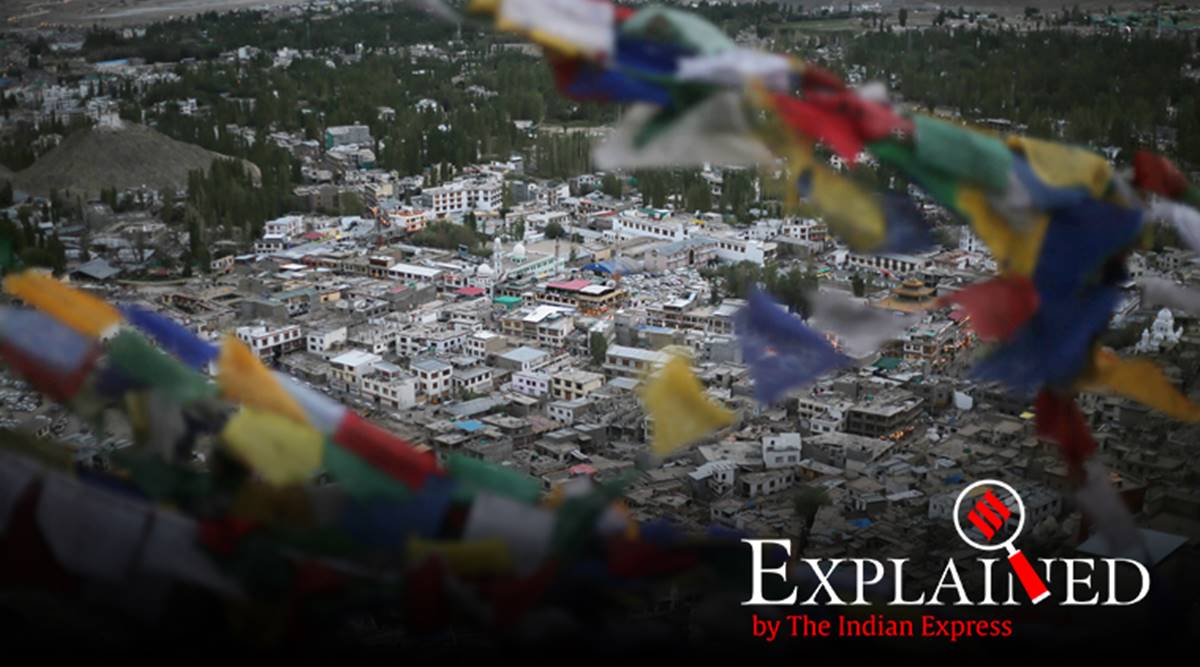
ladakh, strategic importance of ladakh, ladakh terrain, ladakh geography, india china border news, Daulat Beg Oldie, Pangong Tso, indian express A view of Leh city. (Express Photo: Tashi Tobgyal)

With the border standoff with China in its ninth week, Ladakh, a rugged, high-altitude region that is generally far removed from the lives and imagination of most Indians, has become part of their daily conversations and worries. A short primer on the region, its history, and some of the places where Indian soldiers are locked in conflict with the Chinese army.

Looking back at an ancient land

Lying between the Kunlun mountain range in the north and Himalayas to the south, Ladakh was originally inhabited by people of Indo-Aryan and Tibetan descent. Historically the region included the valleys of Baltistan, Indus, and Nubra, besides Zanskar, Lahaul and Spiti, Aksai Chin, Ngari and Rudok.

Major General Dr GG Dwivedi (retd), an expert in Sino-Indian relations who has served in the region, says, “Located at the crossroads of important trade routes since ancient times, Ladakh has always enjoyed great geo-strategic importance.”

In the beginning of the first century AD, Ladakh was part of the Kushan empire. Later it changed hands multiple times, alternating between the kingdoms of Kashmir and Zhangzhung. In 1834, Gen Zorawar Singh, a general of Raja Gulab Singh who ruled Jammu as part of the Sikh empire, extended the boundaries of Maharaja Ranjit Singh’s kingdom to Ladakh, which till the 15th century was part of Tibet and was ruled by dynasties of local Lamas.

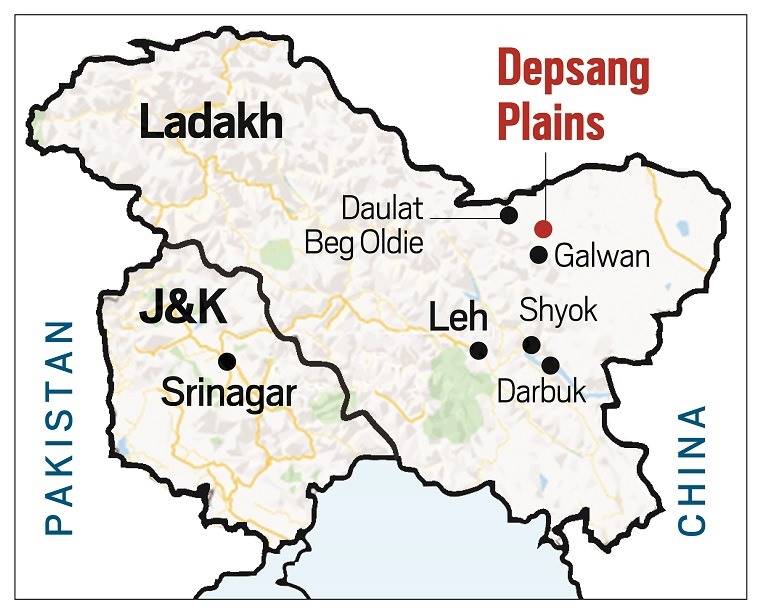
A map of Ladakh. (Express)

Partition, Pakistan and Chinese occupations

Immediately after India’s Partition, tribal raiders from Pakistan attacked Ladakh. They captured Kargil, and were heading for Leh when they were confronted by the Indian Army, who got back Kargil.

Although India has always considered Aksai Chin to be part of Jammu and Kashmir, in the 1950s the Chinese built a highway, called western highway or NH219, connecting Tibet with Xinjiang through this region, which was more easily accessible to the Chinese than to the Indians, who were across the Karakoram.

Story continues below this ad

India learnt of this road in 1957, and it was one of the causes of the 1962 India-China war, after which China strengthened its control over this region. China today claims Aksai Chin to be part of Hotan county of its Xinjiang province.

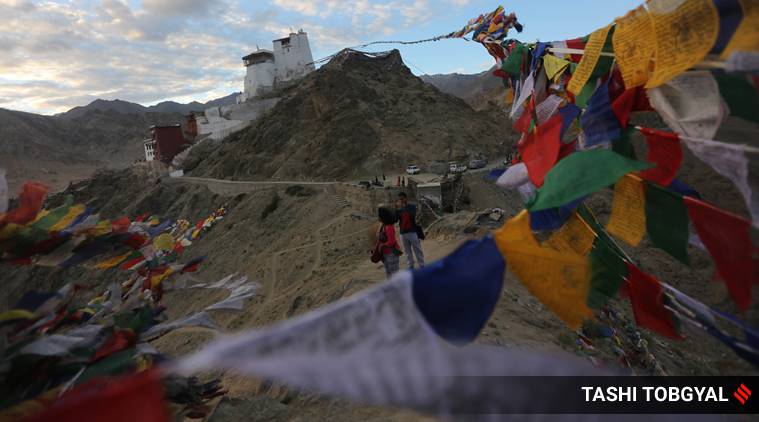
Tourists at the Leh Monastery, Leh, Ladakh on August 8, 2019. (Express Photo: Tashi Tobgyal)

Pakistan ceded the Shaksgam Valley, which was part of the Baltistan region north of the Karakoram, to China following a Sino-Pakistani agreement signed on March 2, 1963.

The strategic importance of Ladakh

Gen Dwivedi says China’s forays into the region began after the 1949 Communist Revolution, when Chairman Mao Zedong, a veteran of guerrilla warfare, began consolidating China’s periphery as part of his expansionist designs.

Story continues below this ad

The People’s Liberation Army (PLA) occupied Tibet in 1951, and then began to eye Ladakh. The reason was that the road connecting Kashgar in Xinjiang to Lhasa in Tibet (NH 219) had to pass through Aksai Chin, which was held by Indians but was seldom patrolled by them.

The Tibetan revolt of 1959 and the Dalai Lama’s flight to India saw China further strengthening its military presence in Ladakh to ensure the security of NH 219. India reacted with its ‘forward policy’ as part of which it began setting up Army posts in the region to prevent Chinese expansion.

“This resulted in the initial clash between the Indian and Chinese forces in the Kongka Pass area in 1959. Later, Galwan Valley became the scene of action when the Indian Army established a post to cut off the Chinese post in the Samjunjling area, marking the beginning of the 1962 war,” says Dwivedi.

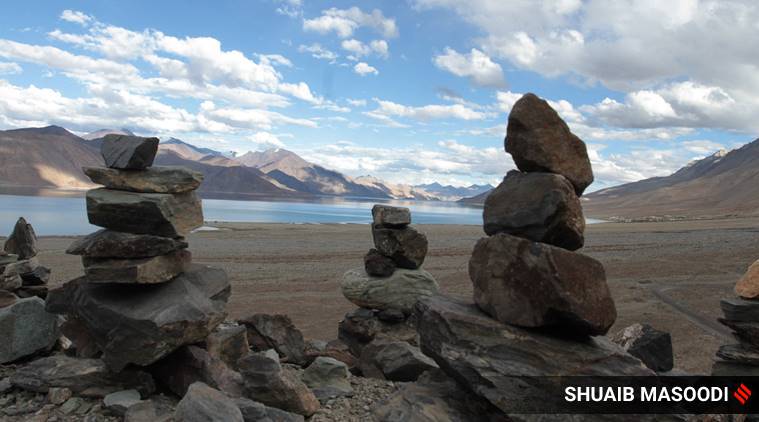
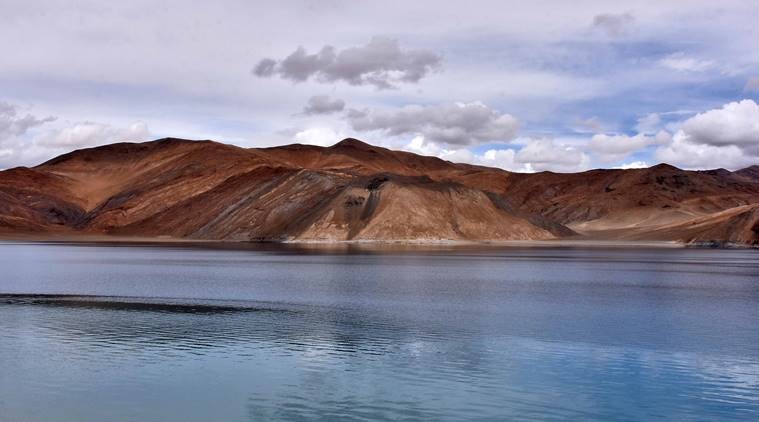
Pangong Tso is one-third in India and two-thirds in China, says Gen Dwivedi. (Express Photo: Shuaib Masoodi)

Pangong Tso, the contested lake

Story continues below this ad

In the latest faceoff, Indian troops first spied the Chinese on the banks of Pangong Tso. Dwivedi says this lake, which is one-third in India and two-thirds in China, is of great tactical significance to the Chinese who have built infrastructure along both its sides to ensure the speedy build-up of troops.

“Chinese incursions in this region aim at shifting the LAC westward so that they are able to occupy important heights both on the north and the south of the lake, which will enable them to dominate the Chushul Bowl,” says Dwivedi.

The narrow Chushul valley, which lies on the road to Leh with Pangong Tso to its north, was an important target for the Chinese even during the 1962 war. It was here that the Battle of Chushul was fought.

A view of Pangong Tso lake in Ladakh region July 27, 2019. (Reuters Photo: Mukesh Gupta)

Strategic SSN, to the far north

Story continues below this ad

The area spanning Galwan, Depsang plateau, and Daulat Beg Oldie (DBO), is called Sub-Sector North (SSN). Lt Gen B S Jaswal (retd), former northern army commander, says this enclave that lies to the east of the Siachen glacier is of immense significance given its proximity to the Karakoram Pass, close to China’s western highway or NH 219 going to Aksai Chin. It’s the SSN that provides land access to Central Asia through the Karakoram Pass.

Domination of this area is also crucial for the protection of the Siachen glacier, lying between the Saltoro ridge on the Pakistani side and the Saser ridge close to the Chinese claim line.

The Galwan heights overlook the all-weather Durbuk-Shyok-Daulat Beg Oldie (DSDBO) Road, which connects Leh to DBO at the base of the Karakoram Pass that separates China’s Xinjiang Autonomous Region from Ladakh. Domination over these heights allows China to easily interdict this road, says Gen Dwivedi.

“Occupation of Galwan will neutralise the tactical advantage India gained by building the all-weather Durbuk-DBO road over the last two decades,” he said.

Story continues below this ad

Last year, the Border Road Organisation (BRO) made this rugged terrain even more accessible by completing the 430-metre-long Colonel Chewang Rinchen Setu (bridge) across the Shyok river. With this, the Darbuk route to DBO became available round the year, and the travel time of troops to the SSN was halved.

Some analysts believe it was this bridge, coupled with the ongoing work on a link road to LAC in this area, which prompted the PLA to enter Galwan.

The Chinese have also intruded into the Depsang plains near a place called Bottleneck point, an area 7 km away from an ITBP base on the newly-built Darbu-Shyok-DBO road.

They have done it in the past too, most recently in 2013 and 2015, coming almost 15 km inside the Indian LAC. But on both occasions they were forced to retreat.

Story continues below this ad

Gen Dwivedi says SSN is critical to India also because it offers maximum scope for military collaboration between China and Pakistan against India by virtue of its location bordering the Siachen glacier.

Curated For You

Manraj Grewal Sharma is a senior journalist and the Resident Editor of The Indian Express in Chandigarh, where she leads the newspaper’s coverage of north India’s most politically and institutionally significant regions. From Punjab and Haryana to Himachal Pradesh and the Union Territory of Chandigarh, she oversees reporting at the intersection of governance, law, politics and society. She also reports on the diaspora, especially in Canada and the US. With a career spanning journalism across several countries, academia and international development, Manraj brings a rare depth of perspective to regional reporting. She is widely regarded as a leading chronicler of Punjab’s contemporary history and socio-political evolution, particularly its long shadow of militancy, federal tensions and identity politics. Her book, Dreams after Darkness, remains a definitive account of the militancy years and their enduring aftermath. Professional Background & Expertise A gold medalist in mass communication and a post-graduate in English literature, Manraj has a multifaceted career spanning journalism, academia, and international development. She was also awarded a fellowship by National Foundation of India and did several in-depth pieces on Manipur. Internationally, she has reported from Israel, US, UK, Myanmar, and Mauritius Her key focus areas include: Regional Politics, History, Agriculture, Diaspora, and Security. Of late, she has started focusing on Legal & Judicial Affairs: Much of her recent work involves reporting on high-stakes cases in the Punjab and Haryana High Court, ranging from environmental policy to civil rights. International Consulting: She previously served as a consulting editor for the Asia Pacific Adaptation Network and a publishing consultant for the Asian Development Bank (ADB) in Manila. Academia: For five years, she was the managing editor of Gender, Technology and Development, a peer-reviewed international journal at the Asian Institute of Technology, Bangkok. Recent Notable Articles (Late 2025) Her recent reportage focuses heavily on judicial interventions and regional governance: 1. Environment & Governance "‘NGT can’t test legality of policy’: HC hears challenge to Punjab’s ‘Green Habitat’ plan" (Dec 22, 2025): Covering a critical legal battle over whether the National Green Tribunal has the authority to strike down a state policy regularizing farmhouses on delisted forest land. "High court pulls up Punjab poll panel over audio clip probe" (Dec 10, 2025): Reporting on judicial concerns regarding the transparency and fairness of local body elections. 2. Legal Rights & Social Welfare "HC issues notice to Punjab, Haryana over delay in building old age homes" (Dec 22, 2025): Reporting on a contempt petition against top officials for failing to establish government-run homes for the elderly as promised in 2019. "Victims can appeal acquittals in sessions court without seeking special leave" (Dec 19, 2025): Highlighting a significant procedural shift in criminal law following a Supreme Court ruling. "HC upholds benefits for Punjab FCI officer acquitted in 20-year-old bribery case" (Dec 19, 2025): A report on the concept of "honourable acquittal" and its impact on employee benefits. 3. Human Rights & Identity "As Punjab denies parole to MP Amritpal Singh, HC asks it to submit ‘foundational material’" (Dec 1, 2025): Covering the legal proceedings regarding the radical preacher and sitting MP's request to attend Parliament. "Protecting life paramount: HC backs Muslim woman in live-in after verbal divorce" (Nov 6, 2025): Analyzing judicial protections for personal liberty in the context of traditional practices. Signature Beats Manraj is recognized for her ability to decode complex judicial rulings and relate them to the everyday lives of citizens. Whether it is a 30-year-old land battle in Fazilka or the political implications of Kangana Ranaut’s candidacy in Mandi, her writing provides deep historical and regional context. Contact @grewal_sharma on X manrajgrewalsharma on Instagram ... Read More


Tags:
  • China Express Explained Galwan Faceoff India China border dispute Ladakh
Edition
Install the Express App for
a better experience
Featured
Trending Topics
News
Multimedia
Follow Us
Military DigestNuclear-powered device lost at Nanda Devi mountain back in spotlight
X