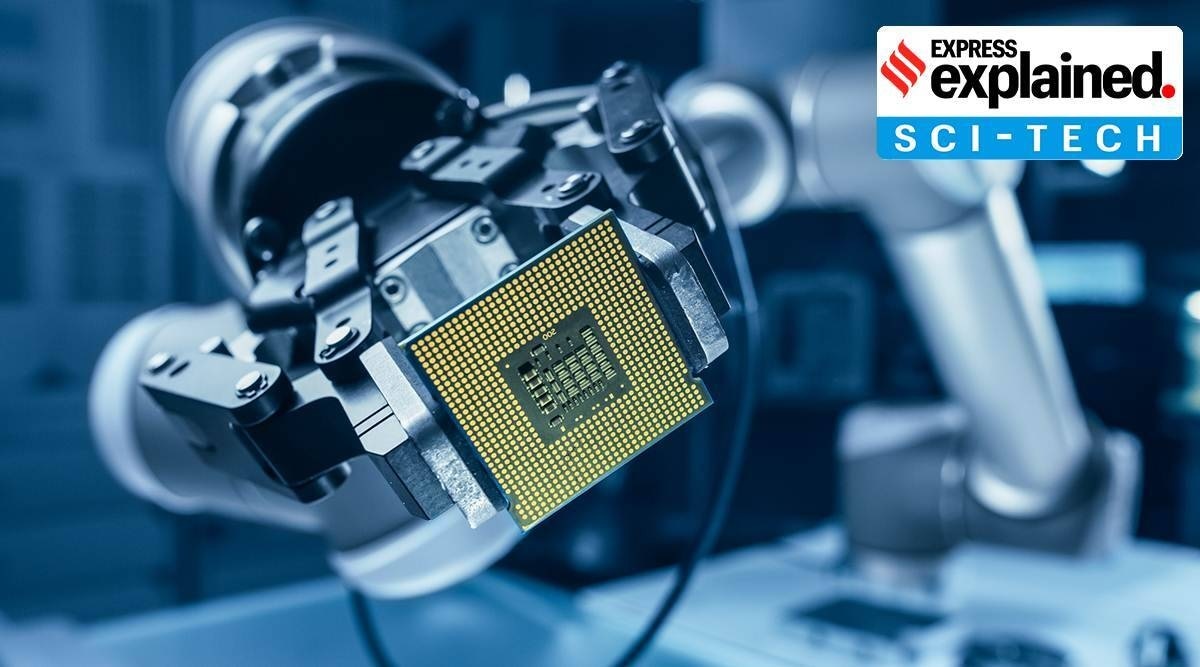
The global semiconductor shortage has affected many industries for more than a year
The chip shortage keeps dragging on. The situation is so bad that now Black Friday, the busiest shopping season of the year, is likely to be impacted with everything from gaming consoles to the new iPhones expected to be hard to come by.
With experts predicting the situation could improve by the middle of next year when more supplies are expected to become available, everyone seems to be asking what led to this major supply chain disruption in the first place and why it’s taking so long to fix.
The global semiconductor shortage has affected many industries for more than a year and because of that, they are either forced to pay more for products or being asked to wait a little more. The shortage has affected smartphones, personal computers, game consoles, automobiles, and medical devices.
You’ve Read Your Free Stories For Now
Sign up and keep reading more stories that matter to you.
In October, Apple said it lost $6 billion to chip shortage in the last quarter and expects an even greater loss from supply chain issues in the December quarter. Japanese gaming giant Nintendo revised sales forecast for the fiscal year “due to the effects of the global semiconductor shortage”. Nintendo said “there has not been a major improvement in the situation” since the beginning of the fiscal year. Sony, too, expects to make fewer PS5s, a console that’s already in short supply since it launched back in November last year.
Chips or processors power every possible product on the market from high-end cars to washing machines. As Dr. Abhisek Dixit, Professor in the Department of Electrical Engineering, Indian Institute of Technology – Delhi, explained, “The consumption of integrated circuits in products is ever increasing and a large manufacturing sector for these kinds of integrated circuits are a part of the supply chain.”
During the pandemic, manufacturing came to a standstill impacting the supply chains of products that need one or more of these. As the automotive sector almost shut down last year, chip makers shifted capacity to cater to increased demand for electronics items such as cell phones and laptops. Since orders for advanced chips are placed well in advance, manufacturers have not yet been able to come back to pre-pandemic production schedules to cater to all sectors.
The automotive chips are of medium-level complexity, compared to the really small and extremely complicated ones on smartphones and personal computers. Building something this small, featuring billions of transistors is an expensive process.
Story continues below this ad
Dixit explained that while chip design has not been affected, “chip fabrication or manufacturing line is really where the factory comes in” and the process can take a few months. “The foundry is not one factory, it’s an ecosystem,” Dixit said, adding that a cutting-edge fab costs $10 billion to build. It also requires lots of clean water, uninterruptible electricity, and a skilled workforce. “When you talk about manufacturing a chip, you are not going to get Elon Musk, or Jeff Bezos to invest into chip manufacturing… these are basically legacy technologies where there are decent returns but there are also very high risks involved,” he said.
Big brands like Apple and Qualcomm design their own chips using the ARM architecture but outsource them to companies like Taiwan Semiconductor Manufacturing Company (TSMC), the world’s largest contract manufacturer for chips. Lately, companies like Intel which design and manufacture their own chips too have started outsourcing some manufacturing to TSMC.
“There are many factors that can ruin a forecast including virus status, government relations, supply chain factors, etc,” Jon Peddie Research analyst Ted Pollak told The Indian Express. Pollak predicted that things will stabilise by March next year.
Story continues below this ad
Intel, Samsung, and TSMC have all announced new fabs in recent months but as Dixit explained these fabs take years to build. This means the semiconductor shortage could linger for long, because companies are placing more orders and holding more inventory.
Things could get worse. While Moore’s Law continues to push for smaller transistors, the clock-speed gains are modest. To improve chip designs, companies will need to experiment with new architectures and new techniques.
Has India missed the bus in setting up chip factories?
Dixit does not agree. From an investor’s point of view, he explained, there is a lot of risks involved in setting up a chip plant. Past initiatives to set up chip manufacturing units in the country never took off due to lack of long-term vision, lack of government incentives, and poor planning. Now the government is keen to promote the manufacturing of semiconductors in the country and has even proposed tax incentives for those who set up state-of-the-art fabs in India.
Story continues below this ad
Things are progressing slowly, but the recent announcement of Tata Group entering semiconductor manufacturing is being seen positively. Last year, US-based memory chipmaker Micron Technologies had announced that it will set up a Centre of Excellence in memory and storage systems in India. Micron is a major supplier to Apple. As of now, the ISRO has a fab foundry in Chandigarh and the DRDO has one too in Bengaluru.
“Within a few years, we should have, if not a full-fledged production-level chip manufacturing unit, something like a prototyping level chip unit in working order,” Dixit said.
How is the chip crisis playing out in geopolitics?
The global chip crisis and geopolitical tensions with China have shifted focus back on semiconductors. The US, which was once a leader in chip manufacturing, wants the crown back. Under President Joe Biden, the US is looking to bring manufacturing back to America and reduce its dependency on a handful of chipmakers mostly concentrated in Taiwan and South Korea. China’s renewed aggression on Taiwan is also being seen in light of the chip crisis.
Story continues below this ad
Semiconductor manufacturing is now dominated by TSMC in Taiwan and Samsung Electronics in South Korea. American chipmaker Intel now plans to spend $20 billion to build two new chip factories in Chandler, Arizona. These new fabs will also manufacture chips designed by Amazon, Qualcomm, and other customers.
The crisis is expected to cost the global automotive industry $210 billion in revenue in 2021, according to consulting firm AlixPartners. This is why American carmakers Ford and GM are also getting into chip development to become self-reliant. Ford has signed a non-binding agreement with GlobalFoundries, whereas GM is working with a number of semiconductor companies like Qualcomm, STMicroelectronics, TSMC, and NXP Semiconductors.
Anuj Bhatia is a seasoned personal technology writer at indianexpress.com with a career spanning over a decade. Active in the domain since 2011, he has established himself as a distinct voice in tech journalism, specializing in long-form narratives that bridge the gap between complex innovation and consumer lifestyle.
Experience & Career: Anuj has been a key contributor to The Indian Express since late 2016. Prior to his current tenure, he served as a Senior Tech Writer at My Mobile magazine and held a role as a reviewer and tech writer at Gizbot. His professional trajectory reflects a rigorous commitment to technology reporting, backed by a postgraduate degree from Banaras Hindu University.
Expertise & Focus Areas: Anuj’s reporting covers the spectrum of personal technology, characterized by a unique blend of modern analysis and historical context. His key focus areas include:
Core Technology: Comprehensive coverage of smartphones, personal computers, apps, and lifestyle tech.
Deep-Dive Narratives: Specializes in composing longer-form feature articles and explainers that explore the intersection of history, technology, and popular culture.
Global & Local Scope: Reports extensively on major international product launches from industry titans like Apple and Google, while simultaneously covering the ecosystem of indie and home-grown tech startups.
Niche Interests: A dedicated focus on vintage technology and retro gaming, offering readers a nostalgic yet analytical perspective on the evolution of tech.
Authoritativeness & Trust
Anuj is a trusted voice in the industry, recognized for his ability to de-jargonize trending topics and provide context to rapid technological advancements. His authority is reinforced by his on-ground presence at major international tech conferences and his nuanced approach to product reviews. By balancing coverage of the world's most valuable tech brands with emerging startups, he offers a holistic and objective view of the global technology landscape.
Find all stories by Anuj Bhatia here.
You can find Anuj on Linkedin. ... Read More