5 min read





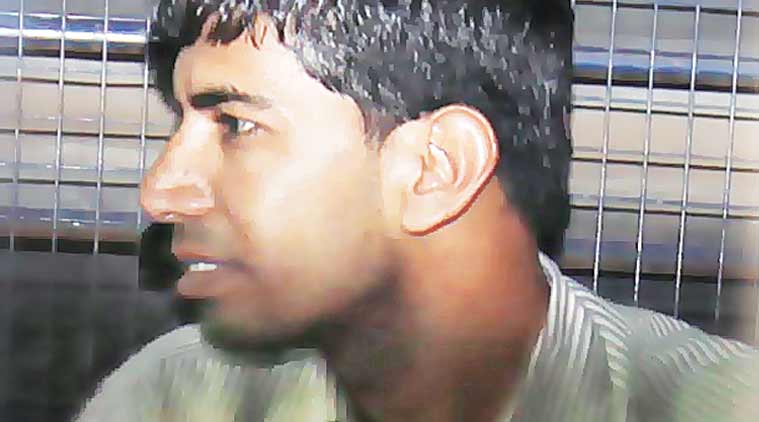 Baig had claimed he was the blast’s 18th victim.
The Accused
Mirza Himayat Inayat Baig, now 35, belongs to a lower middle class family from Kamwada in Maharashtra’s Beed district. His father Inayat Baig, 85, has a jalebi stall at Karanja, Kamwada; his brothers Tariq, 41, and Shehzad, work in a small hotel and as a driver respectively.
An Arts graduate from Beed, Baig pursued a D.Ed from a government-run college in Pune’s Azam Campus from 2003-05, and obtained a “good” for behaviour and studies in the academic register. After completing his education, Baig moved to Udgir in Latur, where he reportedly started the Global Internet Cafe.
On the day he was sentenced to death by the trial court in April 2013, the alleged “mastermind” of the February 13, 2010 German Bakery bombing broke down and begged for leniency. He told the judge he was a simple teacher from a poor family, and the 18th victim of the blast that had killed 17. Baig claimed to have started a tuition centre in Udgir after his graduation, living in a rented room, and offering computer classes to youngsters in the neighbourhood.
The Probe
According to the Maharashtra ATS, they arrested Baig from Pulgate, Pune, on September 7, 2010, and recovered 1.2 kg of RDX — allegedly left over from the Bakery attack — from his Udgir residence the same day. The ATS also named six other accused: alleged Indian Mujahideen operatives Riyaz Bhatkal, Iqbal Bhatkal, Yasin Bhatkal and Mohsin Choudhary, and alleged Lashkar-e-Toiba terrorists Fayyaz Kagzi and Zabiuddin Ansari alias Abu Jundal. In its December 2010 chargesheet, the ATS said Himayat Baig had recced German Bakery on January 31, 2010 after being told to do so by Yasin Bhatkal and Mohsin Choudhary who met him in Udgir earlier that month. According to the chargesheet, the three met again in Udgir in the first week of February, and the bomb was assembled by the IM duo with Baig’s help at the Global Internet Cafe between 1 am and 5 pm on February 7. Baig and Yasin allegedly carried the bomb to Pune via Latur on February 13. “Yasin planted the bomb in a haversack at the bakery around 5 pm and triggered it with the help of a mobile triggering device at 6.50 pm,” said the chargesheet.
[related-post]
The seeds of the conspiracy, according to the ATS, were sown in Colombo in 2008, where Baig allegedly met Fayyaz Kagzi and Zabiuddin Ansari, and “the diabolic design to cause further terrorist activities was finalised”.
Death Penalty
On April 18, 2013, Additional Sessions Judge N P Dhote sentenced Baig to death under various sections of the Unlawful Activities Prevention Act (UAPA), Sections 302 (murder) and 120 (b) (criminal conspiracy) of the Indian Penal Code, and Section 3 of the Explosive Substances Act. The order also sentenced him to life imprisonment under other sections of the UAPA, IPC and ESA.
“From the proven circumstances the act falls under the rarest of the rare case. In the wake of proved facts and taking into consideration the observations made by the apex court in the aforementioned judgments the only punishment the accused deserves is the death penalty,” the judge said. Baig, the court said, “is greatly influenced by the ideology of terrorism”, “there are no chances of his reformation”, and “he is a threat to the society”.
The trial court gave Baig the right to appeal to the Bombay High Court, saying “the death penalty (would be) applicable only after confirmation from High Court”. Baig then moved the Bombay High Court.
The Controversy
While the prosecution claimed Baig had been arrested on September 7, 2010 following a tip-off, the defence said he had been in illegal detention for 18 days since August 19, 2010. In November 2011, alleged IM member Mohammed Qateel Siddiqui was arrested and interrogated by police in Delhi and Bengaluru. It was revealed that Qateel had conducted a recce of German Bakery along with Yasin Bhatkal, but no mention was made of Baig’s involvement. After the National Investigation Agency took over the probe in the Bakery blast case, it did not name Baig as an accused. Meanwhile, in June 2012, Zabiuddin Ansari alias Abu Jundal, an accused in the 26/11 attacks, was deported from Saudi Arabia to India. And in August 2013, Yasin Bhatkal was arrested on the India-Nepal border. In March 2014, the ATS formally arrested Yasin in the German Bakery blast case and filed a supplementary chargesheet against him in August that year. During the High Court hearing, the defence claimed that a video allegedly from the blast scene was fabricated. There were also allegations that the ATS had “coerced” and “tutored” witnesses.
High Court judgment
The High Court’s acquittal of Baig from scheduled offences under UAPA means he has escaped death, and has been cleared of all terror charges. He is now likely to move the Supreme Court. The lower court had sentenced him to death under Sections 16(1)(a) and 10(b) of the UAPA, Sections 120(b) and 302 of the IPC, and Section 3(b) of the Explosive Substances Act. He was also given life terms under Sections 18 and 20 of UAPA, Section 307 of the IPC, and Sections 4(a)(b) and 5(b) of the Explosive Substances Act. The High Court has acquitted him on all five counts of death and four counts of life imprisonment — confirming only a life term under Section 5(b) of the ESA.