6 min read

Journalism of Courage



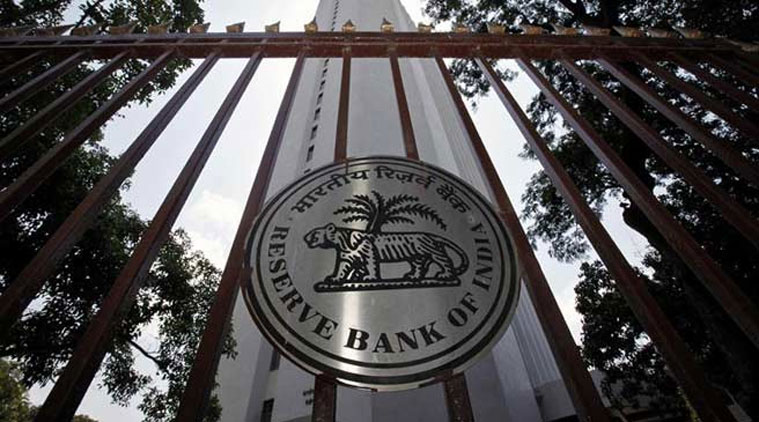 Three of the private banks licensed two decades ago now figure at the top of the pecking order of Indian banks — which says it all.
Two years after the balance of payments crisis of 1991 was resolved, the focus shifted to the financial sector. The government and RBI started work on reforms based on a report by a committee headed by former Economic Affairs Secretary and RBI Governor M Narasimham in 1992, aimed at strengthening Indian banks. The committee said the door should not be shut on new private banks as long as they met RBI norms. That hadn’t been thought of for decades — as governments sought to exercise social control over banks, leading to nationalisation in 1969 and 1980, and also because of controversies over the functioning of banks controlled by industrial groups.
In early January 1993, the RBI Central Board approved the proposal to licence new private banks. C Rangarajan, who had then just taken over, felt it was an opportune time to open up the banking sector. His rationale was that having liberalised in several segments, and with an improvement in the macro-economic scenario, the reform logic of ensuring more efficiency and competitiveness should be extended to the financial sector dominated by sluggish state-run banks. Conspiracy theories abounded too: that the opening-up was part of an agenda “dictated” by the IMF and World Bank, which had loaned money to the P V Narasimha Rao government in 1991.
With no legislative hurdles to granting licences to private banks, the RBI Board issued the first set of guidelines for such banks immediately after giving them approval. Entry barriers were high then — with a minimum capital of Rs 100 crore and a capital adequacy ratio of 8 per cent right at the start. Over the course of 1993-94, over 100 applications were received — including from top industrial houses, Non-Banking Finance Companies, and professionals. In that first round of licensing of private banks, the process of approvals was an internal one. That was because Rangarajan believed that licensing banks was a legitimate function of the RBI and, as he put it, something that could not be outsourced.
To begin with, RBI granted in-principle approvals to the top three Indian financial institutions then — UTI, ICICI and IDBI. The logic being that quasi-state institutions were a better bet given the comfort factor. Later, six more licences were issued on a continuous basis, including to a group of professionals led by Ramesh Gelli, who promoted GTB Bank which ran into trouble years later.
Non-Banking Finance Companies too were later allowed to promote banks, but questions were raised after licences were given to entities linked to the Hinduja Group, and a few others. There was a blowout later — with the CRB Capital promoter, Bhansali, running into trouble with the regulators. Manmohan Singh, who was the Finance Minister then, had a tough time countering a few angry industrialists, whose families had controlled banks, and had been denied licences in the first round.
What helped in the next round of licensing that took place during Governor Bimal Jalan’s tenure between 1997 and 2003, was the fact that some of these new-age banks had started performing well — using technology and offering vastly superior customer service. All this had a knock-on impact on the staid state-owned banks. But the difference in the second round of licensing in 2002-03 was that the process of approving new applications was delegated to an external committee by Jalan, who persuaded former RBI Governor I G Patel to head it. It may well be that the central bank wanted to ensure that it was insulated from pressures of corporate lobby groups. Just two licences were issued in 2003-04 — one to Kotak Mahindra, and the other to Rabo Bank, the Yes Bank of today.
A similar scenario played out almost a decade later during the UPA government headed by Prime Minister Manmohan Singh. The announcement of private players being allowed to promote banks was made in the 2010-11 Budget by Finance Minister Pranab Mukherjee. The moment was lost on many — two personalities who had a conflict three decades earlier on the licensing of a bank (BCCI, a foreign bank that collapsed later) leading to a threat of licensing powers being taken away from the RBI — were now part of the same government.
The RBI’s perceived lack of enthusiasm this time around may have been because of the overhang of a series of scams during the UPA regime. With top corporate groups in the fray, this time, it took four years for the regulator to decide. The RBI under D Subbarao and the government played it safe by handing over this task to a committee headed by former Governor Bimal Jalan. Tougher norms also helped keep off many aspirants. And yet again, corporate houses were kept out, with the committee and the RBI settling for just two — IDFC, an institution-backed firm, and Bandhan Financial Services — from among 25 applicants in 2014. The new Governor, Raghuram Rajan, defended the conservative stance, given the backdrop of concerns over governance.
It is this underlying philosophy, and a gradualist and conservative approach, which will be on test again, with the RBI set to grant new licences to payment and small banks two months from now. Three of the private banks licensed two decades ago now figure at the top of the pecking order of Indian banks — which says it all. “Banking licence needs a measure of trust, and you have to deserve that trust.” Those were Rajan’s words. It’s a good guess as to how many firms in India will measure up to that trust in August.
shaji.vikraman@expressindia.com