© The Indian Express Pvt Ltd
 3 min read


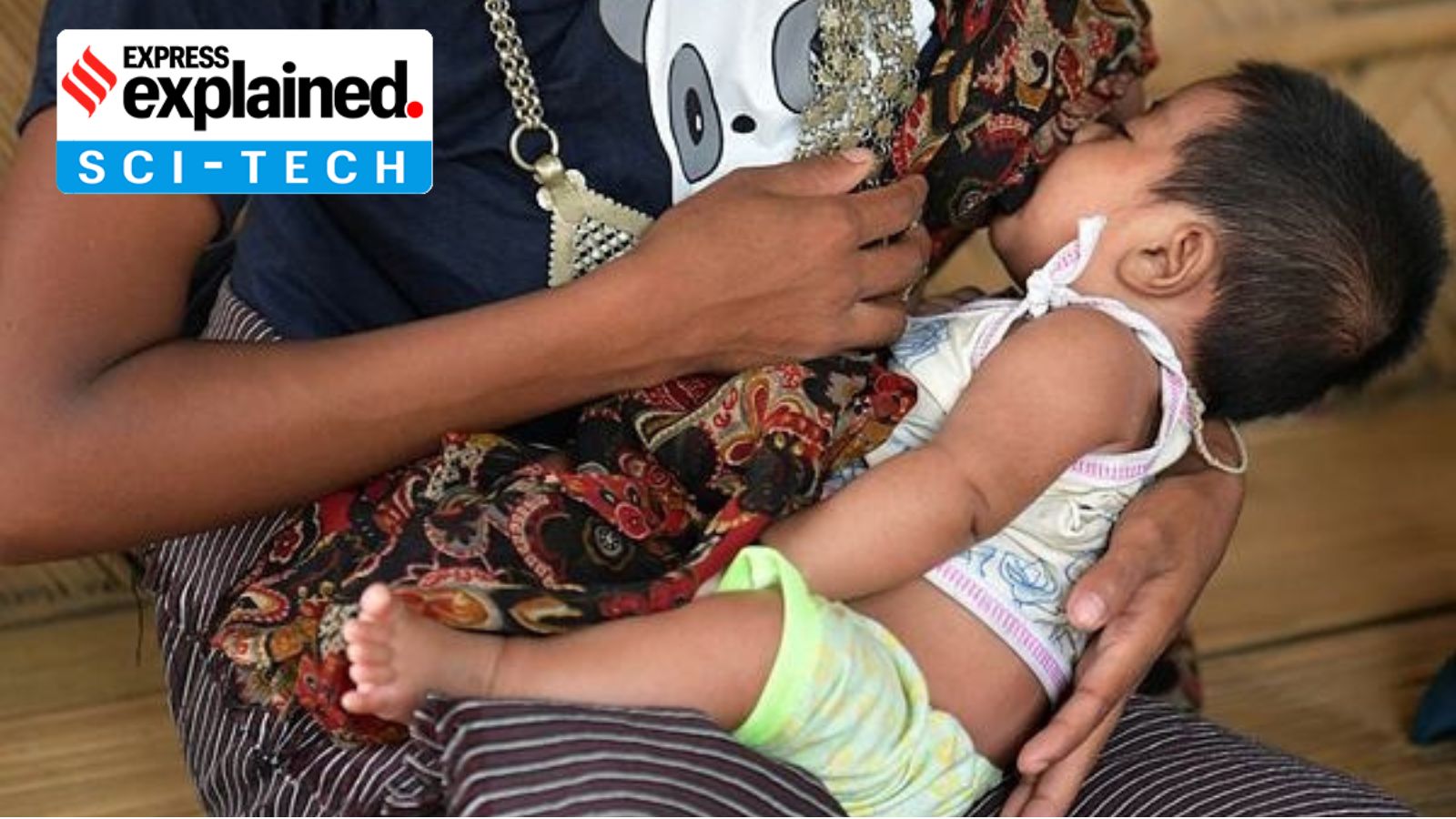 The study, published last Friday in the open-access Scientific Reports journal, detected uranium in 40 breast milk samples collected from mothers in Bihar. (Express File Photo)
Experts have flagged issues with a recent study, which raised alarm over the presence of uranium in the breast milk of lactating mothers in Bihar.
The study, published last Friday in the open-access Scientific Reports journal, detected uranium in 40 breast milk samples collected from mothers in Bihar. The researchers from Mahavir Cancer Sansthan and Research Centre-Patna, Lovely Professional University-Phagwara, and AIIMS-New Delhi concluded that 70% of the infants had been exposed to levels that could potentially cause non-carcinogenic health effects (diseases other than cancer), such as impact on kidneys or bone damage.
Recent reports about the study have fuelled concern about the safety of breastfeeding. Dr Arun Gupta, founder of Breastfeeding Promotion Network of India (BPNI), told The Indian Express, “This is leading to unnecessary fears and may deter people from breastfeeding, which we have been working to promote for years because it is the best nutrition for the babies. It also protects the babies from infections.”
Experts have concluded that the levels detected are not significant, and no health impacts have been observed over the years. Also under scrutiny is the methodology followed by the researchers, as well as the aim of studying the levels in breast milk alone. Here is what to know.
Dr Dinesh K Aswal, former group director of Bhabha Atomic Research Centre, allayed fears that breast milk may be harmful for children.
“Uranium is a natural element, which is invariably present in trace amounts in everything. There is some level of uranium in groundwater across the globe,” he said. “The good thing is that uranium is a heavy element and does not bind with the tissues of the body, so any uranium you consume will likely be flushed out in a very short time. People have to drink highly contaminated water for several years to have some impact on the kidneys. In fact, the levels in India — and what the authors of the study have found — is not very high.”
The World Health Organisation, in its 2001 guidance on uranium in drinking water, said that the human body, on average, contains about 90 µg of uranium derived from normal intakes of water, food and air — about 66% is found in the skeleton, 16% in the liver, 8% in the kidneys and 10% in other tissues.
Dr Aswal added: “While the WHO sets the limit of uranium in groundwater at 30 µg/L, Finland has naturally occurring high levels of uranium and therefore has a higher threshold of 100 µg/L. The levels in India are less than this. The people in Finland have been drinking the same water for generation after generation and haven’t faced significant health impacts.”
The highest concentration of 5.25 micrograms per litre was found in samples from Katihar, while the lowest concentration of 2.35 micrograms per litre in Nalanda. While the researchers began by saying that the uranium exposure through breast milk was at “hazardous levels”, they concluded thus: “…the reported concentrations are below the permissible limits hence, there could be least significant health threat from uranium exposure.”
“The level of uranium was noticeable, but it did not appear to cause major health problems for either the mothers or their babies. Still, around 70% of the infants showed a possible risk for non-cancer-related health effects,” said Dr Ashok Sharma, coauthor of the study and Additional Professor in the Department of Biochemistry at AIIMS New Delhi.
Notably, the researchers noted that the levels did not significantly increase with age, meaning there was no evidence to suggest that living in an area with high levels of uranium in groundwater over a longer period increased uranium levels. It also noted that “bioaccumulation of uranium in breast milk is minimal”.
For the study, the researchers also looked at the uranium levels in 273 groundwater samples. Interestingly, the second-highest level of 77 µg/L was found in Nalanda, where the concentration in breast milk was lowest.
According to Dr Aswal, the possibility of finding uranium in breast milk is remote because it doesn’t bind well with the lactic acid or other components of milk.
He added that there is also no rationale for choosing breast milk as the only sample for testing uranium levels, and that urine samples should also have been tested to see how much uranium gets flushed out.
The children were also not monitored to see whether there was an impact on their health. “No child-health monitoring was done during the study because contamination was discovered only after data analysis,” said Dr Sharma.
Dr Aswal also noted that the researchers have detected uranium at levels of around 5µg/L, which their equipment was not calibrated for.
“They have used a very sensitive instrument, but the calibration has to be proper for detecting accurate levels. Their calibration was between 100µg/L and 2000µg/L — how did they detect 5µg/L then? It’s like going to the sweet shop and asking them to measure the weight of your jewellery,” said Dr Aswal.
He added that the calibration was done using nitric acid and not breast milk, which might also affect the results.
Importantly, Dr Aswal pointed out that with just 40 samples the researchers did not have a statistically significant sample to say which district had higher contamination and which did not. “For groundwater mapping, we had collected 55,000 samples, and I was still not happy.”