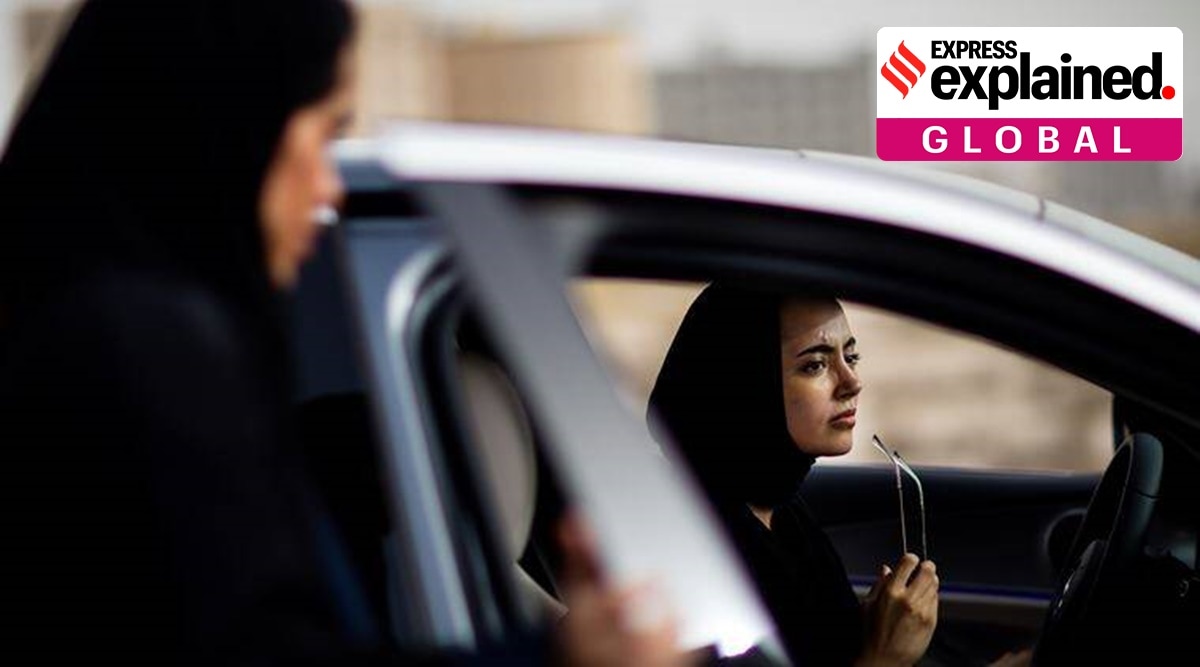
About 28,000 women have applied for 30 train-driver jobs in Saudi Arabia, the first time such a post has been advertised in a gender-neutral format in the conservative kingdom. This follows recent reformatory moves that began with scrapping the ban on women driving and allowing them to travel freely without the shadow of male guardianship in 2018.

Successful candidates will drive high-speed bullet trains between the holy cities of Mecca and Medina after a year of training. Renfe, the Spanish train company operating the service, said it was eager to create opportunities for women in its local business. It currently employs 80 male drivers and is training 50 more.
What does this move mean for Saudi women?
Saudi Arabia has had one of the world’s lowest female workforce participation rates. Until recently, women in Saudi could work only in altruistic roles, like teachers and medical workers. Even then, they had to observe strict gender segregation rules. But over the last five years, female participation in the workforce has nearly doubled to 33 per cent following a drive by Saudi Crown Prince Mohammed bin Salman to open up the kingdom and diversify the economy. So, this has opened up more opportunities for women, who are now taking up jobs once restricted to men and migrant workers.
Despite this, the proportion of women working in the kingdom was still about half that of men in the third quarter of last year, at 34.1 per cent, and female unemployment was more than three times higher than for men, at 21.9 per cent, according to a study by the US-based Brookings Institute. If Renfe hires 30 women, its new recruits will still be a fringe player in the public sector.
Is this a placatory move to cover up Saudi Arabia’s rights record, particularly its clampdown on women activists?
This apparent gender-neutral approach has been seen by some as an attempt by Saudi Arabia to repair its image in the Western democracies, particularly when its human rights are under scrutiny. Crown Prince Bin Salman is hoping to claim leadership of the sustainable energy economy by peddling Saudi Arabia’s renewable energy potential to the West, now that fossil fuels are rapidly depleting. He is making the right reformist noises by projecting a modern Saudi Arabia in sync with the rest of the world. The lifting of the driving ban for women is part of a project to modernise some aspects of Saudi society and draw in trust and belief in his Vision 2030 programme to steer the economy away from oil. It has, therefore, set a goal of 30 per cent women’s participation in the workforce by 2030.
Story continues below this ad
Some observers also see this as a move to deflect attention from the arrest of women’s rights activists, including that of reformist princess, Basma bint Saud, and the murder of journalist Jamal Khashoggi in 2018. Princess Saud was released early this year after being held captive for three years since March 2019. She was detained as she prepared to fly to Switzerland for medical treatment. Her family told the United Nations in a written statement in 2020 that she was held due to her “record as an outspoken critic of abuses”. The prominent Saudi women’s right activist, Loujain al-Hathloul, who led the movement to allow women to drive in the kingdom, was detained in 2018. She was released conditionally in 2021. She still faces a five-year travel ban and other curbs.
What is the ground reality?
Despite some major reforms, Saudi women must still obtain a male guardian’s approval to get married or access certain kinds of healthcare. Women are heavily discriminated against and disadvantaged when it comes to their role in family structures, divorce and custody of children. Much of the women’s rights come more as a dole from existing patriarchal hierarchies. It is still the men who decide and appear as concessionaires of women’s rights.
That said, there has been a gradual societal adjustment, like accepting young men and women working together and meeting in public; women wearing colourful abayas and studying abroad on their own.
Story continues below this ad
So why are women being allowed into what Saudis would consider unconventional jobs?
That’s because Saudi Arabia, challenged by a dipping oil economy, wants its citizens to take up jobs in the service sector. Opening jobs for women, the authorities believe, would help expand the country’s workforce and perk up the country’s economy.
Newsletter | Click to get the day’s best explainers in your inbox


 5 min read