© IE Online Media Services Pvt Ltd
 6 min read


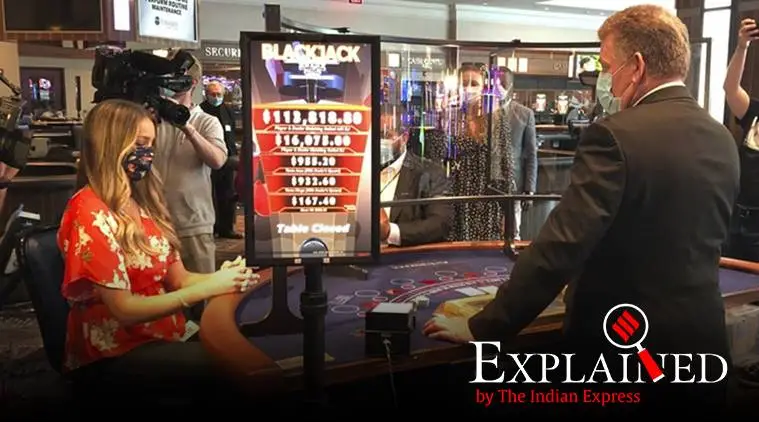 A blackjack dealer at Foxwoods Resort Casino in Mashantucket, Connecticut, demonstrates to reporters on how new protective measures, including plastic shields, will work when the tribal-owned Foxwoods and neighboring Mohegan Sun expect to partially reopen on June 1. (File/AP Photo/Susan Haigh).
By April, when the coronavirus outbreak had forced several states across the US to enforce strict public health precautions, several Native American communities in Indian country witnessed a significant source of their revenue being cut off after they voluntarily closed casinos and gaming establishments that they had been running.
According to a news report by the Associated Press, these casinos contribute to revenue in Native American communities and is used for medical resources and other essentials. Across the US, there are a little more than 500 registered tribal casinos. After more than a month of being voluntarily closed, these casinos have now started reopening on grounds that the money that the operations will bring, are urgently needed by Native American communities.
However, several states have objected to the reopening of these establishments citing coronavirus concerns, and given that most other commercial enterprises are yet to start fully functioning. But there is little that the state governments can do to restrain these Native American gaming establishments, in part because these establishments come under tribal sovereignty. “Tribal nations are just that, they’re nations. So they are not bound by state laws,” the Associated Press quoted New York’s Governor Andrew Cuomo as saying.
What is tribal sovereignty?
Tribal sovereignty is a complex subject, but very simply, it means that Native Americans in the US have the right to govern themselves. In their paper titled ‘Myths and Realities of Tribal Sovereignty’ under Harvard University, Kalt and Singer write: “Though the US has, at times, sought to end tribal governments, it has repeatedly returned to its “recognition of the inherent sovereignty of tribal governments” and rejected termination policies, returning to recognize the existence of Indian nations within the federal framework. This is the current policy of the United States, and has been so for forty years – to recognize tribes’ sovereignty and to ensure its continued existence. This policy is based on promises made by the United States in its 250 treaties with Indian nations and is based on recognition of tribes’ sovereignty embedded in the US Constitution.”
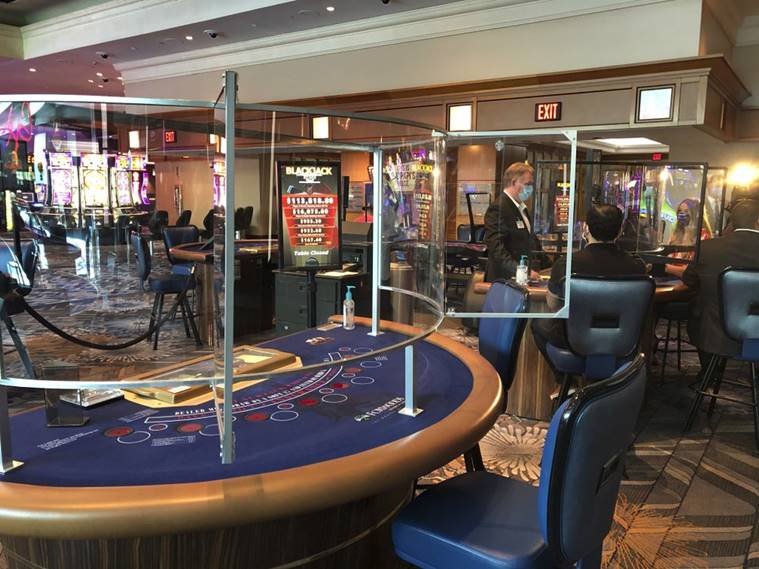 Tribal sovereignty is a complex subject, but very simply, it means that Native Americans in the US have the right to govern themselves. (AP Photo/Susan Haigh)
Kathryn R L Rand and Steven Andrew Light write in their book ‘Indian Gaming and Tribal Sovereignty: The Casino Compromise’ that tribes have an inherent right to govern themselves, and this concept forms the very bedrock of their constitutional status in the US. While these powers are not delegated to Native American tribes by congressional acts, the US Congress does have the power to limit tribal sovereignty, unless these powers are removed due to a treaty or federal statute.
How does tribal sovereignty impact Native American gaming businesses?
According to a 2011 report by the National Indian Gaming Commission, some 460 gambling operations run by approximately 240 tribes in the US earn a total revenue of approximately $27 billion. These gaming establishments on Native American reservations and tribal lands fall under the jurisdiction of tribal sovereignty and hence state governments have little to no authority over these establishments even if state laws do not permit gambling.
These laws have been codified under the Indian Gaming Regulatory Act of 1988, a federal law in the US that oversees Indian gaming.
How did the Indian Gaming Regulatory Act come into force?
In his legal research paper ‘The Legacy of Bryan v. Itasca County: How an Erroneous $147 County Tax Notice Helped Bring Tribes $200 Billion in Indian Gaming Revenue’, Kevin Washburn explains the backstory.
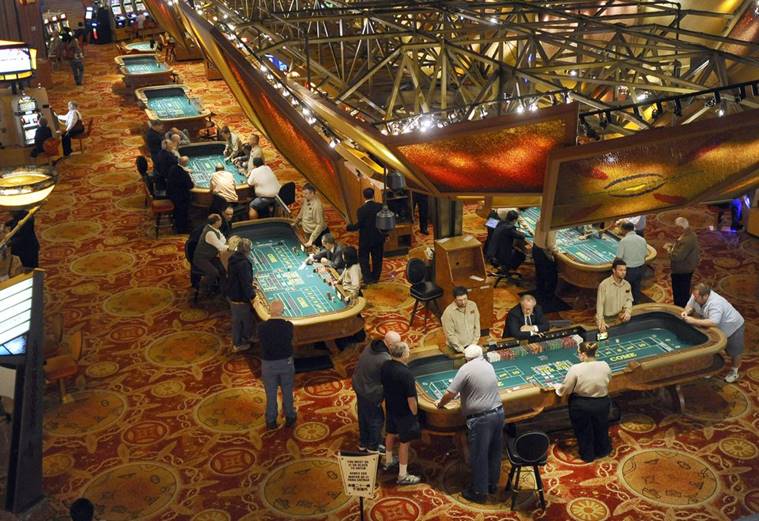 In this Sept. 18, 2013 file photo, patrons play craps at tables at Mohegan Sun in Uncasville, Connecticut. (AP Photo/Jessica Hill, File)
In 1972, Helen and Russel Bryan on the Leech Lake Indian Reservation received a tax notice for their trailer home. This seemingly inconsequential tax notice was challenged in court by the Bryans and it set off a long chain of events that eventually reached the US Supreme Court. This landmark victory created a framework for Indian gaming laws that exist today and also benefited Native American communities in several different ways. According to Washburn, this gaming industry has brought in necessary funds for a range of services, it “has strengthened tribal governmental services, including education, medical and healthcare services, and a wide range of other social services. Gaming has also given tribes tremendous clout in Washington, DC, as well as the ability to engage legal counsel in large transactions and to wage litigation.”
How are these gaming establishments ensuring public health safety?
Due to tribal sovereignty laws, Connecticut governor Ned Lamont was unable to interfere with gaming establishments that have opened despite state public health laws in force due to the coronavirus outbreak. The Associated Press reported that after Lamont’s requests to tribal leaders to not reopen gaming establishments fell on deaf ears, the governor had also considered removing state government-issued liquor licences as a pressure tactic. All Lamont could eventually do was to put up road signs saying “Avoid Large Crowds” and “Don’t Gamble With COVID” on state roads near the Foxwoods Resort Casino and the Mohegan Sun in Connecticut.
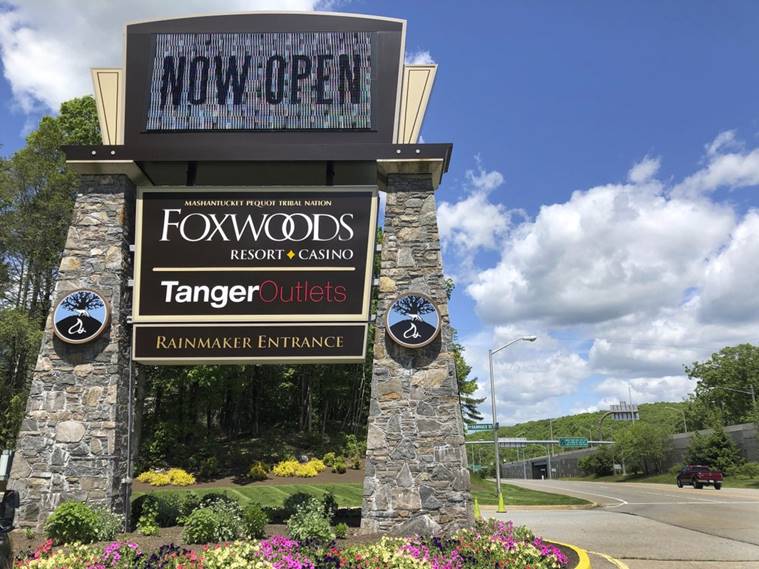 A sign at the entrance to the Foxwoods Resort Casino, in Mashantucket, Connecticut, announces its reopening, Monday, June 1, 2020. (AP Photo/Susan Haigh)
The Associated Press said Native American-run gaming establishments in the states of Washington, Oregon, California, Florida, North Carolina, New York have reopened despite curbs in force on large gatherings in these states. With little else they can do, several state governments in the US have urged residents to avoid visiting these establishments once they have reopened due to concerns that it may lead to fresh clusters of coronavirus infections.
According to the news report, the Miccosukee tribe in Florida that had recently reopened their gaming establishment, closed doors within days for unspecified reasons, despite having claimed that health recommendations were being followed inside the establishment. However, not everyone is eager to restart businesses despite economic factors, with some establishments placing priority on public health in their communities.