7 min read


© The Indian Express Pvt Ltd



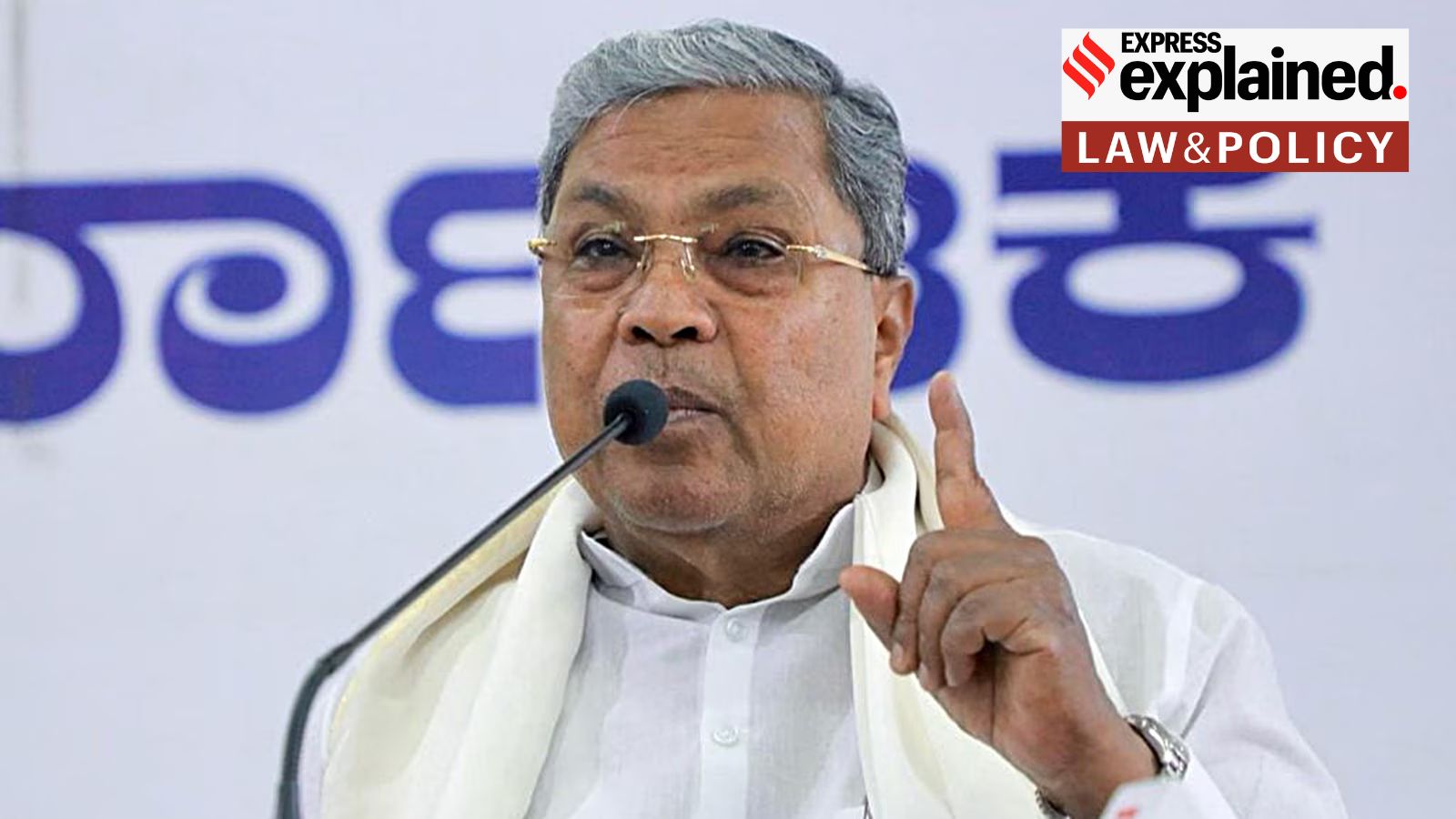 Karnataka’s hate speech law allows the state government to take preventive action on hate speech and prescribe a jail term of up to ten years for repeat offenders. (File)
The Karnataka government on Wednesday tabled in the state legislative assembly a first-of-its-kind legislation to tackle hate speech. The Karnataka Hate Speech and Hate Crimes (Prevention) Bill, 2025 states that its objective is to “curb and prevent dissemination, publication or promotion of hate speech” and also provide adequate compensation to the injured victims.
The Bill also provides for stringent punishment of up to 10 years of imprisonment and gives the government power to block or take down online content that is deemed to be hate speech. Here is all you need to know about the law, and the concerns a stringent special law that seeks to police speech raise.
Karnataka’s hate speech law allows the state government to take preventive action on hate speech and prescribe a jail term of up to ten years for repeat offenders.
An expansive definition
The Bill seeks to define hate crime as “communication of hate speech” which is includes “any expression which is made, published, or circulated, in words either spoken or written or by signs or by visible representations or through electronic communication or otherwise, in public view, with an intention to cause injury, disharmony or feelings of enmity or hatred or ill-will against person alive or dead, class or group of persons or community, to meet any prejudicial interest.”
The law further defines “prejudicial interest” to include bias on the grounds of religion, race, caste or community; sex, gender, sexual orientation, place of birth, residence, language, disability, or tribe. It, however, exempts “bona fide artistic creativity, performance or other form of expression,” “any academic or scientific inquiry; fair and accurate reporting or commentary”, or proselytization.
This definition is broader and expansive in comparison to the clutch of provisions that are currently invoked to tackle hate speech. While there is no specific law that deals with or defines hate speech, provisions in the Bharatiya Nyaya Sanhita that deal primarily with religion are invoked by states. These are Section 299 of the Bharatiya Nyaya Sanhita (outrage religious feelings), Section 298 (damage or defilement of a place of worship), Section 301 (trespassing in a place of sepulture), Section 302 (uttering, words, etc, with deliberate intent to wound the religious feelings of any person) and Section 300 (disturbing a religious assembly).
Overbroad and vague definitions in laws that seek to regulate fundamental freedoms can often result in its arbitrary application and misuse. The police who apply this law at the first instance should be able to decipher illegality from a valid expression of free speech so as not to discriminatorily enforce the law. Overbroad definitions also send a chilling effect, pushing citizens to steer far wider of the vague unlawful zone. In the landmark 2015 ruling Shreya Singhal v Union of India, the Supreme Court emphasised that “a penal law is void for vagueness if it fails to define the criminal offence with sufficient definiteness.”
The Bill extends fresh powers to the state government to block or remove “hate crime materials.” The provision states that a designated officer, notified by the state government, shall have the power to direct any service provider, intermediaries, person or entity to block or remove the hate crime materials from its domain, including electronic media.
The process to challenge such blocking orders is bureaucratic and often involves affected individuals going to court. Generally, the Information Technology (Procedure and Safeguards for Blocking for Access of Information by Public) Rules, 2009 (“Blocking Rules”) provide guidelines that must be followed when the government decides to prohibit content.
Institutional offenders
Significantly, the Bill seeks to punish organisations and institutions collectively for “hate crimes.” Institutions are loosely defined as “association of persons whether registered or not,” under the Bill.
“If the person, committing an offence under this Act, is an Organisation or Institution, every person who, at the time of the offence committed, was in charge of, and was responsible to, such organisation or institution for the conduct of the business of the same, as well as such Organisation or Institution, shall be deemed to be guilty of the offence and shall be liable to be proceeded against and punished accordingly,” the Bill states.
The provision carves out an important exception that no person will be punished if he proves that the offence was committed without his knowledge, or that he had exercised all due diligence to prevent the commission of such offence. While this exception is significant in ensuring that a person is not deemed guilty by mere association, the onus of having to prove that he is not guilty shifts to the accused. Once the wheels of criminal law are set in motion, the process often becomes the punishment for those accused.
Punishment
The Karnataka Bill states that a hate crime shall be punished with a mandatory minimum imprisonment of one year, which may extend to seven years, along with a fine of Rs.50,000. For subsequent or repetitive offences the punishment shall not be less than two years, which may extend to ten years with a fine of Rs.1,00,000.
The BNS provisions that deal with hate speech do not carry a sentence of more than three years in jail. The enhanced punishment in the Karnataka Bill is significant since the Supreme Court has in several rulings, underlined the “bail, not jail,” adage for offences which carry a sentence of less than seven years. A set of directions on a liberal scheme for bail to protect procedural fairness are known as the Arnesh Kumar guidelines.
Other states have also attempted to circumvent the Arnesh Kumar guidelines by invoking the law on sedition for hate speech. For example, the Assam government has been invoking the law on sedition Section 152 of the BNS, which pertains to “acts endangering the sovereignty unity and integrity of India”, a charge similar to “sedition” under the earlier Indian Penal Code (IPC) to target alleged “hate speech.” In the crackdown following the Pahalgam attack, the Assam Police had arrested at least 97 people over two months for posts and comments ranging from those that supported Pakistan and others deemed offensive to Hindus to ones suggesting that the attack was a “conspiracy” linked to elections.
An additional law
The Karnataka Bill clarifies that this proposed law will “be in addition to, and not in derogation of, the provisions of any other law for the time being in force.” This means that apart from the BNS provisions, the special law will also be added as an offence.
The key question is whether a new, additional law would be effective in combating hate speech? The Supreme Court’s interventions in the last year have mostly been around the institution of cases. In October 2022, a Bench of Justices K.M. Joseph and Hrishikesh Roy observed that a “climate of hate prevails in the country” and directed the police chiefs of Delhi, Uttar Pradesh and Uttarakhand to take suo motu action against hate speech cases without waiting for formal complaints. The issue flagged in these cases was whether state governments were coloured in how they applied the law in specific cases, and not that the existing laws were inadequate.
The court had warned that any hesitation would be viewed as contempt. This direction was later extended to all states and union territories in April 2023.