5 min read
© The Indian Express Pvt Ltd



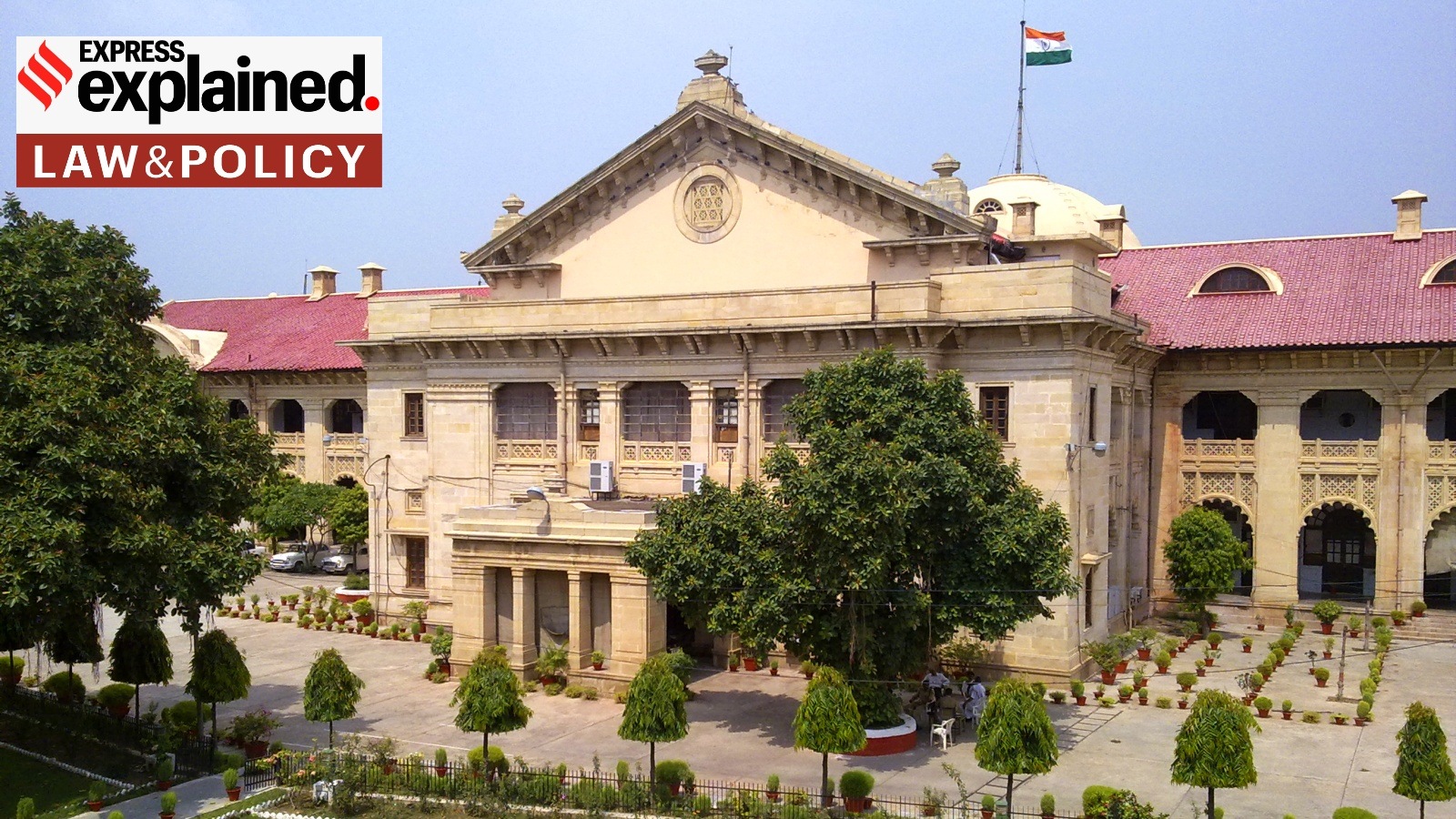 The FIR was based on the statement of a witness who claimed that the accused, born a Hindu, had converted to Christianity and held prayer meetings where he allegedly used offensive language about Hindu deities. (Wikimedia Commons)
Earlier this week, the Allahabad High Court refused to quash a case against a man accused of insulting Hindu deities during Christian prayer meetings and attempting religious conversion in his village.
But what further made the order significant was a contradiction that the court found central to the dispute — while a witness said the accused had converted to Christianity and was working as a Padri or priest, the accused described himself as a Hindu in a court affidavit.
Justice Praveen Kumar Giri said this inconsistency went to the heart of a settled constitutional rule, that religious conversion and Scheduled Caste status cannot run together, and that retaining caste benefits after conversion “would amount to fraud on the Constitution.”
What were the allegations?
Jitendra Sahani approached the High Court after he was booked under Sections 153-A and 295-A of the IPC, for allegedly promoting enmity and insulting religious beliefs. He said he had obtained permission to preach the words of Jesus Christ on his own land.
The FIR was based on the statement of witness Lakshman Vishwakarma, who claimed that Sahani, born a Hindu, had converted to Christianity and held prayer meetings where he allegedly used offensive language about Hindu deities.
According to the witness, Sahani mocked deities by referring to “eight hands”, “four hands”, “five faces”, or a trunk, and by pointing to practices involving offerings, animals or intoxicants. The FIR said these remarks were intended to insult the Hindu faith.
The witness also alleged that Sahani encouraged the poor to convert to Christianity by assuring them of respect within the new faith and “economic benefit” through his missionary connections. These speeches, the witness claimed, created “a feeling of enmity and mutual malice” and threatened local harmony.
The court’s reasoning on conversion and Scheduled Caste status rests on a set of constitutional and statutory rules that tie caste identity to the religion a person professes.
This framework begins with the Constitution (Scheduled Caste) Order, 1950, issued under Article 341. Paragraph 3 of the Order states that, “no person who professes a religion different from the Hindu, the Sikh or the Buddhist religion shall be deemed to be member of a Scheduled Caste.”
The law thus treats conversion to Christianity as a point at which the SC status ends.
The Constitution itself reinforces this classification. Article 366(24) defines the Scheduled Castes as those groups notified by the President under Article 341. Both provisions work in tandem, and the SC/ST (Prevention of Atrocities) Act adopts the same definitions. The result is that a person’s legal identity as a Scheduled Caste is inseparable from the religion they profess.
What the court held
The Allahabad High Court declined Sahani’s plea to quash the proceedings and directed him to seek discharge before the trial court. The court’s concern was not only the IPC charges but the contradiction between how Sahani was described in the FIR and how he identified himself in court. Article 25 protects the right to profess and practise a religion, the court said, but it does not allow someone to maintain “incompatible identities.”
To explain why this inconsistency could not be ignored, the court turned to the Supreme Court’s ruling in C. Selvarani. There, the court held that a person who has undergone baptism and actively practises Christianity “cannot continue to identify herself as a Hindu after baptism.” The High Court said the same principle applied in this case.
It added that the consequences of conversion are tied directly to eligibility for Scheduled Caste benefits and that presenting conflicting religious identities “would amount to fraud on the Constitution,” quoting the Supreme Court.
This position is rooted in long-standing precedent. In Soosai v. Union of India (1986), the Supreme Court held that a Christian who was originally from a caste listed in the 1950 Scheduled Caste Order “is barred by reason of paragraph 3, from being regarded as a member of a Scheduled Caste.”
Selvarani reaffirmed the rule, stating that “upon conversion to Christianity, an individual ceases to belong to their original caste,” and that if “the purpose of conversion is largely to derive the benefits of reservation but not with any actual belief on the other religion, the same cannot be permitted,” because this “will only defeat the social ethos of the policy of reservation.”
Against this backdrop, the Allahabad High Court said the discrepancy in Sahani’s record was not a trivial factual conflict but one with constitutional consequences. Under the legal scheme governing Scheduled Caste status, the religion a person professes is central. Any mismatch between a person’s declared identity and their lived practice, the court said, must be examined by the trial court and cannot be brushed aside at the stage of quashing proceedings.