The Union Ministry of Law and Justice withdrew the draft Advocates (Amendment) Bill, 2025, on Saturday (February 23), following strikes by lawyers and objections from the Bar Council of India (BCI).
The Union Ministry of Law and Justice published the draft Bill on February 13 to solicit public comments. It proposed sweeping changes, with provisions allowing the Centre to influence the functioning of the BCI, govern the entry of foreign lawyers, and restrict lawyers’ right to protest.

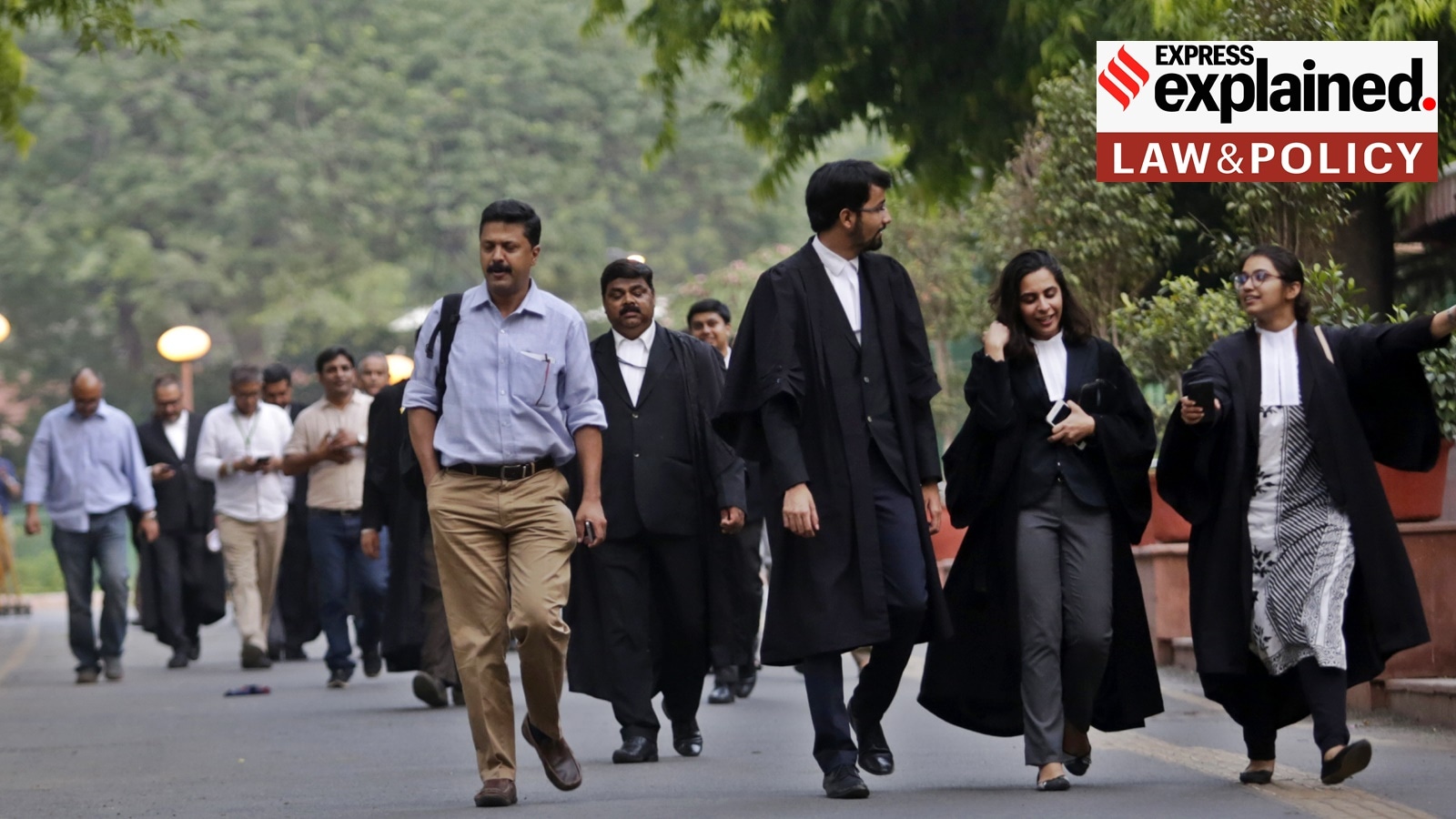
Lawyers across Delhi’s courts stopped work earlier this month in protest. Multiple circulars from the coordination committees of all district court bar associations stated that the decision was taken unanimously against the “proposed unjust, unfair and biased” Bill. Following the strikes and a flurry of letters sent to the government, the ministry withdrew the Bill. It said the revised draft will be processed afresh for consultation with stakeholders. Here is what to know about their criticisms.
Concerns over independence of lawyers’ associations
Section 4 of the Advocates Act, 1961, established the “Bar Council of India”, which has been granted wide authority over matters related to the legal profession. This includes the admission of lawyers, deciding cases of misconduct against lawyers, and more (Section 6).
Section 4 also dictates who will become a BCI member. The draft Bill proposed amending this provision to allow the Centre to nominate up to three members to the BCI. Several lawyers said this would hamper the BCI and practising lawyers’ autonomy.
BCI chairperson and BJP Rajya Sabha MP Manan Kumar Mishra wrote a letter to Law Minister Arjun Ram Meghwal, saying, “This provision is fundamentally opposed to the structure and independence of the Bar Council, which has always been a democratically elected body representing the 27 lakh advocates of the country”. He later changed his view after “discussions with the government”.
Further, the proposed Section 49B said the Central government can direct the BCI “as may appear… to be necessary for carrying into execution any of the provisions of this Act…” Effectively, it would give the Centre the final say on any matter that falls under the Advocates Act and the purview of the BCI. The BCI claimed that this provision would seriously undermine its independence.
Story continues below this ad
Opposition to provisions on foreign law firms
The entry of foreign law firms into India remains a murky issue, even following the Supreme Court’s 2018 decision in Bar Council of India v. A K Balaji. The apex court held that foreign law firms and lawyers can be engaged to provide legal advice on a “casual” basis, but cannot “practice” law in the same manner as an advocate registered with the BCI.
In 2023, the BCI notified rules to allow foreign lawyers and firms to practice in certain areas, such as international arbitration, but they remained barred from practising litigation matters before courts. The draft Bill allowed the Centre to create rules governing “the entry of foreign law firms or foreign lawyers in India” under Section 49A. Currently, this power lies with the BCI, which objected to these changes.
Another provision greatly expanded the definition of “legal practitioner” to include lawyers working with foreign law firms and corporate entities. The definition only includes practising High Court advocates, pleaders and revenue agents at present.
Lawyer’s protest as a ground for ‘misconduct’
One of the most contentious new provisions was Section 35 A, which read: “No association of advocates or any member of the association or any advocate, either individually or collectively, shall give a call for boycott or abstinence from courts’ work or boycott or abstain from courts’ work or cause obstruction in any form in courts’ functioning or in court premises.”
Story continues below this ad
A limited exception was provided, allowing participation in a strike “only when it does not impede the administration of justice such as strikes intended to bring attention to legitimate concerns about professional conduct, working conditions, or administrative matters…”
Any violation would be considered misconduct, punishable under Section 35. In response, advocate KC Mittal, former chairman of the Bar Council of Delhi and a practising lawyer of 52 years, said, “A right to protest is well established and to bring it within the meaning of misconduct is rather atrocious.” He also questioned the exception, saying, “How can our fundamental rights to protest be allowed as an exception… the exception should be given as to when we can’t protest.”
Additional grounds for ‘misconduct’
Section 45 B on “Liability for misconduct in certain cases” read: “If any person suffers loss either caused deliberately or by the misconduct of the advocate, then, such person may make a complaint of misconduct against the advocate under appropriate regulations as may be prescribed by the Bar Council of India for deciding the liability of the advocate.” This would allow clients to make a complaint against a lawyer if they suffered a “loss”.
Lawyers raised concerns about potential misuse. “If any client suffers loss in his case, he can make a complaint of misconduct against the advocate. How can an advocate be held responsible if he loses the case for his client? This has serious legal implications for all advocates practising in the country,” said Advocate Paras Jain.
Story continues below this ad
The draft Bill also suggested monetary punishments for “misconduct”. Along with the possibility of suspension or removal of the advocate’s name from the state roll, the Bill proposed a fine of up to Rs 3 lakhs. On the other hand, a fine of Rs 50,000 will be imposed on the complainant if his case is found to be frivolous.
Further, Section 26A, titled ‘Power to remove names from rolls’ stated that a Bar Council of a state may remove an advocate’s name upon their death, on their request, or if they’re found guilty of “serious misconduct or causing obstruction in the court’s functioning”. The serious misconduct condition is a new addition. Neither “misconduct” nor “loss” are defined in the Advocates Act or the draft Bill.
Advocate NC Sharma, President of the Dwarka Court Bar Association and spokesperson of the coordination committee, said, “Who will decide what is misconduct? Should lawyers be representing their clients or fighting for something as basic as having their names on state rolls… this way many lawyers can be barred from running elections.”


 6 min read