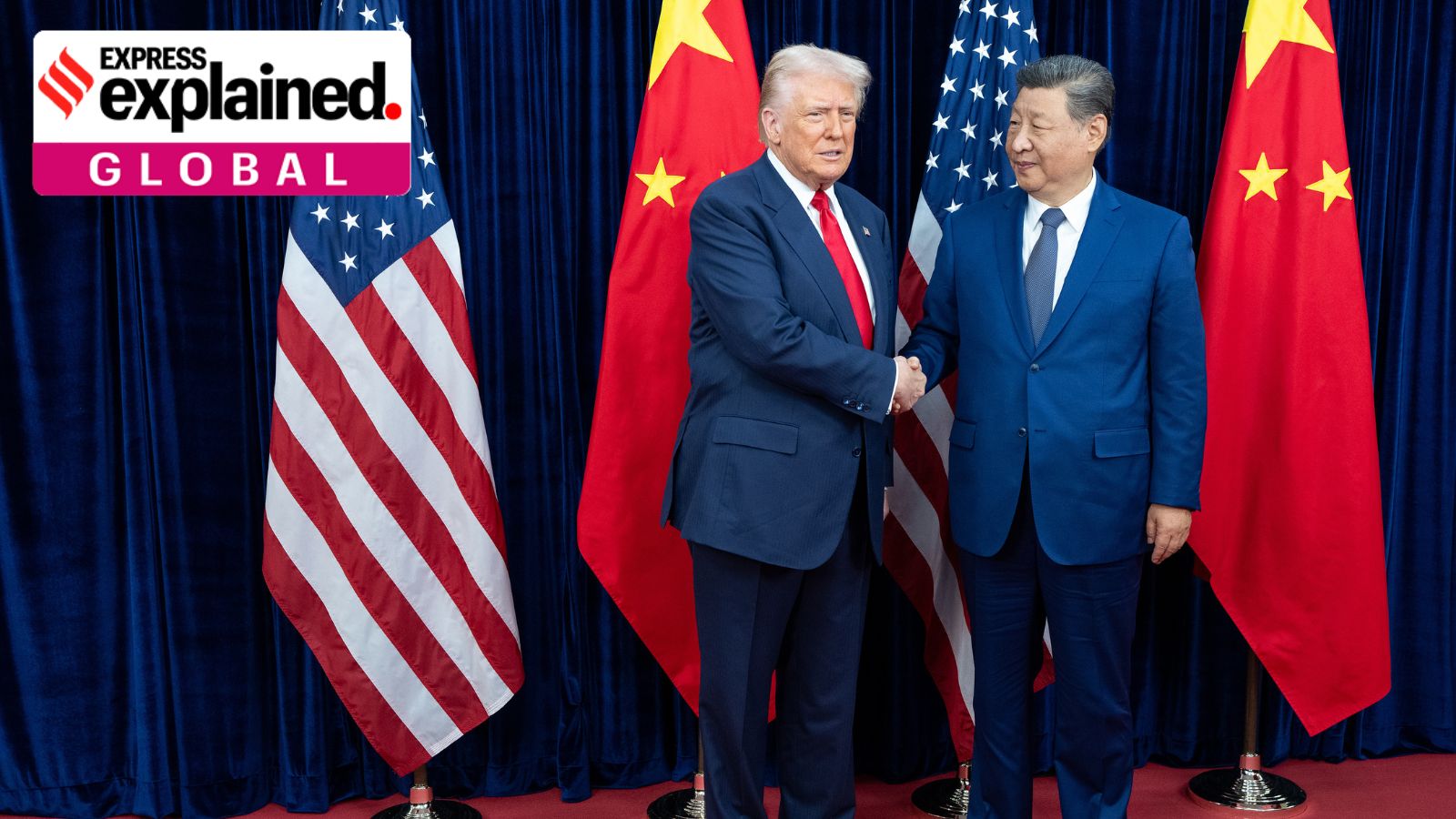
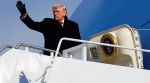
The first year of US President Donald Trump’s second term has been a blitz. Over the last 365 days, Trump has signed hundreds of executive orders; launched a trade war; withdrawn the US from major international institutions and agreements; ordered mass deportations; bombed three countries – Yemen, Iran and Nigeria; and extracted a sitting president from his bedroom in Caracas, Venezuela to face trial in New York.
Before he took the oath on January 20 last year, Russia was perhaps the biggest existential threat to Europe. Almost inconceivably, now it is the United States. Gold and silver have now surged to fresh highs just days after breaking previous records, as investors flock to safe-haven assets amid a choppy geopolitical and economic outlook triggered by an unexpected actor – the leader of the world’s largest economy.

Amidst all this upheaval, what could be Trump’s most significant contribution in reshaping the global order? Despite his success in tapping the Make America Great Again (MAGA) wave that he rode to power, Trump’s actions since taking office are ostensibly having an unintended side effect: ‘Making China Great Again’.
As soon as he took office, Trump signalled an intent to build on a bipartisan project in DC – isolating China. Trade curbs were supplemented with an intent to restrict technology transfers. One year down the line, China’s trade surplus has surged to new highs on a strong end to 2025, with Beijing’s trade surplus having surged to new record highs in December, to a level roughly equivalent to a top 20 economy’s GDP in 2025. China’s economy expanded by a strong 5% last year, meeting Beijing’s official target, as a record trade surplus boosted growth. The trade bonanza was good enough to upstage China’s travails of the past year: struggles to boost domestic spending and a lingering property crisis, alongside the turbulence caused by Trump’s tariff policies. China has countered this by integrating better with the rest of the world.
Canada-China reengagement
Nothing exemplifies this better than Canadian Prime Minister Mark Carney’s visit to Beijing, which observers have described as a “pivotal” moment even as Carney and his Chinese counterpart Xi Jinping announced the beginnings of a “new strategic partnership”. The two leaders agreed that Beijing will lower tariffs on Canadian canola seed and some seafood, while Ottawa will allow 49,000 Chinese EVs into its market.
Carney’s visit came after almost a decade of strained ties between Ottawa and Beijing – the last time a Canadian Prime Minister visited China was in 2017 when Justin Trudeau met Xi in Beijing. And Carney is just the latest in a series of world leaders headed to Beijing in a bid to reset ties with China amid increasing belligerence from Trump.
Earlier this month, South Korea’s Lee Jae Myung was in Beijing, the first South Korean president to visit China since 2019, according to the BBC. Keir Starmer is expected to travel to China in January, the first visit by a British Prime Minister since 2018. Germany’s Chancellor Friedrich Merz is also set to visit China next month.
Story continues below this ad
The abdication by the US of its post-war role as a facilitator of global trade and the architect of the framework governing the world order has meant that countries are increasingly finding a way around America and ramping up partnerships among themselves.
Shifting supply chains
A recent analysis of international flows by the DHL Global Connectedness Tracker, developed in collaboration with NYU Stern School of Business, confirmed this trend: global trade is shifting, and supply chains are stretching further than ever, with average trade distances hitting record levels. The increasing trade in Asia, West Asia and Africa outweighs the shrinkage in US trade.
The latest update of the DHL Global Connectedness Tracker, published in October 2025, offers insights into how trade adapts under pressure – tracking not only goods, but also capital, information and people flows across more than 180 countries for a holistic view of globalisation’s evolution. The findings were clear: despite geopolitical turbulence and the withdrawal of America, global flows remain near historic highs. Global trade, in fact, experienced an unusually strong start to 2025, driven by front-loading ahead of expected tariff changes – a reminder of how policy uncertainty can influence timing.
According to a January 2026 paper by Timothy Garton Ash, professor emeritus of European Studies at the University of Oxford and a founding member of the European Council on Foreign Relations, and colleagues, many people around the world expect China’s global influence to grow over the next decade, and more now view Beijing as an ally or necessary partner: “For much of the world, America is globally influential and will continue to matter, but few people expect it to gain in influence. In most countries, expectations of Trump are lower than 12 months ago. His first year back in power seems to have caused dramatic shifts of opinion in some places, including India and South Africa.”
Story continues below this ad
Donald Trump did not go into politics to make China great again, they said, adding: “But that is what the latest poll of global public opinion from the European Council on Foreign Relations suggests he has done in the eyes of the world”.
A year on from Trump’s return, in countries across the globe, many people believe China is on the verge of becoming even more powerful. America’s traditional enemies fear it less than they once did—while allies now worry about falling victim to a predatory US, they said in the ECFR note.
This splitting of the West is most visible in Europe, and in what others think of Europe. Russians now regard the EU as more of an enemy than they do the US, while Ukrainians look more to Brussels than to Washington for help. Most Europeans no longer consider America a reliable ally, and they are keen to rearm. These are the main findings of a new poll of 25,949 respondents across 21 countries conducted in November 2025—one year after Trump’s triumphant victory in the last presidential election—for ECFR and Oxford University’s Europe in a Changing World research project, the fourth in a series of such global surveys.
Alexander Al-Haschimi and colleagues, writing in the ECB Economic Bulletin of July 2025, had said earlier that before the COVID-19 pandemic, Chinese exports and imports tended to move in tandem. Since then, however, a clear decoupling has taken place: goods exports have risen well above their pre-pandemic trend, while goods imports have stagnated below their 2021 level, resulting in a large trade surplus. That trend has only widened further, precipitated by Trump’s actions.
India’s pivot
Story continues below this ad
New Delhi too has pivoted somewhat to open up in a graded manner in its dealings with China, marking a practical rebalancing of its foreign policy options. This is largely as a reaction to the soured economic relationship with the US under the Trump administration. Festering border issues and strategic misalignments notwithstanding, some of the low-hanging fruit in the bilateral engagement with China have been addressed so far, but reciprocity from Beijing in accommodating Indian business interests and an easing of curbs in areas such as rare earth magnets is now being seen as warranted, before further easing restrictions on India’s side.
Meanwhile, India’s exports to China soared in December while shipments to the US declined as Trump’s steep tariffs prompted New Delhi to focus on alternative markets. Exports to China surged nearly 70 per cent in December to $2 billion, in contrast to goods shipped to the US dropping nearly 2% to $6.8 billion, according to government data earlier this month. The US has slapped 50% tariffs on New Delhi, among the highest on any country and even higher than on China, upending both the trade and diplomatic engagements between the two countries.


 8 min read