5 min read
© The Indian Express Pvt Ltd



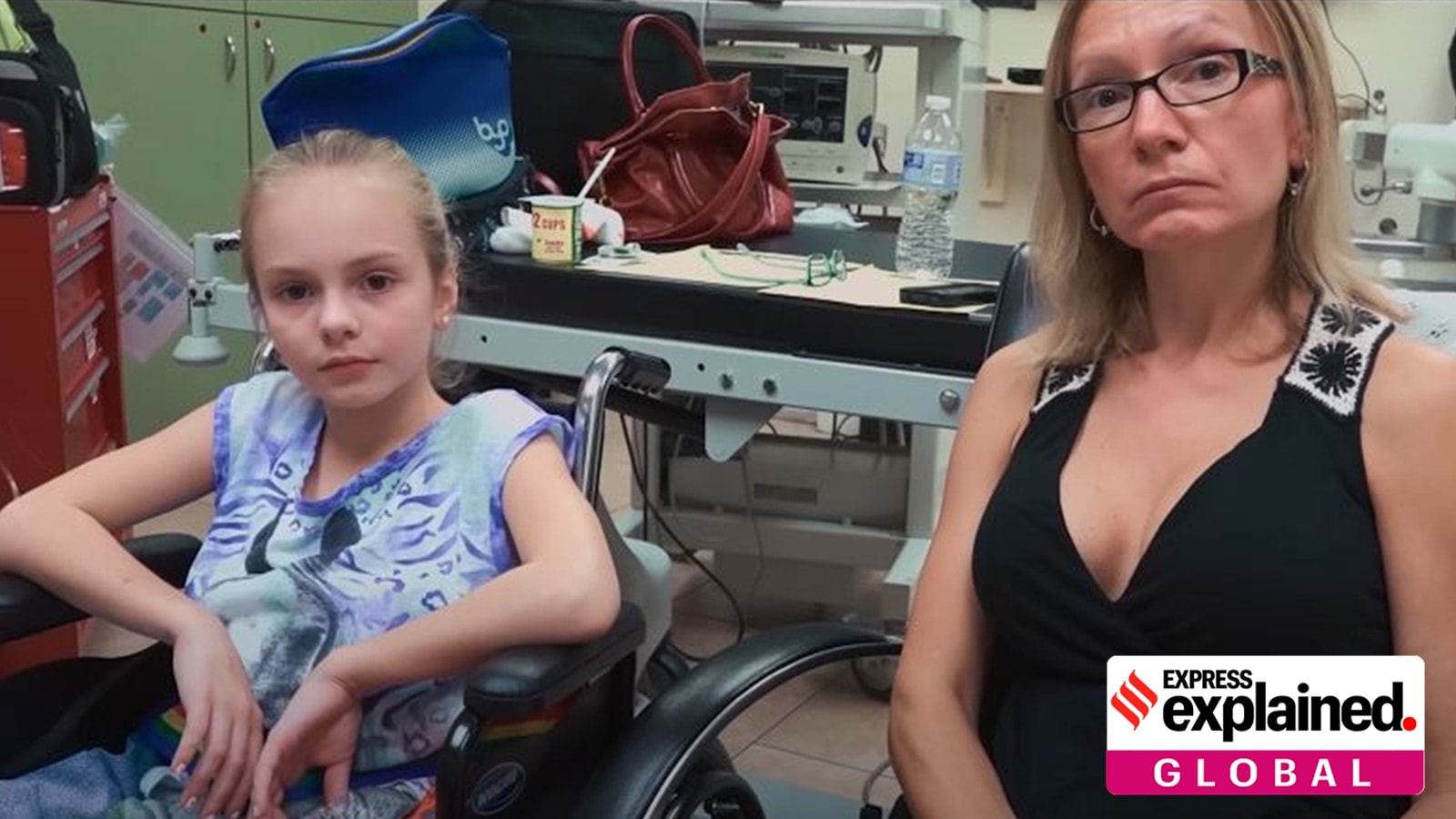 A still from the Netflix documentary 'Take Care of Maya', showing Maya (left) and her mother Beata Kowalski. (YouTube screengrab)
 A jury in Florida, USA, has asked the Johns Hopkins Hospital this month to pay $261 million in damages to a family for, among other things, preventing them from seeing their daughter while she was placed there.
Charges against the hospital include false imprisonment, battery, and medical negligence, The New York Times reported. A few days after the damages were announced, the daughter in question (now 17 years old), Maya Kowalski, levelled additional charges of assault and sexual abuse at the hospital and filed a criminal complaint.
The months-long separation from her daughter was also believed to be the cause of Maya’s mother’s death by suicide, in 2017. The Kowalskis’ story was the subject of a Netflix documentary released earlier this year, titled Take Care of Maya. What is the case about? We explain.
Jack and Beata Kowalski lived in Florida with their two children – Maya and Kyle. In 2015, the 10-year-old Maya began to experience debilitating pain in her body at the smallest of triggers, such as light and showers. It eventually led to her using a wheelchair for mobility, even as a diagnosis of her discomfort remained elusive.
According to a report in The Cut, the name of a local anesthesiologist was then suggested to the family. He had been studying Complex Regional Pain Syndrome (CRPS), a rare condition which often subsides after a few months or years. A 2014 paper from South Korean researchers said that CRPS “is a medical condition whose primary symptom is chronic distressing pain”, involving pain that is localised to a body part (the arm, hand, leg, or foot) or affects multiple parts of the body.
It has been theorised that the disease may involve the central nervous system and the peripheral nervous system. People having the disease are also more likely to have suicidal thoughts. Another theory says it develops after another, usually smaller injury. In Maya’s case, she suffered an asthmatic attack in 2015, a few weeks before she showed symptoms of CRPS.
The anesthesiologist prescribed doses of ketamine, which is a drug known to cause dissociation and is used for medicinal and recreational purposes. However, Maya complained of severe abdominal pain one night in 2016 and was taken to Johns Hopkins All Children’s Hospital.
What was the hospital’s response?
A nurse at the hospital and a pediatric physician were some of the people who were concerned about the idea of administering ketamine to the child before having her undergo routine tests. A social worker, and later a child abuse expert named Sally Smith, were called on to look at the case.
Despite Florida’s Department of Children and Families rejecting the social worker’s report for lack of evidence, Smith was told to continue on the case. Her report on the family and an analysis of Maya’s medical history led her to conclude that the child’s illness was being faked.
She said it was a case of Munchausen syndrome, a mental illness where people lie about their illness. Smith said Beata had displayed the syndrome “by proxy”, projecting it onto her daughter. Beata’s constant arguments with the hospital staff were flagged as a sign of her concerning behaviour, strengthening the idea that she needed to be separated from her daughter.
Smith’s report led to the state government issuing a shelter order, which meant the child was to be separated from the parents. Jack could see her for limited periods while Beata was only allowed restricted access via videocalls and phonecalls. Other relatives and even teachers were denied access to her. Attempts from the family for a legal route of out the situation also failed, as hospital lawyers cited the potential risk of child abuse towards Maya for returning home.
Weeks after this, Beata was found dead at her home. She left a note saying it was because of the suspicions against her and the pain of being separated from Maya. Soon after, in early 2017, Maya was allowed to leave the hospital and go home. Gradually, she was able to walk and regain her health. Subsequently, the family sued not only the hospital, but also a child welfare service company called Suncoast Center Inc. Florida has privatised its services and the contract was awarded to Suncoast in this region of the state.
The Cut’s article suggested that the lack of oversight on such actors allows them to often play an outsized role in the medical system. Additionally, the system has been designed on “multiple levels to aggressively identify child abuse”. Reporting child abuse is mandatory for all citizens and failure to do so results in punishment.