7 min read

Journalism of Courage



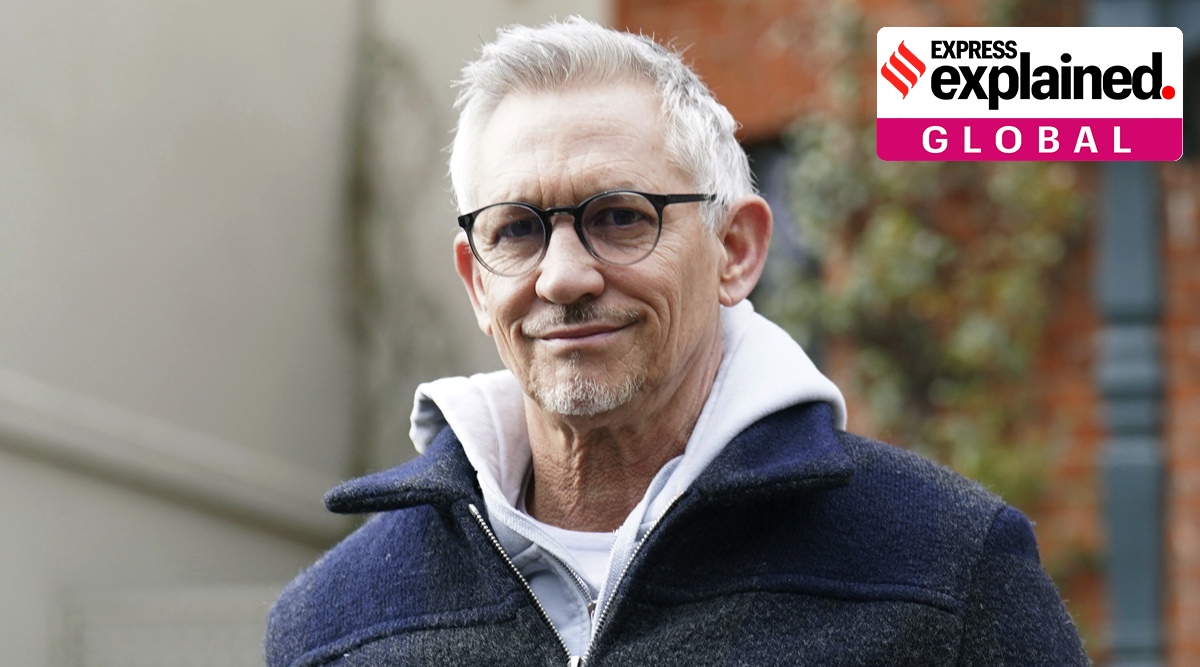 British soccer broadcaster Gary Lineker leaves his home, in London, Monday March 13, 2023. (James Manning/PA via AP)
 The British Broadcasting Corporation (BBC) on March 13 announced that it would reinstate Gary Lineker after suspending him over his criticism, on Twitter, of the United Kingdom government’s new asylum policy.
In a statement, Tim Davie, the director general of the BBC, said “Gary is a valued part of the BBC and I know how much the BBC means to Gary, and I look forward to him presenting our coverage this coming weekend.”
Davie added that the organisation would soon review its social media guidelines, focusing on how it applies to freelancers outside news, such as Lineker. Meanwhile, the star presenter welcomed the announcement of his return on air and said that he supported the review.
The week-long saga unfolded after Lineker, on March 7, tweeted that there wasn’t any huge influx of refugees in Britain and that the Rishi Sunak-led government’s asylum policy was “directed at the most vulnerable people in language that is not dissimilar to that used by Germany in the 30s, and I’m out of order?”
With the tweet causing a massive furore among right-wing politicians, the BBC said it was taking the sports presenter off the air for allegedly breaching the organisation’s impartiality rule.
The suspension of Lineker, who has been hosting the BBC’s hugely popular show ‘Match of the Day’ since 1999, sparked a row both within the organisation and outside as his supporters accused the broadcaster of buckling under political pressure.
The controversy also spotlighted the global debate over whether journalists or sports presenters, not only in the BBC but also in other news outlets, must remain ‘objective’ in the sense of refusing to take a side, especially in the case of what might appear to be obvious and egregious wrongs, such as abuses of human rights.
Section 4 of the BBC’s editorial guidelines deals with impartiality. It announces that “the BBC is committed to achieving due impartiality in all its output”, and that “this commitment is fundamental to our reputation, our values and the trust of audiences.”
The guidelines lay down that “the impartiality must be adequate and appropriate to the output, taking account of the subject and nature of the content, the likely audience expectation and any signposting that may influence that expectation.”
They mention that the BBC must be “inclusive, considering the broad perspective and ensuring that the existence of a range of views is appropriately reflected”.
Importantly, the guidelines also say that there isn’t a requirement for “absolute neutrality” on every issue, or detachment from fundamental democratic principles.
The social media guidance under the ‘Personal Activity’ subsection says that all BBC staff are allowed to engage in social media activities if they wish. However, they must behave appropriately online, and in accordance with the organisation’s editorial values and policies.
Disclaimers “written in (social media) biographies such as ‘my views not the BBC’s’” don’t provide any “defence against personal expressions of opinion on social media that may conflict with BBC guidelines”, the policy specifies.
Individuals “involved in the production or presentation of any output in News or other factual areas that regularly deal with a range of public policy issues have a particular responsibility to avoid damaging the BBC’s impartiality”.
In a 2021 interview with the BBC, Lineker clearly stated that as he is a freelance sports presenter, the guidelines regarding impartiality do not apply to him. He said, “They only apply to people in the news and current affairs…I consider myself a freelancer anyway.”
But only months before the recent controversy surfaced, Davie, as per a report by the BBC, updated the organisation’s social media guidelines. The updated guidelines read: “There are also others who are not journalists or involved in factual programming who nevertheless have an additional responsibility to the BBC because of their profile on the BBC. We expect these individuals to avoid taking sides on party political issues or political controversies, and to take care when addressing public policy matters.”
At the time the update was made, the BBC’s media correspondent David Sillito said, “Some described the new rule as the Lineker clause,” the news outlet reported.
It remains unclear if Lineker accepted the new clause applied to him, or whether the BBC had asked him to follow it in his contract.
According to a report by the Press Gazette, which examined the social media guidelines of several news outlets across the world, when it comes to impartiality, almost every organisation has its own policy.
While Channel 4 vaguely states “You should avoid making statements that could be perceived as taking a position on a political issue of the day,” CNN is more specific: “You are prohibited from sharing opinions or grievances on causes, movements, issues, people, politicians, governments, companies or organisations that we cover.”
The report also mentioned the guidelines of the Associated Press, which said employees are allowed to “root for teams or make general comments about elements of popular culture” – but not to mock other teams. AP sports and entertainment journalists do not even have the former luxury, given they are directed to not “show favour to” anything within their area of coverage.”
Impartiality of journalists and sports presenters has been a subject of intense debate for a long time and it became even more complicated with the advent of social media.
The existence of guidelines notwithstanding, many believe that it’s quite hard, if not impossible, for journalists to remain ‘neutral’ in their reporting and commentary on social media, especially because they are individuals who usually have good knowledge and considered opinions on issues related to their beats.
In 2021, the Reuters Institute released the findings of a study conducted with a series of focus groups and in-depth interviews with politically and ethnically diverse groups of both older and younger people interested in and engaged with the news. The study found that participants “want journalists to focus on facts, objectivity and fairness, and to steer clear of opinions and bias in reporting, leaving them to decide for themselves how they feel about the news”.
However, most participants also noted that remaining impartial wasn’t easy in practice, or for every issue.
When it came to stories about science, natural disasters, and questions of social justice, many participants expected journalists to “show greater empathy and connection in their reporting than perhaps traditional interpretations of impartiality have allowed in the past”, the study found.