Journalism of Courage
 7 min read


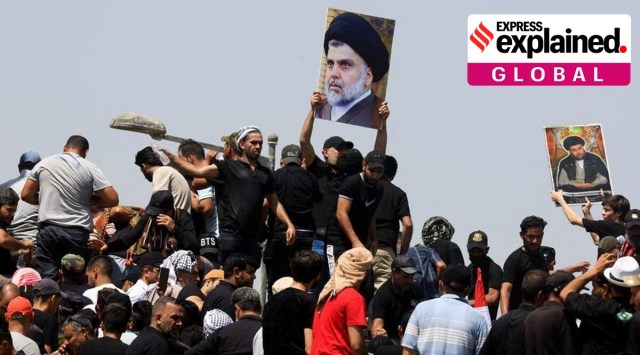 Supporters of Iraqi Shi'ite cleric Moqtada al-Sadr protest against corruption, in Baghdad, Iraq July 30, 2022. REUTERS/Thaier Al-Sudan
At least 23 supporters of the Shia cleric Muqtada al-Sadr were killed and more than 380 injured on Tuesday (August 30), after clashes between protesters and Iraq’s military continued for the second consecutive day in Baghdad.
Sadr’s supporters on Monday stormed the presidential palace in the capital’s fortified Green Zone — which houses government buildings and foreign embassies — after Sadr announced that he was quitting politics following the prolonged political deadlock in Iraq.
The Iraqi parliament in late July was stormed by hundreds of protesters chanting anti-Iranian slogans. The demonstration was against the announcement of the prime ministerial nominee, Mohammed al-Sudani, selected by the Coordination Framework bloc, a coalition led by Iran-backed Shiite parties and their allies.
So, who is Muqtada al-Sadr, the founder of the Sadrist movement and the master of mass mobilisation in the current Iraqi political system?
Muqtada al-Sadr and the Sadrist movement
An Iraqi Shia scholar, militia leader and the founder of the most powerful political faction in the country right now, Muqtada al-Sadr rose to prominence after the overthrow of the Saddam Hussein government.
In July, after his followers occupied parliament, al-Sadr put out a statement on Twitter telling them their message had been received, and “to return safely to your homes”. After which, the protesters began to move out of the Parliament building with the help of security forces. His ability to mobilise and control his large grassroot followers gives him a strong advantage over his political rivals.
Back in 2016, in a similar manner, al-Sadr’s followers stormed the Green Zone and entered the country’s Parliament building demanding political reform. The US worries Iranian dominance in the country because its influence can alienate the Sunni communities. Although al-Sadr right now looks like the only viable option to have in power in Iraq for the US, back in the day, he was enemy number one after the fall of Saddam.
Back in 2004, The Guardian quoted Lieutenant General Ricardo Sanchez saying, “The mission of US forces is to kill or capture Muqtada al-Sadr.” The Sadrist and the affiliated militia (Mahdi army) started a resistance against the US troops following the country’s invasion in 2003. These militias under al-Sadr are now called the “peace companies”.
However, the growing influence of al-Sadr could cause problems for both the US and Iran. He has demanded for the departure of the remaining American troops and has told the Iranian theocracy that he will “not let his country go in its grip”.
The Sadrist movement, which is at its strongest right now in Iraq, was founded by al-Sadr. A nationalist movement by origin, the Sadrist draws support from the poor people of the Shiite community across the country.
News agency Reuters in a report claimed that over the past two years, members of the Sadrist Movement have taken senior jobs within the interior, defence and communications ministries. They have had their picks appointed to state oil, electricity and transport bodies, to state-owned banks and even to Iraq’s central bank, according to more than a dozen government officials and lawmakers.
Iraq’s political turmoil
Iraq has been unable to form a new government nearly 10 months after the last elections, this is the longest period the political order has been in tatters since the US invasion. The deadlock at the centre of Iraqi politics is largely driven by personal vendettas of elites.
The fight, majorly between the Shia leaders al-Sadr and Prime Minister Nouri al-Maliki, is due to the nationalist agenda. Al-Sadr, challenges Iranians authority over Iraq while the former PM derives great help from the country.
Having great religious influence, al-Sadr’s alliance won the most seats in October’s Parliamentary election, but political parties failed to reach the two-thirds majority needed to pick a president. After the negotiations to form the new government fell apart, al-Sadr withdrew his bloc from Parliament and announced he was exiting further talks. Expectations of street protests have prevailed in Baghdad since he quit the talks.
On the other hand, Al-Maliki, al-Sadr’s arch rival heads the Coordination Framework alliance, a group led by Shiite Iran-backed parties. With al-Sadr’s withdrawal, the Framework replaced his resigned MPs from the Iraqi Parliament. Although the move was within the law, it was also provocative, and provided the Framework with the majority needed in Parliament.
Iraq’s former labour and social affairs minister, Mohammed al-Sudani’s announcement as the PM nominee, is seen by al-Sadr loyalists as a figure through whom al-Maliki can exert control. The former PM Al-Maliki wanted the premiership for himself, but audio recordings were leaked in which he purportedly was heard cursing and criticising al-Sadr and even his own Shiite allies.
At the moment, neither the al-Sadr nor the al-Maliki factions can afford to be cut-off from the political process, because both have much to lose. Both the rivals have civil servants installed in Iraq’s institutions, deployed to do their bidding when circumstances require by halting decision-making and creating bureaucratic obstructions.
Iran’s role
The Islamic Republic of Iran shares a 1,599 km-long border with Iraq, which provides the former with a clear added advantage over the war-torn country. After the fall of Hussein, the border helped Iran to send militias to take power and resist the US forces, as the result right now, the country’s top ruling elite are Shiites, fighting among themselves for power.
Iran currently is trying to work behind the scenes, just like Lebanon, to stitch together a fragmented Shiite Muslim elite. The nomination of al-Sudani is evidence of Iranian efforts to bring together the Shiite parties in the alliance. However, the electoral failure of the Iranian-backed parties in the recent elections has marked a dramatic turnaround.
According to a report by the Associated Press, Esmail Ghaani, commander of Iran’s paramilitary Quds Force, has made numerous trips to Baghdad in recent months. The Quds Force is a part of the Iranian Revolutionary Guard, which is answerable only to Supreme Leader Ayatollah Ali Khamenei. Working on the already established network of his predecessor, Qasem Soleimani, Ghanni is trying to help the parties in Iraq to stay united and agree on a PM candidate.