How Oman deal adds heft to India’s West Asia trade strategy amid rising trade curbs in the West
India Oman trade deal: New Delhi’s trade deal with Oman will be its second trade pact in the West Asian region after the UAE, which was signed in 2022. Here's why it matters.
Written by Ravi Dutta Mishra
New Delhi | Updated: December 19, 2025 08:31 AM IST
4 min read
Whatsapp
twitter
Facebook
Reddit
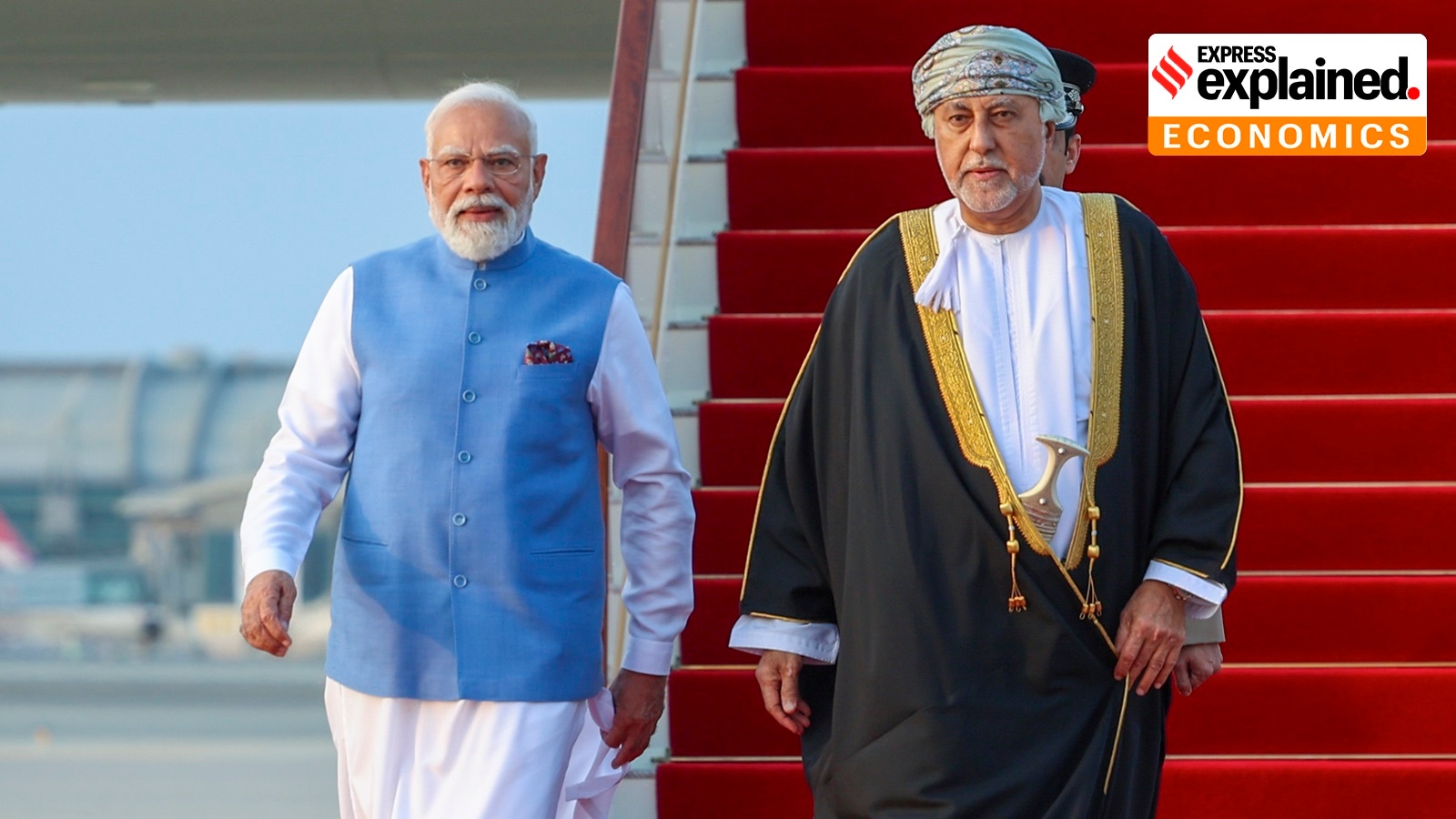
India Oman trade deal: PM Modi with Oman Deputy Prime Minister for Defence Affairs Sayyid Shihab bin Tariq Al Said, right, as he arrives, in Muscat, Oman. (PMO via PTI Photo)
India Oman trade deal news update: Amid increasing trade restrictions in the US due to tariffs and the European Union on account of the carbon tax, India has signed a trade deal with Oman on Thursday (December 18) to expand the footprint for its exports in West Asia. This fits into New Delhi’s strategy of rapidly pushing for more and more free trade agreements (FTAs), thereby securing new markets amid continued uncertainty around the trade deal with the US.
Indian exporters have also been pushing for better market access in the Arab region due to less stringent standards compared with the European Union (EU). This not only raises the cost of compliance for exporters, but also often acts as a non-tariff barrier (NTB). The Oman deal comes even as talks for a trade deal with the Gulf Cooperation Council (GCC) — which comprises Bahrain, Kuwait, Oman, Qatar, Saudi Arabia, the UAE — did not materialise. India will now have a deal with two members of the GCC, namely, Oman and the UAE.
India-Oman trade
While Oman is much less diversified and a much smaller market for India compared with the UAE, its strategic location serves as a hub from where Indian products can find other markets in the region and in Africa. Oman’s total annual imports are around $40 billion, but it imports nearly two-thirds of its machinery goods and is primarily an energy exporter.
India Oman trade. (Graphic by Abhishek Mitra) India-Oman exports and imports. (Graphic by Abhishek Mitra)
Notably, Oman has an FTA with the US that came into effect in 2009. Under the deal, a wide range of products from Oman reaches the US duty-free. Oman’s top exports to the US include industrial supplies, aluminium, fertilisers, jewellery, and oil by-products such as plastics. New Delhi is also looking to boost exports of gems and jewellery, which have faced the most tariff-related stress.
Indian exports, largely consisting of machinery and parts, have doubled in the last five years from $3 billion to $6 billion. New Delhi’s top exports apart from naphtha and petrol included machinery, aircraft, rice, iron and steel articles, beauty and personal care products, and ceramic products.
As Oman has offered zero-duty access on 98 per cent of its tariff lines, the deal is expected to improve competitiveness for Indian industrial exports. To be sure, sustained growth will depend on quality upgrades and product differentiation in Oman’s relatively small market, experts said.
Oman largely exports crude oil, liquefied natural gas and fertilisers, chemical inputs such as methyl alcohol and anhydrous ammonia, along with petroleum coke. These items are critical for India’s energy sector and already enjoy low tariffs under India’s other FTAs.
Story continues below this ad
Government officials said India could gain the most in the service sector from this FTA. Oman’s substantial global services imports amount to $12.52 billion, with the share of India’s exports in Oman’s global imports basket at 5.31 per cent. According to the agreement, Oman has extended substantial commitments across a broad spectrum of sectors, including computer-related services, business and professional services, audio-visual services, research and development, education and health services.
“A major highlight of the CEPA is the enhanced mobility framework for Indian professionals. For the first time, Oman has offered wide-ranging commitments under Mode 4, including a notable increase in the quota for Intra-Corporate Transferees from 20 per cent to 50 per cent, together with a longer permitted duration of stay for Contractual Service Suppliers — extended from the existing 90 days to two years, with the possibility of a further two-year extension,” the Commerce Ministry said.
Ravi Dutta Mishra is a Principal Correspondent with The Indian Express, specializing in economic policy and financial regulations. With over five years of experience in business journalism, he provides critical coverage of the frameworks that govern India's commercial landscape.
Expertise & Focus Areas: Mishra’s reporting concentrates on the intersection of government policy and market operations. His core beats include:
Trade & Commerce: Analysis of India's import-export trends, trade agreements, and commercial policies.
Banking & Finance: Covering regulatory changes and policy decisions affecting the banking sector.
Professional Experience: Prior to joining The Indian Express, Mishra built a robust portfolio working with some of India's leading financial news organizations. His background includes tenures at:
Mint
CNBC-TV18
This diverse experience across both print and broadcast media has equipped him with a holistic understanding of financial storytelling and news cycles.
Find all stories by Ravi Dutta Mishra here ... Read More


 4 min read



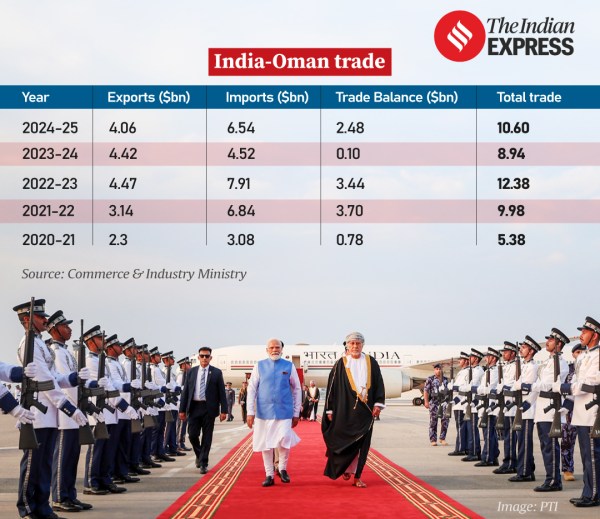 India Oman trade. (Graphic by Abhishek Mitra)
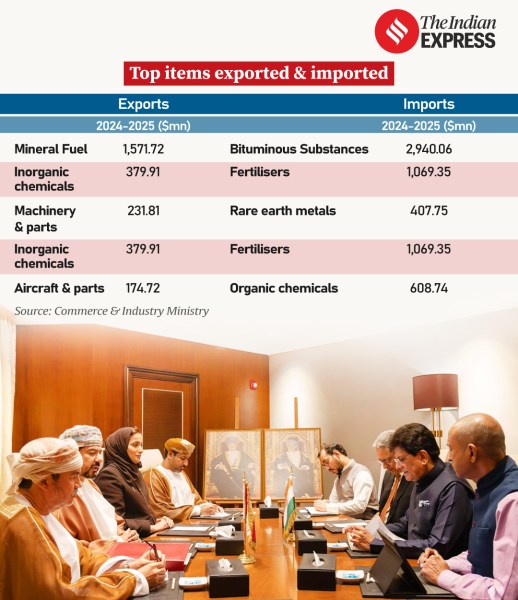 India-Oman exports and imports. (Graphic by Abhishek Mitra)