© The Indian Express Pvt Ltd
 7 min read


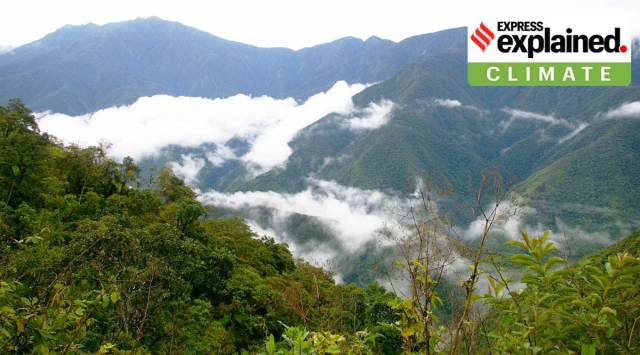 Bolivia granted all nature rights equal to that of humans in 2011, establishing the Law of the Rights of Mother Earth, which redefined Mother Earth as “an indivisible community of all living systems and living organisms, interrelated, interdependent and complementary, which share a common destiny.” (Photo via Wikimedia Commons)
With novel approaches being put forth for tackling the climate crisis in the last few years, the concept of granting legal rights to natural entities has been discussed in a recent report.
Consultancy group Jigsaw Foresight and The Law Society of England and Wales, in their report published in August 2022 titled ‘Law in the Emerging Bio Age’, have proposed giving legal rights to plants, animals, and non-living entities is crucial to building meaningful human-environment relationships in the future. Experts have said changes in legal frameworks could help.
The report focused on rapid developments in biotechnology and the need to understand its ethical consequences on humanity’s relationship with the environment.
As per the report, the increased integration of biotechnology in human life will bring in the bio age. Integration of life sciences with modern technology through the production of genetically modified organisms (GMOs), engineering of genes to enhance disease resistance, gene editing, and more, indicate that biotechnology is most likely to pervade our lives in the future.
It will mark the end of the digital Information Age, says the report, and this era will require legal intervention to hold researchers accountable for the impact of their work on the environment.
This is where the question of nature as a “juristic person” or an entity recognized in law as a person, which otherwise is not, comes in. As the Law Society report argues, granting legal rights and protection to non-human systems – flora, fauna, rivers, ecosystems and landscapes – would recalibrate human-environment relationships and bring ethical conduct to the field.
At a time when the world is battling climate change and exploitation of natural resources, countries like Ecuador, Bolivia, and New Zealand have taken some significant steps in bringing laws into the natural world, for a variety of reasons.
The South American country of Ecuador, in 2008, approved a Constitution that grants tropical forests, islands, rivers and air, legal rights to “exist, flourish and evolve”.
Ecuador, with a long history of its resources being exploited by corporations with the help of favourable laws, attempted to level the playing field. The country’s courts now recognize the rights of “Pacha Mama” or nature, to maintain and regenerate its cycles, structure, functions and evolutionary processes, as highlighted by Article 71 of the Ecuadorian Constitution.
More recently, in April 2022 Ecuador became the first country to grant legal rights to individual wild animals. The judgment states: “wild species and their individuals have the right not to be hunted, fished, captured, collected, extracted, kept, retained, trafficked, marketed or exchanged.” The ruling came after a woolly monkey named Estrellita died suffering a sudden cardio-respiratory arrest. One-month-old Estrellita was brought illegally from its natural habitat and kept as a pet for 18 years, after which the animal was shifted to a zoo where it died.
Bolivia granted all nature rights equal to that of humans in 2011. It established the Law of the Rights of Mother Earth, which redefined Mother Earth as “an indivisible community of all living systems and living organisms, interrelated, interdependent and complementary, which share a common destiny.” It provided legal status to Mother Earth and all its components, which includes human beings, entitling them to inherent rights recognized by law.
This includes: the right to life and to exist; the right to continue vital cycles and processes free from human alteration; the right to pure water and clean air; the right to balance; and the right to pollution-free living.
The Maori people had been fighting for the river to be recognized as a living entity for about 160 years. The New Zealand parliament, on March 15, 2017, passed the Whanganui River Claims Settlement Bill, which granted legal personhood to river Whanganui and its surrounding ecosystem, in North Island. The river, revered by the Maori people, is represented in court proceedings by iwi – one of the members of the Maori tribe – and one from the Crown.
Article 51-A (g) of the Constitution of India lays down that it is the fundamental duty of every citizen to protect wildlife and have compassion for all living creatures. However, such duties are not enforceable by law.
The Uttarakhand High Court, on March 20, 2017, granted the river Ganga and its longest tributary Yamuna the legal right to be protected and not be harmed. The rivers were to be represented by Uttarakhand’s chief secretary, advocate general, and the chief of the National Mission for Clean Ganga, a government body that oversees the conservation of river Ganga. While both rivers are held sacred by Hindus, they are also highly polluted.
Environmental activists said the step was not enough to protect the rivers, given their current state. The Supreme Court stayed the judgement a few months later after the state government raised several legal and administrative issues and said it was unsustainable.
While other legal acts such as the Wildlife Protection Act of 1972 and the Cruelty to Animals Act of 1960 exist, they do not recognize animals as individual living entities.
According to an article on such rights in The Guardian, another issue is that nature may suffer the same hurdles that ordinary cases of law do. “In 2011 a provincial court ruled in favour of the Vilcabamba River against damaging road construction. The river won in court but the developer didn’t actually take the action required to remediate the pollution. Ecuador’s courts have since held more than three dozen lawsuits in the name of nature. Many have been successful but verdicts have not always been enforced on the ground,” it said.
A compelling shift from competition to cooperation between humans and living systems for future survival is currently an underexplored area, with the question of how India is preparing for the “bio age” still remaining.