4 min read
© The Indian Express Pvt Ltd



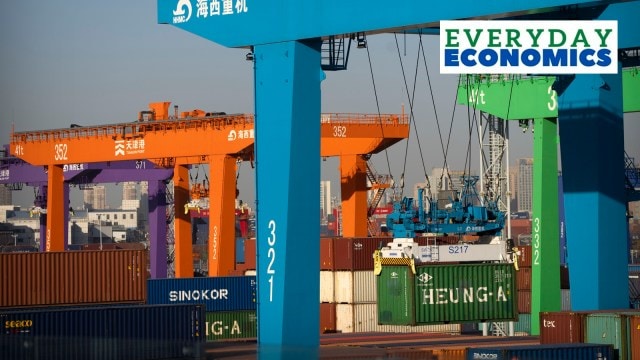 Additionally, Moody’s retained China’s A1 long-term local and foreign-currency issuer ratings on Tuesday. (AP Photo/Mark Schiefelbein, File)
Ratings agency Moody’s cut its outlook on China’s credit ratings, from ‘stable’ to ‘negative’, on December 5. Here’s why, and what it means.
The cut has to do with some issues that the economy has been facing of late, such as a slowdown in manufacturing that was worsened by the Covid-19 pandemic. To deal with the spread of the virus, China employed a ‘Zero-Covid’ policy, under which any reporting of cases would result in total lockdowns. This impacted economic activity.
Moody’s said, “The outlook change also reflects the increased risks related to structurally and persistently lower medium-term economic growth and the ongoing downsizing of the property sector.”
China’s property sector has been facing major funding constraints, coming after years of boom because of high demand for homes. With lowered demand, real estate giants such as Country Garden and Evergrande have recently defaulted on their loans. There are worries about how this could affect the rest of the economy.
Also, as the government may have to step in and spend billions of dollars to actively assist such sectors, concerns have been raised about the government’s finances.
Moody’s expects the country’s annual GDP growth to slow to 4.0% in 2024 and 2025, and to an average of 3.8% from 2026 to 2030.
Credit rating agencies rate the financials and business models of companies, as well as economic management by governments. They are based on the analysis of official and other data, and interactions with government officials, business leaders, and economists.
The long-term ratings are opinions about the relative credit risk of financial obligations, with an original maturity of one year or more. They address the possibility that a financial obligation will not be honoured as promised – indicating both the likelihood of default and any financial loss suffered in the event of default.
Agencies like Moody’s, Standard and Poor’s and Fitch, then rate financial instruments – such as bonds, debentures, commercial papers, deposits, and other debt offerings – issued by companies or governments. These help investors make informed decisions.
A better rating from such agencies helps companies and governments raise funds at a cheaper rate. Upgrading or downgrading the ratings of a financial instrument is a continuous process, based on the performance and prospects of a company or country.
In the case of Moody’s, its highest rating on long-term and short-term borrowings is ‘Aaa’, indicating the highest quality and minimal risk instruments. The scale goes down to Aa1, Aa2… A1, A2, Baa1, Baa2… Caa1, Caa2 and C. In the case of long-term borrowings (meaning for more than one year), C refers to the “lowest-rated class of bonds and are typically in default, with little prospect for recovery of principal and interest”.
Additionally, on Tuesday, Moody’s retained China’s A1 long-term local and foreign-currency issuer ratings. However, the lowering of the outlook means there could be a downgrade in the future. The last downgrade of the Chinese economy happened in 2017, when it was lowered from Aa3 to A1.
China’s Finance Ministry said it is “disappointed by the downgraded outlook on China’s credit rating”, state media organisation CGTN reported. It cited a ministry statement, which said: “Moody’s concerns about China’s economic growth prospects, fiscal sustainability and other aspects are unnecessary.”
Notably, last month Moody’s outlook on the US credit rating was also cut from “stable” to “negative”. This was on account of the threat posed by rising interest rates; a mounting debt burden; and a polarised Congress that has been failing to agree on ways to tackle America’s budget deficit. But its AAA rating was retained.
(With agency inputs)