2 min read
© The Indian Express Pvt Ltd



 Data revealed that men predominate in more than 85% of expert groups and task forces; women predominate in just 11.5%. (File)
An analysis of available data has found that men predominate in more than 85% of Covid-19 decision-making and key advisory bodies around the world. The analysis is published in BMJ Global Health.
The authors collected information up to June 2020 on the membership of Covid-19 global and national decision-making and expert bodies for 193 UN member states. Most of the information about membership, leadership, and areas of expertise was not easily accessible or publicly available.
The final analysis included 115 expert and decision-making Covid-19 task forces from 87 countries. This was collected through a crowdsourcing effort, targeted “grey literature” searches, and outreach to national governments or World Health Organization (WHO) country offices.
The data revealed that men predominate in more than 85% of expert groups and task forces; women predominate in just 11.5%, with gender parity in a mere 3.5%. Again, 81% (65) were headed by men at the time of the search.
📣 Express Explained is now on Telegram. Click here to join our channel (@ieexplained) and stay updated with the latest
“Lack of representation is one symptom of a broken system where governance is not inclusive of gender, geography, sexual orientation, race, socio-economic status or disciplines within and beyond health — ultimately excluding those who offer unique perspectives and expertise,” the authors write.
They recommend: “Reaching a critical mass of women in leadership — even as result of intentional selection or quotas – benefits governance processes through the disruption of groupthink, the introduction of novel viewpoints, a higher quality of monitoring and management, more effective risk management and robust deliberation.”
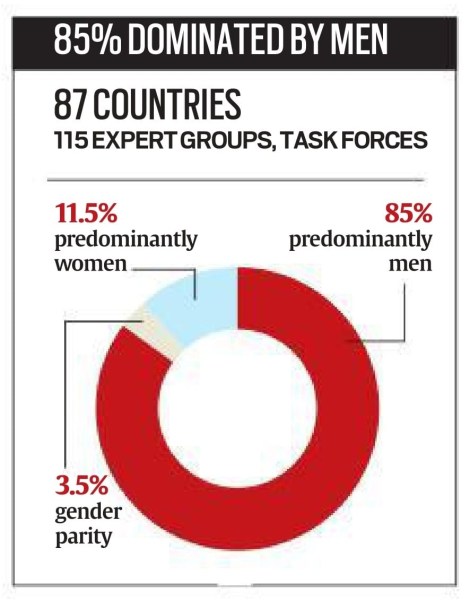 85% dominated by men
The authors have noted that countries with women at the helm have been associated with particularly effective Covid-19 responses, fewer cases, and lower death rates from the disease.
“Men dominating leadership positions in global health has long been the default mode of governing… This not only reinforces inequitable power structures but undermines an effective Covid-19 response — ultimately costing lives,” they conclude.