3 min read


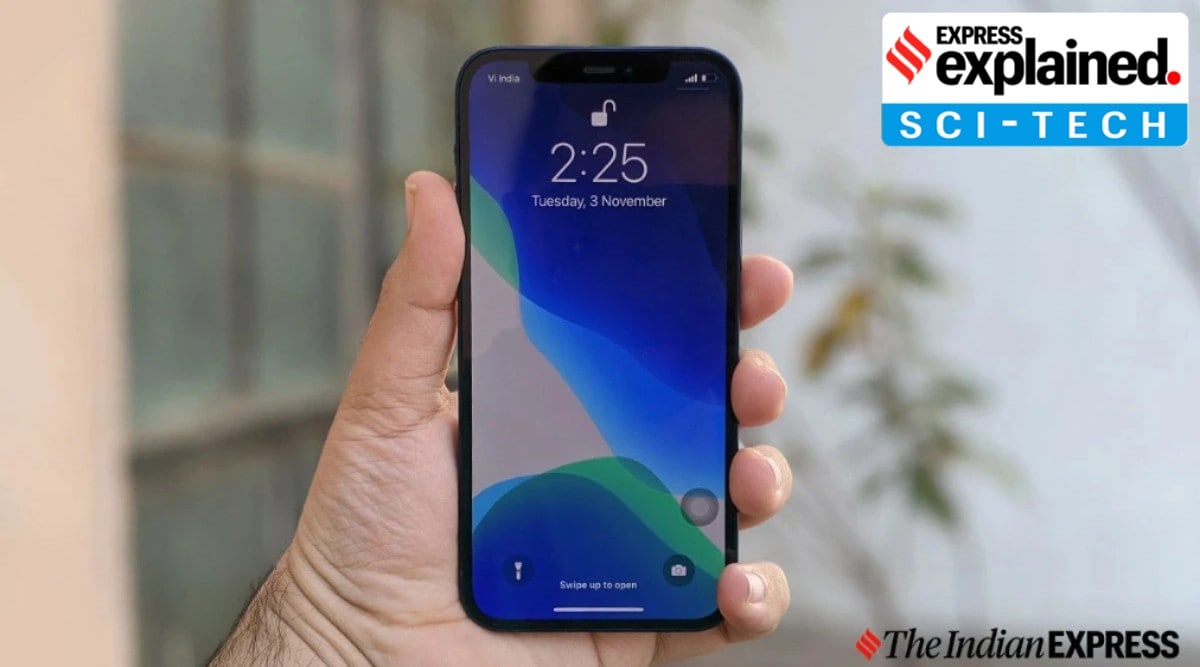 Users of 5G-enabled iPhones who download the iOS 16 Beta software update will be able to use the service on Airtel and Jio’s network. (Express photo)
Apple will roll out 5G support for its smartphones in India starting next week as part of a beta software program, allowing iPhone users on the networks of Airtel and Reliance Jio to access the high-speed service in parts of the country where 5G is currently supported. The company offered the information to the government during a meeting with the Department of Telecommunications (DoT) Wednesday.
Users of 5G-enabled iPhones who download the iOS 16 Beta software update will be able to use the service on Airtel and Jio’s network. To be sure, the option will only be available to people who have 5G-enabled iPhone 14, iPhone 13, iPhone 12 and iPhone SE (3rd generation) models and is enrolled in the iOS 16 Beta Software Program.
The beta program also lets users try out pre-released software and experience the latest features before the software becomes more widely available. Users will be able to provide feedback to Apple on the quality and usability of the software. To access the Apple Beta Software Program, users will have to enroll their iPhone for the program and install the updates as they are rolled out.
The company had earlier said it would release software updates for 5G support in India by December. But with the beta program, users will be able to use 5G on iPhones much before that.
Currently, a number of 5G-enabled smartphones sold in the country don’t support the bands launched in India. Last month, the IT Ministry had also called a meeting with Apple, Samsung and other smartphone makers to start supporting 5G on their devices. According to information on Airtel’s website, while some of Samsung’s entry-level smartphones have been updated to support Airtel 5G, several of its mid-tier to flagship phones such as the S20 fan edition and Galaxy Z fold 2 do not currently support the network.
Samsung had last month said its phones will start supporting 5G from mid-November. “In India, Samsung has the widest portfolio of 5G devices. We are working closely with our operator partners and are committed to rolling out OTA updates across all our 5G devices by mid-November 2022, enabling Indian consumers to experience 5G seamlessly,” a Samsung India spokesperson had said at the time.
5G services were officially launched in the country by Prime Minister Narendra Modi on October 1, where he hailed 5G as “a knock on the doors of a new era” and the “beginning of an infinite sky of opportunities”. The PM had also said that 5G technology will revamp the entire architecture of the Internet.
For consumers, 5G will provide superior Internet speed and low latency. At its peak, Internet speeds on 5G could touch 10 Gbps, compared to the 100 Mbps peak of 4G. Similarly, latency under 4G is between 10-100 ms (millisecond), whereas it is expected to be under 1 ms on 5G. Latency is the time it takes for a device to send packets of data and get a response.