This is an archive article published on September 21, 2022
From Junior Bachchan to Gajodhar bhaiya, how Raju Srivastava carved out his own style of comedy
With the demise of Raju Srivastava on Wednesday morning, India has lost an artist with a mass connect with his natural flair and humour.
Written by Alaka Sahani
Mumbai | Updated: September 21, 2022 04:01 PM IST
5 min read
Whatsapp
twitter
Facebook
Reddit
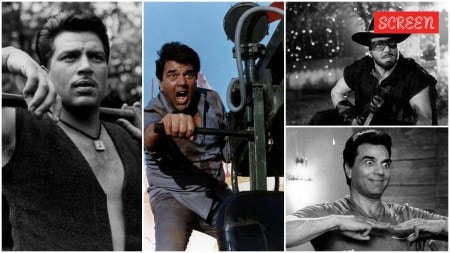
Raju Srivastava breathed his last on Wednesday in Delhi. (Photo: Express Archive)
Much before stand-up comedy gained prominence in popular culture, comedian Raju Srivastava enjoyed public attention with his mimicry of superstar Amitabh Bachchan. As the scope of stand-up comedy and popularity grew, Srivastava created a series of everyday characters and found humour in everyday life to regale his audience. Over the years, he broadened his repertoire of observational comedy to include gags about politicians and other celebrities. This established him as one of the top comedians in India.
With the demise of Srivastava on Wednesday morning, India has lost an artist with a mass connect with his natural flair and humour. During a visit to Delhi to meet his relatives, Srivastava suffered a heart attack on August 10 while working out in a gym. Following this, Srivastava, who is the chairman of Uttar Pradesh Film Board, was admitted to All India Institute of Medical Sciences (AIIMS), New Delhi. Srivastava had a history of heart ailments and earlier had stents inserted. The 58-year-old comedian is survived by his wife Shikha Srivastava and his children Antara and Ayushman.
It was his father Ramesh Chandra Srivastava, a poet known by his pen name ‘Balai Kaka’, who introduced the comedian-turned-politician, to the art of mimicry. During his growing up years in Kanpur, the comedian used to accompany his father to social events where the latter used to present his gags.
Cinema had a major influence on the 1963-born Satya Prakash Srivastava, popularly known by his stage and screen name ‘Raju’. The blockbuster movie Sholay (1975), and Amitabh Bachchan, who essays the character of brooding Jai in it, left a lasting impression on him. During his growing up years, Srivastava entertained people by delivering Bachchan’s dialogues and songs from his popular movies such as Deewar (1975) and Laawaris (1981). In fact, during a 2012 interview with Rajya Sabha TV, he recounted how he earned his first pay. “I earned Rs 50 for entertaining the crowd with Deewar’s dialogues at a stage show. After that, I regularly performed at shows in Kanpur before I moved to Mumbai in 2012,” Srivastava recalled.
After earning his living as well as the moniker ‘Junior Bachchan’, Srivastava in the late 80s thought of carving out his own individuality and style as an artist. That’s when he created characters of common man of Uttar Pradesh and comic situations related to their reaction to watching Sholay. Soon, he developed a range of gags impersonating people from different walks of life. However, the mainstay of his comedy remained spin-offs of Sholay and its characters. He also performed comic acts that mimicked many other popular stars such as Anil Kapoor and Shah Rukh Khan.
Even though he had acted in movies such as Maine Pyar Kiya (1989), Baazigar (1993) and Aamdani Atthanni Kharcha Rupaiya (2001), he became a household name with The Great Indian Laughter Challenge on Star One. His character of Gajodhar Bhaiya, who often shared his interpretation of movies and other experiences with fellow villagers, became widely popular. “Earlier, stand-up comedy was not taken seriously. It was mostly treated as a side gig. After Laughter Challenge it got its due recognition and became very popular,” he says in the Rajya Sabha TV interview. The actor-comedian also took part in several television shows such Bigg Boss, Comedy Ka Maha Muqabala, Nach Baliye and Mazaak Mazaak Mein.
Srivastava took a plunge as a politician when the Samajwadi Party fielded Srivastava as its Lok Sabha candidate from Kanpur in March 2014. Soon after, he returned the ticket on the ground that he was not getting enough support from the party’s local units. A few days later, he joined Bhartiya Janta Party. He was part of several government campaigns. In 2019, he was appointed as chairman of Uttar Pradesh Film Development Council.
Story continues below this ad
In an earlier interview with The Indian Express, Raju had shared his formula of being a successful comedian. He had said, “It is very important to connect to the masses. Comedy is not about narrating silly jokes; it is more about humouring life’s situations, in a subtle way by not hurting anyone’s sentiments.” While most of his gags remained true to this belief and remain entertaining, some of them come across as inappropriate and dated, today. A case in point, some of his views while commenting on Ranveer Singh’s nude photographs are problematic, especially when he comments on the way certain female celebrities dress up.
Alaka Sahani is a prominent film critic and journalist based in Mumbai. With a career spanning over two decades, she has established herself as one of India’s most authoritative voices in cinematic journalism, known for an analytical approach and insights that transcend the standard cycle of celebrity journalism.
Expertise & Accolades
In 2014, Alaka was honoured with the National Film Award for Best Film Critic. Her Swarna Kamal (Golden Lotus) citation specifically lauded her for "highlighting facets of cinema beyond glamour and gossip" and for her ability to delve into the contemporary relevance of iconic filmmakers. Her commitment to journalistic integrity was further recognised in 2019 with a Special Mention at the Red Ink Awards for her investigative feature, 'In Search of a Star'. Her article titled 'People Like Us', published in The Indian Express on March 27, 2022, was shortlisted for Red Ink Award, 2023.
Global Industry Leadership
Alaka’s expertise is sought after by major international and domestic film bodies:
Golden Globes: In 2025, she joined the international voting body for the 83rd Annual Golden Globes.
National Film Awards: She served on the prestigious jury for the 68th National Film Awards, helping select the finest contributions to Indian cinema.
Global Perspective: Her work consistently bridges the gap between commercial Bollywood A-listers and emerging independent talents, offering nuanced insights into both Indian regional cinema and international film trends.
Focus & Vision
Beyond the screen, Alaka is a dedicated observer of Mumbai’s vibrant theatre scene and the historical evolution of the moving image. Through her long-form articles and deep-dive interviews, she continues to challenge "tried-and-tested" templates, providing readers with a deep understanding of the artistic and systemic workings of the Indian and global film industry. ... Read More


 5 min read