


Click here to follow Screen Digital on YouTube and stay updated with the latest from the world of cinema.
Premium
This is an archive article published on February 13, 2015
A Cultural Makeover
Single screens like Liberty and Deepak Talkies are exploring new concepts to make their theatres commercially viable.
Mumbai | Updated: February 13, 2015 09:53 AM IST 9 min read
9 min read


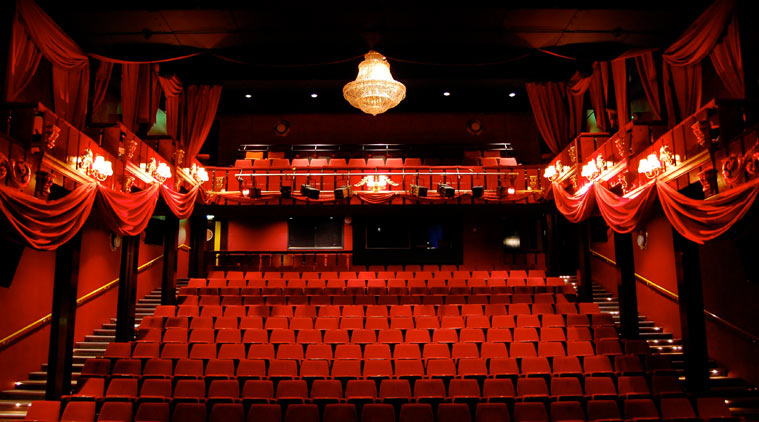 Keeping pace with the voracious appetite of a changing breed of audience, iconic single screens like Liberty and Deepak Talkies are exploring new concepts to make their theatres commercially viable.
Keeping pace with the voracious appetite of a changing breed of audience, iconic single screens like Liberty and Deepak Talkies are exploring new concepts to make their theatres commercially viable.
Not so long ago, the regal precincts of Liberty theatre that was established on March 21, 1949 was once again abuzz with activity. After closing down in October 2012, to make a few changes to the interiors, the theatre re-opened in February 2013 as a hub for cultural activities .
High-heeled, coiffured ladies and men in suits stepped out of their cars to enjoy an evening at the theatre. A far cry from the usual milling crowds that flocked there, this new breed of audience would in the future become an integral part of the theatre, the connoisseurs of good music, culture and the art. For the 19th century Liberty theatre, it was in a way, a new beginning.
Though the journey was fraught with risks, its owner Nazir Hoosein, after carefully taking cognisance of the falling footfalls and the high cost of maintenance that a theatre like Liberty involved, decided to veer off and cater to a different audience. This grand theatre with its ornate architecture and red carpeted interiors soon became a place for alternate entertainment. Hoosein, however, does not attribute the failing fortunes of single screens to the multiplex.
“The market is wide, but I don’t think that the multiplex is the reason for single screen theatres to shut shop, but yes the survival of single screen theatres does pose a question mark,” states Hoosein. Unlike other theatres like Deepak Talkies, Liberty has completely stopped screening the regular commercial pot-boilers. With the Cinema License Act giving the theatre a wide berth to introduce different entertainment, Hoosein instead encouraged cultural groups, stand-up comedians, classical music concerts, exhibitions, film festivals and turned it as he puts it, “into a concert hall.”
The groups who perform take care of the entertainment tax, the performance license etc. Osianama, a cultural group headed by Neville Tulli launched its Cinefan Club with a wide range of activities that include screening 50 films from India and foreign films in its first year. It shall also introduce nine membership-driven cultural clubs under its umbrella which will in- clude Vintage & Classic Automobiles; Cinefan; Antiquities & Fine Arts Appreciation; Books & Poetry; Photography; Architectural Heritage & Preservation; All Creatures Great & Small; Design, Craft & Popular Cultures & Sporting Heritage.
Later, on February 22, The Film Heritage and Restoration School shall host a week long programme at the theatre. “Earlier, theatres like Eros and Regal were our competitors, but now it is the NCPA (National Centre for Performing Arts). We started out by screening Bandit Queen, a silent film featuring Fearless Nadia. Since it is a silent film, we enhanced the movie watching experience by having a live orchestra band with 19 instruments on the stage. Initially, I was quite apprehensive about this experiment as I was not sure whether the auditorium would be suited for such an experiment, but the response that I received was phenomenal,” says Hoosein.
The success of their first outing thus led them to plunge head-on into this economically viable prospect. Though the theatre incurred losses earlier too, “But now we are losing less money. This is because the kind of viewers who come to my theatre have changed. I do not have to fret about seats being torn or the wood being gouged. Since the decor inside is made of rare Canadian cedar and Burmese teak wood, I cannot replace the damaged furniture.”
Story continues below this ad
Liberty has also become economically viable for groups that want to stage one act plays. Producer-actor Tathagata Chowdhury of Comedy Kitchen who performed a year and a half ago believes that since it is a theatre meant to screen films, the stage area becomes very constricted and does not allow free movement of space. “Besides for a live performance, we had to bring the lighting and sound equipment as the available facility did not suffice our requirement. Since, it is not a proscenium theatre, we had difficulty moving the props.
When we performed, we had paid ` 25,000 as rent, which is quite low as compared to say St. Andrews where the rent is ` 50,000. If the producer is willing to experiment then it is a fantastic place, otherwise it will take some time to catch up as a cultural hub as I don’t think it is a fantastic place to stage plays,” opines Chowdhury, who feels that it is an experiment that needs to continue and be encouraged.
While other single screen theatre owners are treading a cautious path, Eros theatre in South Mumbai plans to earn money by setting up a food court and other commercial activities in its premise. “With attendance as low as 30-40 per cent, it has become increasingly difficult for us to sustain ourselves. The 45 per cent entertainment tax is another burden. Multiplexes do not have to worry about this as they have been exempted for five years and from the seventh year onwards they need to pay only 10 per cent tax. Our monthly air condition bill comes upto ` 6 lakh.
In the near future, owners are thinking of doing different things besides screening films,” reveals Murlidharan, the manager of Eros. Saddled with the Cinema License that includes a wide repertoire of activities within the entertainment space, the owners are however not at free to pull the structure down. “We are married to the theatre for a life time,” states the young owner of Deepak Talkies, Punit Shah. This quaint little theatre, nestled in the bylanes of Lower Parel in Mumbai, is however fast becoming a cultural hub, showcasing old Indian and international classics.
Story continues below this ad
The place has gone in for a complete makeover and has not only acquired a new avatar, but has rechristened itself as Matterden CFC, explains Pranav Ashar, the founder of Enlighten Film Club who is quite emphatic that it should be called by its new name. “Besides films that are screened, we also have cine-plays followed by an interaction of the audience and theatre artistes.
There are short film-making competitions too. So we are now no longer a film club, but a theatre in itself with a new identity. We function as a team, that also includes Punit Shah, the owner. Our aim is to cull out great content for the audience. We look for a lot of programmers and content that is in the alternate space and decide on a monthly basis, the kind of content that needs to be screened. We also provide a platform for the screening of exclusive independent films apart from classics and international films and plays,” says Ashar. Shah further elaborates, “We have both formed the brand called Matterden CFC which is India’s first film centre.
One dedicated show in the 7-8 pm slot is devoted completely to alternate content. We are trying to take this movement forward with a lot of international cinema, world cinema, Indian classic art, contemporary arts, live performances, etc. Our main focus shall revolve around films and we want to turn it into a film centre which will include a library, book store, a cafeteria; more on the lines of Prithvi theatre. Recently, we screened Kalia Mardan, a 1919 film—these are the gems that we want the aam junta to come and see.”
So do we see other owners of single screens following in their footsteps? Shah who is the youngest member and the Chairperson of the Cinema Owners Association feels that, “It is more of a generation shift and the audiences are appreciating quality content. It has become very difficult for single screen theaters to survive. The number of single screens have depleted and they are further diminishing because of the losses.
Story continues below this ad
Besides, the government has completely neglected this sector. Only Marathi films are exempted from taxation and
even then we are not allowed to charge more than Kalia Mardaan `100. So in order to survive, the only recourse then lies in changing tracks. For instance, since this is Oscar time, we plan to screen Oscar films.” Despite facing obstacles, both Hoosein and Shah look at their enterprise as an experiment that is here to stay. “Earlier we were losing money, but now we are losing less money. We are happy with our decision and have no regrets.
We are growing, but I wish we would grow faster,” says Hoosein. The economic criteria not withstanding, it is as Shah succinctly puts it, “Although it is not an economically viable project at present, we are not here only for money, but are passionate about what we are doing.”
Advertisement
Loading Taboola...


More Entertainment




Advertisement
PHOTOS

PHOTOS





Top Stories






Must Read







Advertisement
- 01
- 02
- 03
- 04
- 05
Advertisement
