


Click here to follow Screen Digital on YouTube and stay updated with the latest from the world of cinema.
© IE Online Media Services Pvt Ltd
Tags:


Regardless of his recent missteps, filmmaker Ram Gopal Varma has earned himself a free pass for life with his early work. Audiences will instantly forgive the sleazy, sloppy, and nonsensical stuff that he’s been churning out the second he delivers something that captures even half the verve of Satya. But in addition to being an eccentric who operates on his own terms, Ramu is also a keen cultural commentator. And something that he said recently hits home when you watch Marco, the most successful Malayalam-language film of the last couple of months.
In an interview with Pinkvilla, Ramu said that directors in the South aren’t concerned about intellectualising their films. “South directors only look at scenes, they don’t care about story. A big actor once told me, ‘I never listen to the story, my only question is, ‘Mera entry kya hai?’” he said. You’d imagine that Ramu was talking about the unbearable string of copycats inspired by SS Rajamouli’s films — films like Salaar: Part 1 – Ceasefire, Kalki 2898 AD, and even Kantara. Who knew that his derision was also directed at the otherwise acclaimed Malayalam industry? But Marco fits the bill; instead of following in the footsteps of Malayalam mavericks, it appears to have learnt all the wrong lessons from the more popular sort of South Indian filmmaking.

Also read – Rifle Club: A mind-blowing metaphor for the Malayalam industry’s emergence as India’s boldest creative hub
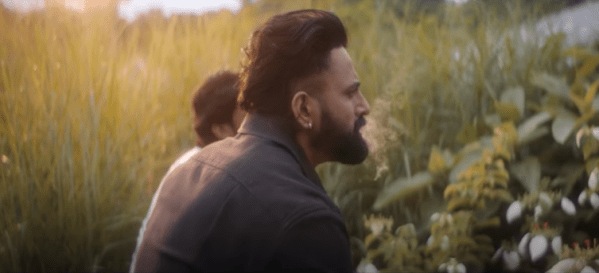
What’s striking about Marco isn’t its provocative violence — ideas are always more potent than empty visuals — but how dramatically inert it is. The most deplorable scene in the highly controversial A Serbian Film worked only because of its underlying political commentary. In Marco, the murder of a pregnant woman and the violence inflicted upon her baby is reprehensible, but that’s about it. The movie has nothing to say, either about violence or our response to it. It’s cruelty for cruelty’s sake — blind carnage of the most careless kind. It would, however, be unfair to complain about this. Marco doesn’t aim for depth, nor does it claim to be high art. But pointing out the glaring flaws in its storytelling is fair game.
Perhaps the most ludicrous creative decision that writer-director Haneef Adeni makes in Marco is to keep the protagonist not one, but three steps behind the audience. It robs the film of all stakes. For instance, when an innocent blind man named Victor — he’s Marco’s brother — is killed for having ‘witnessed’ a murder, we are told immediately who the culprits are. And as if this weren’t enough, we are also given explanations for why they killed Victor. So, when Marco vows to avenge his brother’s death, he runs around in circles trying to identify individuals that we, the audience, are already familiar with.

Things get even more harebrained when the villainous ringleader embeds one of his sons in Marco’s team, seemingly to derail his investigation. And it works. Marco isn’t very intelligent, no matter how sycophantically a chorus of random kids hype him up. “I’m a wrong, wrong man,” he says repeatedly. And we all know that someone who is actually menacing doesn’t have to insist that they are. This tactic is straight out of the Prashanth Neel playbook — a filmmaker who is simply incapable of letting his protagonists prove their worth through their actions; it’s easier for him to deploy a supporting character to sing their praises instead.
But it takes Marco over an hour to get on the same page as the audience. And you can imagine how uninteresting that hour must be. It is only in the ‘interval block’ that he recognises that he was being played by the villains all along. Even Sandeep Reddy Vanga avoided this mistake in Animal — a rubbish movie that comes across as a masterpiece by comparison. Not only does Marco fail to realise — for an hour! — that the man literally sitting next to him was responsible for throwing his brother into a vat of acid, he pursues the wrong leads, allows the villains to gain further advantage, and most stunningly, gets his entire family, including the chorus of kids, killed in gruesome ways.

The point, it seems, is purely to provoke. Which is fine; not every movie needs to examine the consequences of violence and the emptiness of revenge. Some films exist only to show off. But the trouble is that Marco fails by even these standards. It finds ways to disappoint even a non-discerning viewer, weaving around all the goodwill that the Malayalam industry has earned for itself.
It is simply impossible to care for a character like Marco; a man who wastes time dressing up in a snazzy suit and spraying himself with cologne mere moments after his baby nephew has had his head bashed in. Like Ramu said, these filmmakers care only about scenes and moments, not narrative arcs and drama. The experience, fittingly, is best summed up by the villain. After successfully duping Marco, he gloats, “Good job! I appreciate your valour. But I am sorry about your brain. It doesn’t function properly.”
Post Credits Scene is a column in which we dissect new releases every week, with particular focus on context, craft, and characters. Because there’s always something to fixate about once the dust has settled.


Click here to follow Screen Digital on YouTube and stay updated with the latest from the world of cinema.


