5 min read


Click here to follow Screen Digital on YouTube and stay updated with the latest from the world of cinema.



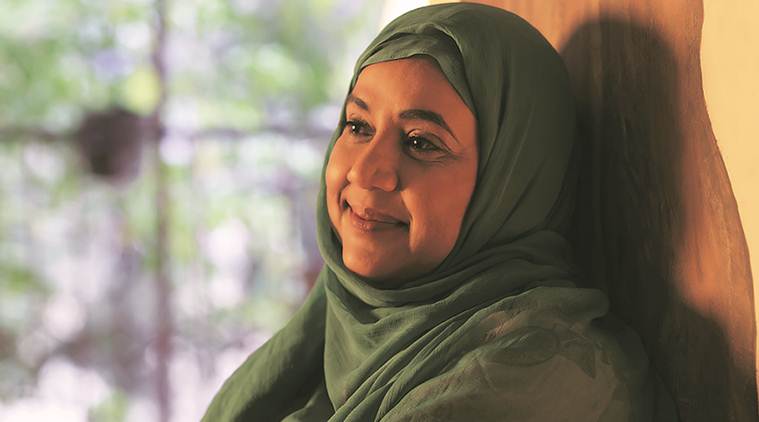 A still from the film, ‘Code Blue’.
As the issue of triple talaq, the practice where Muslim men divorce their wives by stating “talaq” thrice in oral, written or electronic form, has assumed political overtones in the country, a new film aims to showcase the ground reality of the practice and the impact it has on those women who are abandoned by their husbands.
The world premiere of the film Code Blue directed by Aleena Khan, 30, was held recently at the ongoing Berlin Film Festival 2019. The film is based on real life of a 23-year-old Muslim woman, Ashi (fictitious name in film), who was divorced by her husband within two months of their marriage when she was pregnant, without specifying any reason for the action.
 The world premiere of the film Code Blue directed by Aleena Khan, 30, was held recently at the ongoing Berlin Film Festival 2019.
Khan is a medical practitioner (critical care specialist) by profession and says that after she met this young woman, she decided to make a film and use cinema as medium to portray the pain and suffering of women who are victims of triple talaq, still prevalent and widespread in India.
The title of film is significant too, says Khan, “In our profession, we use the term Code Blue when the last stage of an emergency is announced in a hospital and it indicates that a patient is dying and immediate resuscitation is needed to save him. Here, there is no medical emergency, but a social emergency to save Muslim women from this draconian practice,” says Khan, who lives in Mumbai.
“Even as the Quran says that a man cannot divorce his wife when she is pregnant, Ashi’s husband divorced her by sending her a letter through religious clerics, stating that he is giving her triple talaq. He also stated that they do not have any child from their two months of marriage, but Ashi was pregnant. We are fighting a legal battle against him and we also questioned those clerics who approved of this action,” says the director, who has had no formal training in filmmaking.
Khan adds that she had to quit her medical career for almost a year to concentrate on the film based on Ashi’s life. “She is not a financially sound woman and could not have fought her battle alone. She gave birth to a baby girl but even then her husband did not accept her and the baby. She is continuing with her studies and we are helping her to become independent. I have adopted her daughter, who now lives with me,” she says.
Khan says that many actors were approached to play Ashi’s role in Code Blue, but ultimately she herself had to play that role. The film has been produced in association with Rahat Kazmi Films with a budget of about Rs 5 crore and has been shot in Uttar Pradesh, Nepal and England.
“We got many threats… I am still getting threats for making a film against triple talaq despite being a Muslim. I would say this practice has nothing to with religion. If I am a Muslim, it doesn’t mean I will support wrong practices of our community. As doctors, we do not treat patients as Hindus or Muslims, but as human beings who needs help. What is wrong is wrong,” she says.
Khan says she has come across many victims of triple talaq during her medical career and believes it must be completely banned and criminalised in India. “Muslim women need legal protection against this practice. There is no need of politics here. It is about social justice for women who are abandoned without any valid reason,” says Khan. The film also features Sushmita Mukherjee and Rishi Bhutani.
The film in slated for release in India on March 15. “We are targeting at least 100 screens. I had no experience of making a film before but couldn’t find a better way to portray the story of women like Ashi, who are left to fend for themselves and there is no one to question their husbands because triple talaq is still not a criminal act,” adds Khan.
In one of the dialogues in the film, Ashi says, ‘Mujhe mehr nahi chahiye, meri ladaai teen talaaq ki khilaaf hai.” Mehr is the money or property that a man has to give to his wife for her financial stability, if he decides to divorce her. “But it is not always about money. It is about dignity. Three words in three seconds cannot decide a woman’s fate,” adds Khan.
Click here to follow Screen Digital on YouTube and stay updated with the latest from the world of cinema.