5 min read

Journalism of Courage



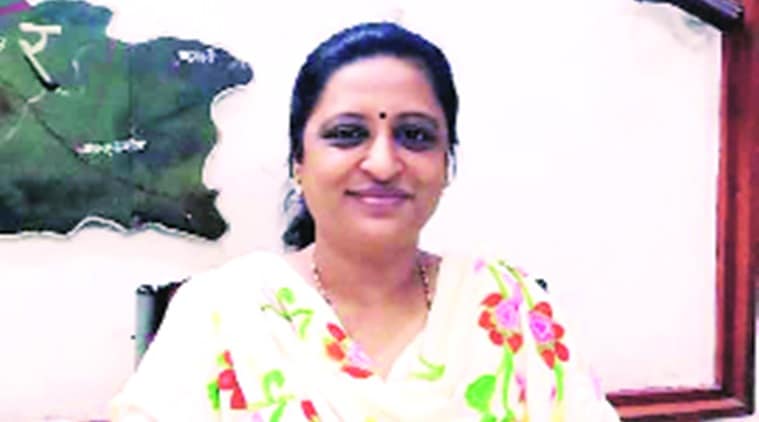 Meenakshi Raut, deputy director of education, Pune
More than 75,000 students in Pune district will be applying for admissions to first-year junior colleges through the Centralised Admission Process (CAP), which is one of the biggest admission processes taking place this year. From the serpentine queues and flawed processes that led to massive student protests a couple of years ago to fewer complaints last year, the CAP has seen several changes. In a conversation with The Indian Express, Meenakshi Raut, deputy director of education (in-charge), discusses the process, the common mistakes students make, and the trends.
Over the last few years, which faculty has attracted most students and why?
More students are veering towards Commerce and Arts; interest in Science seems to be fading. This trend, I think, has been observed across the country, at all levels of education. Until a few years ago, medical and engineering were the most sought after streams. We used to receive maximum number of applications for Science faculty seats. However, last year, commerce and arts (English) faculties took over. Not even one seat was left vacant in the faculties, especially in aided colleges. In the science faculty, meanwhile, even the aided seats that demand lesser fees remained vacant. It could be because professional courses have taken precedence, and commerce leaves more scope for pursuing job-oriented options such as MBA, CA, CS and Law, among others…
This year, admission rounds to bifocal courses were started first. Will that lead to more admissions? Because most seats remained vacant last year…
Actually, even this year, the number of applications received for admissions to bifocal seats was less than half the seats available. That could be because of what we discussed earlier — declining interest in engineering. Bifocal science, which comprises subjects such as electrical, computer science, electronics, civil engineering and mechanical maintenance, is taken up by students pursuing engineering or technical courses. Last year, admissions to bifocal courses were part of the last round and interested students had already taken up admissions elsewhere. So, this year, we decided to open the admission round with bifocal courses, for the benefit of students and junior colleges.
What are the most common mistakes students make while filing online forms?
Part I of the application form requires students to provide their personal information, while Part II requires them to select colleges of their choice. While filling up Part I, students, especially those living outside the city limits, don’t check the status bar at the end of page. Students who live outside the city and belong to a reserved category have to get their documents approved at one of the nine guidance centres. Till the documents are not approved, the status bar on Part I of the form will reflect ‘Status Pending’, and students will not be able to open the second part of the form… Every day, we receive maximum number of calls on this particular issue…
Another common mistake is, while entering the SSC board seat number, students often write “CO” — ‘O’ the alphabet — whereas the code is alphabet C and numeric zero. Because of this mistake, students’ marks don’t show up and they can’t fill forms… students panic thinking they have been blocked.
While selecting a college, what parameters should a student keep in mind?
We have said it time and again, a student gets a minimum of one and maximum of 10 options. First, we suggest using the maximum. Second, check the colleges’ previous year cut-off lists and choose accordingly. Also, students choose top colleges, even if they are located far away from home, not realising the time they will have to spend on the daily commute… we cannot cancel admissions later. Other common things students often miss at the time of choosing a college include the fees, availability of a sports ground or unavailability of a particular subject. This year, students can use the filters on the option form to check the aided courses and the subjects available at a particular college.
College officials say that the cutoffs are likely to be higher this year. What do you think?
I don’t think there will be a huge difference in the cut-off lists as compared to last year. What happens is that toppers or students who have scored above 90 per cent get distributed across the different streams. Unlike previous years, when all toppers chose science, increasing cutoffs of that stream, now they may choose any faculty, which is kind of a balancing act. Therefore, I believe, there may be a marginal increase in the cutoffs this year.
This year, the CAP committee has announced that students who do not take admission in their first preferred college will be locked out of the admission process. Isn’t that harsh?
If we don’t do this, how do we complete the admission process in time? Students and their parents are given several days to name colleges of their preference. If they are given admission into a college of their first preference, and they refuse that as well, is it not injustice to other students…? We will consider them for admissions but after the first few general rounds, so that all students can get an equal opportunity.