© The Indian Express Pvt Ltd
 14 min read


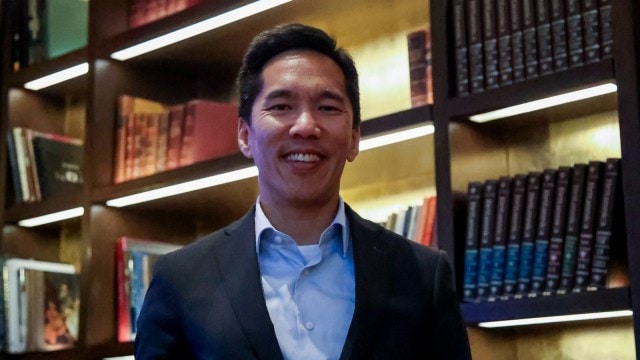 University of Southern California (USC) interim president Beong-Soo Kim
As US higher education grapples with federal research cuts, proposed restructuring of the Department of Education, and heightened immigration anxieties, universities are navigating and operating in turbulent conditions. At the University of Southern California (USC), interim president Beong-Soo Kim, appointed in July this year, says the moment demands sticking to the core values of the university.
In an interview with The Indian Express during his visit to India this month, Kim discusses sustaining USC’s long standing relationship with Indian students, their current anxieties, layoffs, Artificial Intelligence in classrooms, and why he believes universities must remain places where difficult conversations are not avoided but encouraged.
Yes, higher education as an overall industry has been going through a lot of volatility over the last number of months. But two points. First, I think that it’s important to look underneath the headlines at how different universities are actually dealing with those kinds of challenges. At USC, we’ve actually been able to deal with some of these challenges quite well. Our research grants are actually up from the prior year, and as of right now, we’re trending even higher, even though there has been some pullback in federal research funding overall.
USC has been able to withstand those challenges for a few reasons. We’ve been continuing to submit applications and grants. We don’t just depend on federal grant funding — we get sponsored research funding from a variety of sources. And a lot of the focal points of our research are actually areas where the administration has been very supportive. The Alzheimer’s research is a major focus of ours, and it’s also an area where we continue to receive substantial funding from NIH and other sources; similarly with respect to AI and quantum.
We haven’t been in any kind of negotiations with the administration unlike some of our peer institutions. We haven’t been fined or had to engage in negotiations relating to anti-Semitism or some of the other issues that have been challenges for other universities. We’ve really tried to follow our rules and values. A campus should be one that’s open to all students. We need mutual respect and tolerance of different viewpoints. Although the volatility has been challenging, we see many of the issues you’ve alluded to as opportunities to double down on our mission—being intentional about research areas and the values we want to stand for.
One of the criticisms made against some US universities has been that they’re not very tolerant of diverse viewpoints, in particular conservative viewpoints. At USC we’ve always prided ourselves on being a university where faculty and students feel comfortable expressing themselves, but there’s always room for improvement. After I became interim president, I started the Open Dialogue Project, led by a prominent researcher, Neeraj Sood. He had an experience during COVID where he felt pressure related to research he was doing. So I asked him to lead an initiative aimed at making sure USC doesn’t just have the right policies and rules but that we’re also creating a culture where people feel comfortable expressing their viewpoints—where those viewpoints are not just tolerated but embraced.
Another opportunity is doing research more efficiently so society benefits at lower cost. And we are diversifying research funding—working with private foundations, the state government, corporations. There are tremendous opportunities to align more closely with private industry. They need our talent, and closer alignment lets us work on challenging problems while giving our students opportunities to collaborate with potential employers.
I honestly don’t really have a developed point of view on that. The research funding we receive is primarily from other agencies—NIH, Department of Defense, NSF—not so much from the Department of Education. So the changes there haven’t impacted our research. And I think there are still a lot of questions about what the end result of any restructuring will be. If functions are simply moved to other departments, there may not be a significant impact on universities.
I can’t say we’ve experienced much impact. There is legislation referred to as the “one big beautiful bill” that contains new provisions relating to graduate student loans. We’re still analysing how it could impact us. There are a lot of unanswered questions about how that law will apply.
I don’t think the bill has provisions specific to international students. They would impact all students depending on their programs. Our international student enrollment overall has not decreased significantly this year—we’re down only about 3 percent. Again, it’s easy to overread headlines. USC has an incredibly strong global brand. There are many more qualified applicants than we can admit. We have over 500,000 living alumni across the globe, over 6,000 of whom are in India. The Indian student community is very important at USC.
My own parents were international students from Korea in the late 1960s and ’70s. USC’s mission statement talks about the importance of international students. There’s a lot of excitement in the alumni I’ve met here in India.
It’s something everyone should be concerned about. The United States has benefited greatly from being a beacon to international students, including students from India. Indian students are some of the best prepared and strongest students we see. Many stay in the U.S. after they receive their degrees; many go back to India. Talent flows between two great democracies matter.
So far we’ve been able to manage the uncertainty you describe. I know there has been much more uncertainty around visas and staying in the U.S. after graduation, but the historic value of this exchange is important. I’m optimistic that view will prevail.
I would say apply to USC. Yes, there’s uncertainty, but USC has been managing those challenges. We have amazing professionals who work hard to make sure admitted students can enter the country. We have an unrivaled alumni network of Trojans who hire other Trojans. I’m a passionate believer in the value of a USC education and the way we integrate liberal and professional learning. The workforce is changing rapidly thanks to AI and other technologies—the value of a USC education has never been stronger. I would urge anyone who’s interested in a life-changing experience to apply, and we’ll deal with the challenges together.
I don’t believe USC has any of the anti-immigrant sentiment you described. We’re in Los Angeles, a global city like Delhi or Mumbai. USC is proud of its diversity. With respect to affordability—we’re not the least expensive university, but we believe there is unsurpassed value in a USC education. USC innovates in curricula; we have a new AI strategy initiative designed to place us at the forefront. At the same time, we recognize the affordability challenge. We’re constantly thinking about efficiencies to bring down tuition growth. One thing I’m focused on is bending the cost curve.
Over the last few months, we had to make some difficult decisions laying off some employees. But we were able to do it in a way that maintained our academic mission. We’ll have a stronger operating model that allows us to reinvest funds into the academic mission and student experience. It was hard, because universities aren’t used to what private corporations go through every quarter. But it was the right thing to do.
It’s hard to estimate because some individuals who received notices may be placed in reorganized positions. But I would use a round number—approximately 1,000 individuals, around 3 percent of our workforce. That’s in line with the private sector. We wanted to make decisions and then put them behind us so we could move forward with Alzheimer’s research, AI, and other initiatives. With respect to the highest compensated individuals, we reevaluated payroll practices that would result in certain individuals receiving less take-home compensation.
We have an AI Strategy Committee led by the dean of our business school, Jeff Garrett. They’ll be providing recommendations on how to rethink what and how we teach in this era. We had an AI summit where Eric Schmidt shared his thoughts about the excitement students should feel around AI. There’s broad recognition that banning AI doesn’t work.
We want every student to graduate with AI literacy pertinent to their field—engineers, dancers, musicians, historians. At the same time, we need to teach critical thinking. If people use AI to write papers, they won’t learn those skills. We’re rethinking how to teach writing—showing steps in the process rather than just a final paper. In some classes, we might return to handwritten exams. The goal is to position USC as a global leader in AI and education.
I think we could be. If USC doesn’t approach this properly, there’s a danger of teaching students to use specific AI applications that students understand better than professors. The challenge is teaching enduring AI literacy skills. A university isn’t a corporation. A corporation might replace an employee with AI; a university’s job is to educate. Young adults’ minds are still forming. We want them to use AI effectively and responsibly but not at the expense of their academic development.
ChatGPT has vast information, so educators need to get beyond teaching facts that can be memorized. We need to focus on critical thinking. When you prompt ChatGPT, it gives an answer that seems like the answer. But the hardest questions are ambiguous. This may be a moment when we return to classics and liberal arts—understanding Shakespeare, or why a historical event occurred. The ability to deal with ambiguity is what students’ professional lives will be about.
Yes, absolutely, and I’ll explain why. He set up his booth right outside my office. I observed hundreds of students engaging with him, some agreeing, many disagreeing. That interplay is exactly what should happen at a great university. It’s tempting to say, “Let’s not invite controversial speakers,” but if we stop doing that, we’re not serving our students. Our mission is to encourage robust debate across the spectrum.
That was before I was interim president. Free speech doesn’t mean you can break rules. You can’t block campus access, spray graffiti, or break into buildings. Universities need to enforce rules consistently and uniformly. I believe USC has done a good job of that. I fervently believe in open dialogue and freedom of expression, but rules must be applied equally.
Lawful protests are fine, we have a long history of them. But universities must draw a line when protests become harassing, discriminatory, or break neutral rules. I think USC has done that well, and that’s part of why we’re in a strong position with federal research funding.
I wouldn’t say I felt political pressure. On its face, the administration offered benefits in exchange for agreeing to provisions and principles. Many principles, open dialogue, viewpoint diversity—we strongly agree with. Where we struggled was the idea that research should be awarded based on anything other than the merits. That was a significant factor in declining. But it was important to express the areas of agreement and welcome further engagement.
There’s nothing more important than this simple principle: do the right thing. Figuring out what the right thing is can be complicated, but it’s critical that a university start from that core principle. I’m proud of the progress USC has made over the last five or six years in putting those events behind us.
We’ve put those legacy issues behind us as of several years ago. Now I get to focus on ensuring USC continues to be a leader in innovation—medical research, AI, hospitals. I’m excited about collaborations with the IITs, BITS, IISc, Reliance Foundation Hospital. Secondly, ensuring the value of a USC education remains unsurpassed. And third, making sure we never lose sight of our values—doing the right thing, humanity, morality.