


Tags:


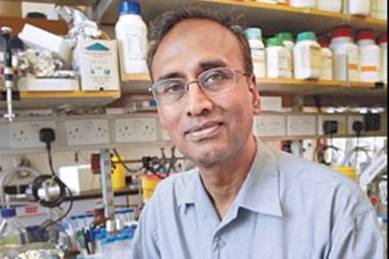
Nobel Laureate and structural biologist Prof Venkatraman Ramakrishnan, pushed for protecting science from “political interference” and said that India needed to invest more in science.
Speaking at the 38th Vikram Sarabhai Memorial Lecture on “Science and Technology in a Changing World” at Ahmedabad, Ramakrishnan who is also president of the Royal Society, UK, said Monday that China and Singapora had already made that transition while while India’s position was “not so high” and not among the top 10 countries.


Also read: Vibrant Gujarat Global Summit to witness signing of 157 education sector MoUs: Minister
Stating that the investment in private research and development (R&D) in India was “abysmal” Venki cited the case of Rolls Royce, which manufactured engines for jets and invested high amounts on R&D and healthcare major GlaxoSmithKline.
The noted scientist spoke about how wealth of a country depends on knowledge and innovation and that economic growth precedes scietific growth, provided a minimum level of high quality science needed to make the transition.
Batting for “freedom for young investigators”, Venki said that to grow science needed stable long-term funding, efficient transparent procedure and flexibility of funding and that countries should not “wait for the economy to get better to invest in science”.
He also expressed concern that while India was at an advantage to develop solar power it was China that was the largest producer of photovoltaic cells. “Why not India?”, he said.
Asked about his dream for India, Venki who was born in Tamil Nadu and grew up in Vadodara said he was a “defector” having left the country when 19-years old but said that he would like to see India corruption free and “have standards in public hygiene” and that young people be educated. Remembering how he used to cycle in his days in Gujarat, he said it was impossible now at the rate cities were growing in a way none had planned.
Pointing out areas in which India has a unique advantage, he advocated use of modern methods including GM (genetically modified) for drought and pest resistsance and more nutritive crops, exploiting solar energy and harness India’s large resources of Thorium. He also mentioned that India can take the lead globally in discovery of vaccine development, generic and new drugs and in robotics, handling of complex data in the field of IT.
For more stories on education, click here


