Dr Bhushan Patwardhan, Vice-Chairman of University Grants Commission (UGC). (Source: UGC website)
The higher education system is terribly wrong somewhere and it needs a major overhaul, said Dr Bhushan Patwardhan, Vice-Chairman of University Grants Commission (UGC), on Thursday. He also listed a few initiatives the UGC has undertaken to make it student-centric.
He was speaking at the inaugural programme of an ‘International Conference on Urban Transformations, Youth Aspirations and Education in India’ jointly organised by the Indian Institute of Technology Gandhinagar (IITGN) and the National Institute of Educational Planning and Administration (NIEPA), New Delhi at IIT Gandhinagar. “We don’t give any freedom, forget about students’ aspirations we do not even respect their inspirations,” Patwardhan who was the chief guest at the inaugural programme said.
Echoing similar views, Vice-Chancellor of Ahmedabad University, Pankaj Chandra said “We have not paid much efforts to lay students at the centre of an institution. Unless we understand what drives or motivates them, we will not be able to achieve that student centrism,” he said.
“The major problems in our policy is that we have made a clear divide in white and blue collar. There is no reason why it should be and we are talking about it but we still continue to do that without any interruptions,” the UGC Vice-Chairman added.
Talking about the aspirations of the youth, he said that the youth from rural areas are coming to education institutes, joining graduate programmes, their aspiration is to appear for some examinations or some good job in banks or some stable job somewhere.
“So, these are the aspirations we have put upon them… Their real aspirations will come when we start talking to them. Forget about respect we do not even acknowledge their aspirations in our current system. We enforce upon them our curriculum, question banks, model answers and we evaluate them based on their abilities to reproduce our answers. So we do not allow them to think at all in this whole process,” he said, adding that the system is terribly wrong somewhere, the whole system of higher education needs a major overhaul.
Speaking about the recent initiatives UGC has taken recently, Patwardhan said, “By taking cue from the New Education Policy (NEP) we have incorporated the ‘multiple entry-multiple exit’ and ‘liberal education’ system. So, without even waiting for what will be the fate of the NEP, we have incorporated the good points of it. We will implement these.”
Story continues below this ad
“So, we have established a ‘National Academic Credit Bank (NACB)’. UGC primarily is trying to de-regulate universities as we think we are getting into too many nitty-gritties and by doing that we are putting students into a compliance mode. By putting so many conditions and at the end of the day the job of the teacher or student is to comply and that compliance can get through any way. The best example of this compliance came through the journals – the pay and publish trash culture what we saw in India in last few years so we have fixed that,” he added.
Elaborating the NACB system, the UGC vice-chairman said that it allows students to open account in this virtual bank and start learning much before they come to a college. It is the universities who will decide how many credits you want for a degree and in the same way it should also decide how many over credits you need if you want to award a degree by dualism.
“At present, the idea has been accepted by the Commission and we are in the process of regulation formation stage,” Patwardhan said.
The second initiative taken by UGC is ‘Semester Outreach Programme’. “Why teachers are monopolising teaching? Why teaching is only in the classrooms or campuses? Because teaching happens all over, in the community, everywhere. Let us talk about National Cadet Corps 2.0 or National Service Scheme 2.0. These were enacted decades back and after that there has been no critical overview of these which has become more of a photo opportunity and the original spirit of these programme is getting lost,” the UGH V-C said.
Story continues below this ad
While Sudhir Jain, director of the Indian Institute of Technology Gandhinagar (IITGN), stressed upon the importance of values and integrity that are lacking among youth these days for which he said that ‘we (institutions) should take the responsibility’.


 5 min read


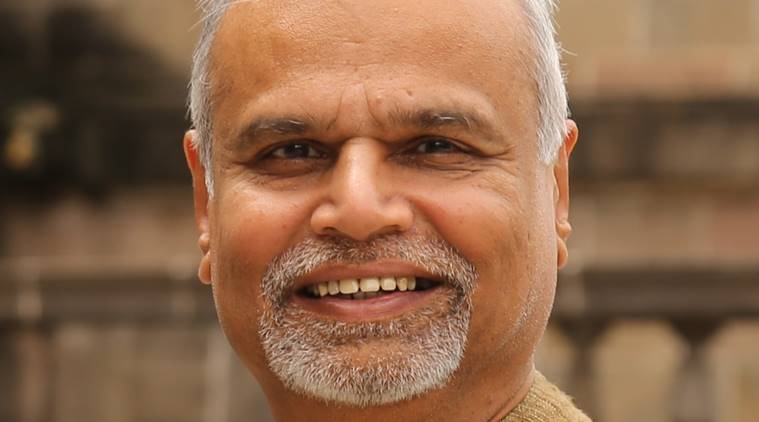 Dr Bhushan Patwardhan, Vice-Chairman of University Grants Commission (UGC). (Source: UGC website)