Premium

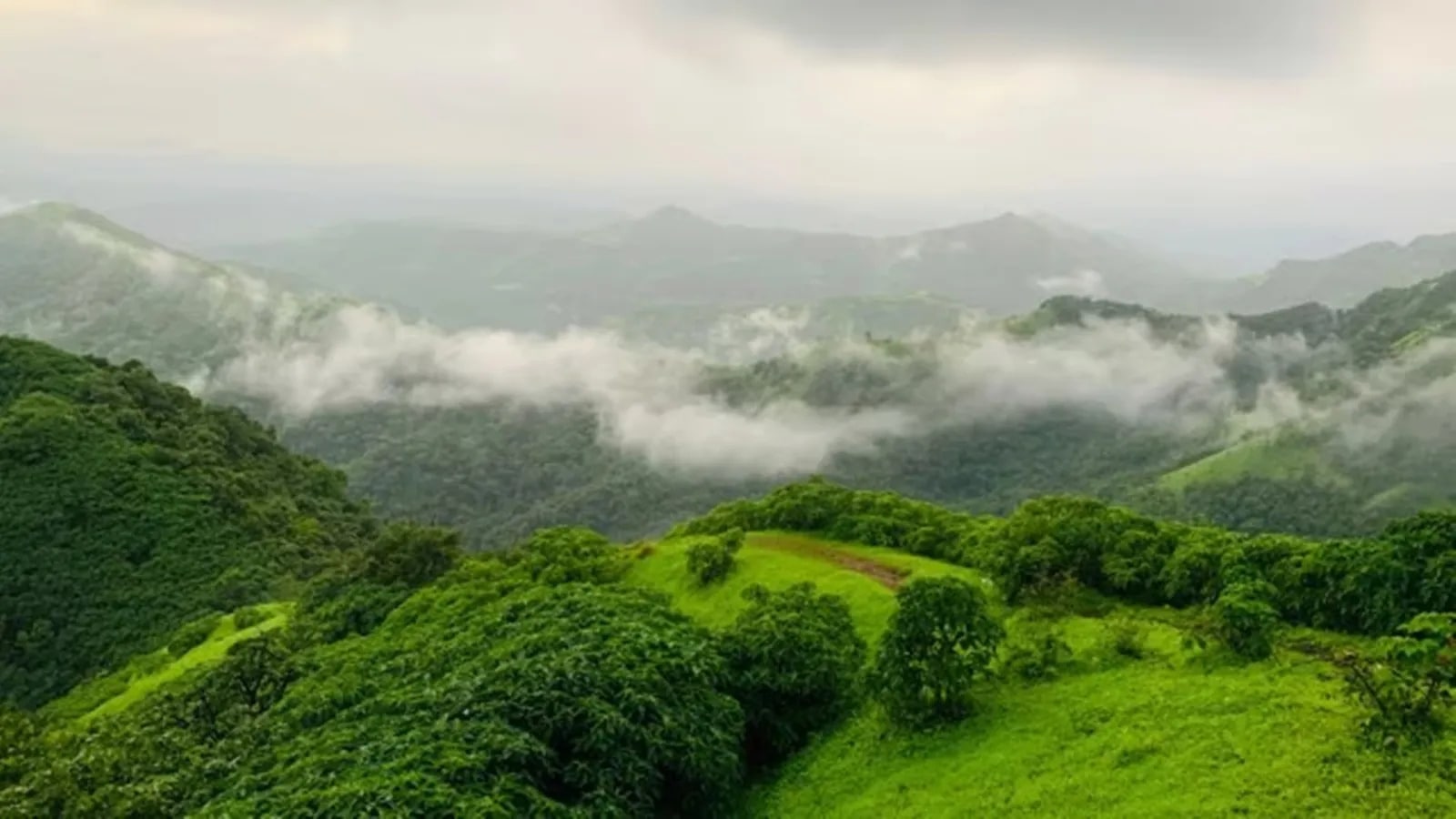
In a first, researchers on a mission to study microclimate across Western Ghats

There is an urgent need to document microclimate niche of plant species for saving the crops and trees around us, says one of the researchers, Balachandra Hegde of Kuvempu University who started Microclimate India project in 2021.

western ghats microclimateIn February 2025, Goa and Maharashtra recorded India's first-ever winter heatwave — a startling milestone that made the month the hottest February in 125 years. (Express File)

The weather station is a reliable source of information about an eco-region, but temperature, precipitation and moisture often differ drastically every few metres. Hence, there is a growing need to understand the micro-level impact of climate on ecosystem and agricultural processes, from phenology to pollination. In a first, researchers are spanning the length of the Western Ghats, an important biodiversity hotspot, to document the association of microclimate with ecological processes.

“There is an urgent need to document microclimate, otherwise we may lose many species before we understand them,” says Balachandra Hegde of Kuvempu University who started the Microclimate India project in 2021.

“There is a difference between the climate observed at weather stations and the actual climate that the plant experiences on the ground. We have been working to understand climate change impacts on tropical forests. We have realised that microclimate is an important factor in the survival of tropical trees. Climate change is obvious but global efforts for reversing climate change are beyond the reach of farmers and people living in the tropical forests of the Western Ghats. For saving the crops and trees around us, it is important to understand the microclimate niche of plant species, so that we can create suitable modifications to cropping patterns,” says Hegde.

Hegde has worked with forest, wildlife and community conservation in Sirsi, Karnataka for over 35 years.

“He has also played a critical role in declaring many sections of the forests as protected areas near the Sirsi and Ankola regions. He noticed that associations of forest processes are not explained well with macroclimate models. This is when he reached out to me and Dr Carolina Greiser of Stockholm University, who have undertaken microclimate projects in Europe,” says Dr Rohan Shetti, who has founded the Pune-based The Green Concept, with Dr Aboli Kulkarni and Dr Girish Kulkarni.

The organisation, with experts in landscape ecology, ecosystem dynamics and environmental analytics, has facilitated the instrumentation and statistical analysis for the project. Among the other collaborators are Dr Mandar Datar and the Agharkar Research Institute team, who have helped select the sites and study of plant diversity from different sections of the Western Ghats.

The project has led Hegde to observe bioluminescent fungi on forest floors. “It is very sensitive to microclimate. Drosera plants, which are found during post-paddy harvesting season in paddy fields, are restricted to high soil surface temperature above 25 degree Celsius and up to 32 degrees and high soil moisture of about 90%. We have been observing many such instances of the impact of microclimate on ecosystems,” he says.

Story continues below this ad

On its website, Microclimate India states, “Most of the diversity resides within the under-canopy and is influenced by microclimate factors, such as soil temperature, shade, air temperature close to the earth, soil moisture conditions and so on. Our research spans across the length of the Western Ghats recording the microclimate features at a fine resolution and quantifying various ecological aspects and their relation to microclimates in the forested region”.

The process involves installing microclimate loggers across the landscape, from hilltop to valleys to measure temperature, humidity, soil moisture etc. Across the Western Ghats of Karnataka and Maharashtra, there are also weather stations placed in open areas. The data loggers record data on below-soil temperatures, soil surface temperatures, above-soil temperatures and soil moisture content every 10 minutes. The probes will function for about seven years. This is a high-resolution data and will also run long-term. “The data will be open source for scientific communities who wish to study climate change impacts,” says Hegde, who is in the process of publishing more outcomes.

“Policymakers, foresters and government institutions should invest in microclimate research. Due to climate change in the future, the weather patterns will get more uncertain. Ecological and agricultural processes will be impacted by this, and our predictive ability needs to improve if we are to evolve with these changes. Microclimate research, which is very advanced in Europe, is critical to model future changes,” says Shetti.

“However, floral and faunal diversity is way higher in the tropics as compared to the temperate regions. Therefore, it becomes our greater responsibility to have a better understanding of our microclimates,” he adds.

Story continues below this ad

Shetti says that many microclimate stations need to be set up to improve predictability for agricultural production, among others. “We now have the know-how and the analysing techniques. If we are backed by a public, research and political will, we can bring about a positive change to our diverse systems. Microclimate stations are cheaper and very easy to install, if there is enough funding and correct research from the government a very wide network can be installed uncovering many features of ecosystems still unanswered to mankind,” he says.

Dipanita Nath is a Senior Assistant Editor at The Indian Express, based in Pune. She is a versatile journalist with a deep interest in the intersection of culture, sustainability, and urban life. Professional Background Experience: Before joining The Indian Express, she worked with other major news organizations including Hindustan Times, The Times of India, and Mint. Core Specializations: She is widely recognized for her coverage of the climate crisis, theatre and performing arts, heritage conservation, and the startup ecosystem (often through her "Pune Inc" series). Storytelling Focus: Her work often unearths "hidden stories" of Pune—focusing on historical institutes, local traditions, and the personal journeys of social innovators. Recent Notable Articles (December 2025) Her recent reporting highlights Pune’s cultural pulse and the environmental challenges facing the city during the winter season: 1. Climate & Environment "Pune shivers on coldest morning of the season; minimum temperature plunges to 6.9°C" (Dec 20, 2025): Reporting on the record-breaking cold wave in Pune and the IMD's forecast for the week. "How a heritage tree-mapping event at Ganeshkhind Garden highlights rising interest in Pune’s green legacy" (Dec 20, 2025): Covering a citizen-led initiative where Gen Z and millennials gathered to document and protect ancient trees at a Biodiversity Heritage Site. "Right to breathe: Landmark NGT order directs PMC to frame norms for pollution from construction sites" (Dec 8, 2025): Reporting on a significant legal victory for residents fighting dust and air pollution in urban neighborhoods like Baner. 2. "Hidden Stories" & Heritage "Inside Pune library that’s nourished minds of entrepreneurs for 17 years" (Dec 21, 2025): A feature on the Venture Center Library, detailing how a collection of 3,500 specialized books helps tech startups navigate the product life cycle. "Before he died, Ram Sutar gave Pune a lasting gift" (Dec 18, 2025): A tribute to the legendary sculptor Ram Sutar (creator of the Statue of Unity), focusing on his local works like the Chhatrapati Shivaji statue at Pune airport. "The Pune institute where MA Jinnah was once chief guest" (Dec 6, 2025): An archival exploration of the College of Agriculture, established in 1907, and its historical role in India's freedom struggle. 3. Arts, Theatre & "Pune Inc" "Satyajit Ray, Ritwik Ghatak were not rivals but close friends, says veteran filmmaker" (Dec 17, 2025): A deep-dive interview ahead of the Pune International Film Festival (PIFF) exploring the camaraderie between legends of Indian cinema. "Meet the Pune entrepreneur helping women build and scale businesses" (Dec 16, 2025): Part of her "Pune Inc" series, profiling Nikita Vora’s efforts to empower female-led startups. "How women drone pilots in rural Maharashtra are cultivating a green habit" (Dec 12, 2025): Exploring how technology is being used by women in agriculture to reduce chemical use and labor. Signature Style Dipanita Nath is known for intellectual curiosity and a narrative-driven approach. Whether she is writing about a 110-year-old eatery or the intricacies of the climate crisis, she focuses on the human element and the historical context. Her columns are often a blend of reportage and cultural commentary, making them a staple for readers interested in the "soul" of Pune. X (Twitter): @dipanitanath ... Read More


Click here to join Express Pune WhatsApp channel and get a curated list of our stories

Latest Comment
Post Comment
Read Comments
Advertisement
Loading Taboola...
Advertisement