Premium
This is an archive article published on August 19, 2023

After more than 100 years, Punjabi satirical poet Sardar Charan Singh Shaheed’s works get English translation

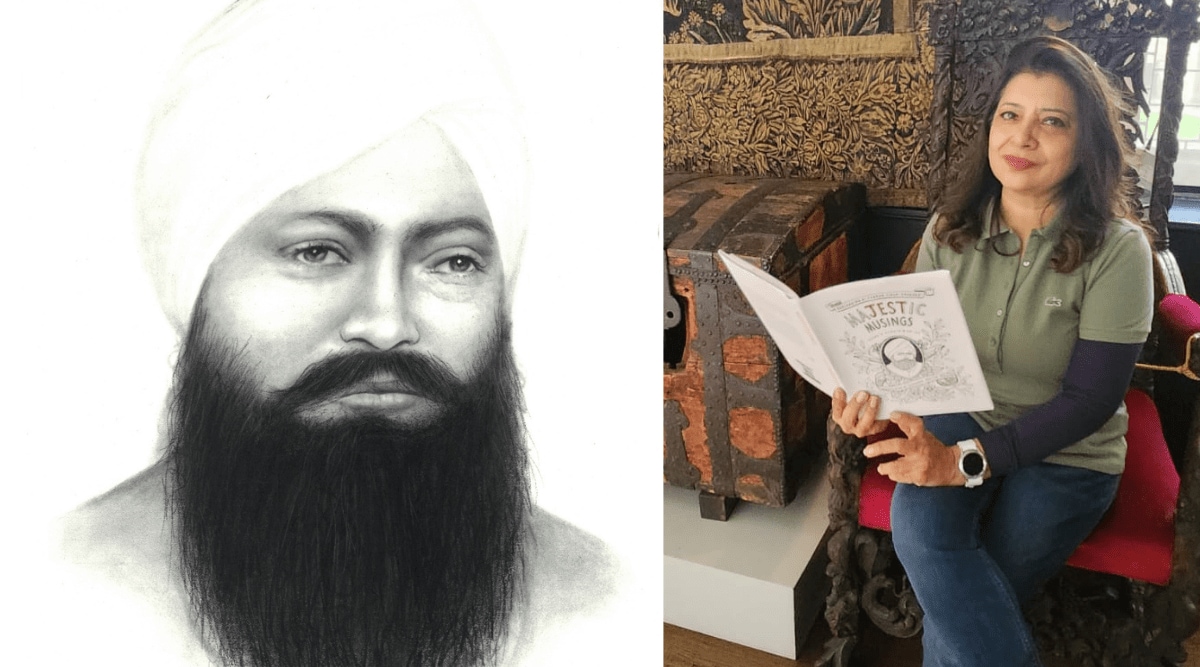
On August 20, Sunanda Beecha Mehta, former resident editor of The Indian Express, Pune, will launch her translation of the poems of ‘Badshahian’, written by her illustrious great grandfather Sardar Charan Singh Shaheed, from Gurmukhi to English at Poona Club.

Pune Poet Titled Majestic Musings: Poems of Humour and Satire, the book contains poems in both languages and illustrations by Aditi Deo
Listen to this article
After more than 100 years, Punjabi satirical poet Sardar Charan Singh Shaheed’s works get English translation
x
00:00
1x 1.5x 1.8x

The first time Sunanda Beecha Mehta met her illustrious great grandfather, Sardar Charan Singh Shaheed, it was through a green booklet called ‘Badshahian’ that was full of poems and sat on her father’s bedside table. Every so often, her father would read from it and end up laughing heartily. At 10, Mehta did not understand the context of the poems but would join in the laughter. Soon, she had embedded the poems, especially the punch lines, in her memory.

On August 20, Mehta, former resident editor of The Indian Express, Pune, will launch her translation of the poems of ‘Badshahian’, from Gurmukhi to English, at Poona Club.

Titled Majestic Musings: Poems of Humour and Satire, the book contains poems in both languages and illustrations by Aditi Deo. Among the works are Verses v/s Curses, in which a poet meets a crowd of thousands of devotees, and The Uncouth Dude, about a conversation between a man and his visually-impaired wife, and Insane, about a persisting sociopolitical problem.

The poems make a reader wonder if Shaheed really wrote more than 130 years ago as his concerns apply to this day. Other concerns dealt with in the collection are untouchability and caste, man-woman relationship and even brotherly love.

Born in 1891, Shaheed played a major role in the development of Punjabi literature with his poems, short stories and novels. He started Mauji, the first weekly Punjabi newspaper in pre-Independence India, and worked as the court chronicler for the principalities of Nabha and Patiala. In his lifetime of 44 years, Shaheed developed a great following among critics and other readers for his satires and social commentaries.

Fittingly, the book is an ode to the pen with Shaheed writing “It pours nectar into ears when it speaks, my pen! It lightly unfolds thousands of godly secrets, my pen!”

“In 2017 my father passed away. As I stood in his spartan, functional room, post all the rites and rituals, my eye fell on the book lying next to his bed. Now even more yellowed and fraying, but still carefully preserved. I picked up the copy of the 100-year-old Badshahian and held it for a long time. It was the only possession, along with a Cross pen that I had gifted my father and which he always prized, that I took away from that room,” says Mehta.

Story continues below this ad

It would, however, take the pause of the pandemic for Mehta to decide to translate Badshahian for a wider readership.

“The problem of my inability to read Gurmukhi was resolved by a close friend, Meeran Chadha Borwankar, a former IPS officer, who generously volunteered to convert them all into voice notes and send them to me. It became a daily ritual during the pandemic- of listening to those voice notes every night and translating the poems into English. Another friend Navneet Anand burnt her midnight oil to patiently answer all my doubts on how exactly a line should be interpreted, in turn using her contacts within Pune’s Sikh community to crack the toughest verses,” she says.

While Badshahian contained 100 poems and she translated them all, Mehta chose 50 for this first book. “If this is well received, I’ll probably do the other 50 also in the form of a second volume,” she says.

Dipanita Nath is a Senior Assistant Editor at The Indian Express, based in Pune. She is a versatile journalist with a deep interest in the intersection of culture, sustainability, and urban life. Professional Background Experience: Before joining The Indian Express, she worked with other major news organizations including Hindustan Times, The Times of India, and Mint. Core Specializations: She is widely recognized for her coverage of the climate crisis, theatre and performing arts, heritage conservation, and the startup ecosystem (often through her "Pune Inc" series). Storytelling Focus: Her work often unearths "hidden stories" of Pune—focusing on historical institutes, local traditions, and the personal journeys of social innovators. Recent Notable Articles (December 2025) Her recent reporting highlights Pune’s cultural pulse and the environmental challenges facing the city during the winter season: 1. Climate & Environment "Pune shivers on coldest morning of the season; minimum temperature plunges to 6.9°C" (Dec 20, 2025): Reporting on the record-breaking cold wave in Pune and the IMD's forecast for the week. "How a heritage tree-mapping event at Ganeshkhind Garden highlights rising interest in Pune’s green legacy" (Dec 20, 2025): Covering a citizen-led initiative where Gen Z and millennials gathered to document and protect ancient trees at a Biodiversity Heritage Site. "Right to breathe: Landmark NGT order directs PMC to frame norms for pollution from construction sites" (Dec 8, 2025): Reporting on a significant legal victory for residents fighting dust and air pollution in urban neighborhoods like Baner. 2. "Hidden Stories" & Heritage "Inside Pune library that’s nourished minds of entrepreneurs for 17 years" (Dec 21, 2025): A feature on the Venture Center Library, detailing how a collection of 3,500 specialized books helps tech startups navigate the product life cycle. "Before he died, Ram Sutar gave Pune a lasting gift" (Dec 18, 2025): A tribute to the legendary sculptor Ram Sutar (creator of the Statue of Unity), focusing on his local works like the Chhatrapati Shivaji statue at Pune airport. "The Pune institute where MA Jinnah was once chief guest" (Dec 6, 2025): An archival exploration of the College of Agriculture, established in 1907, and its historical role in India's freedom struggle. 3. Arts, Theatre & "Pune Inc" "Satyajit Ray, Ritwik Ghatak were not rivals but close friends, says veteran filmmaker" (Dec 17, 2025): A deep-dive interview ahead of the Pune International Film Festival (PIFF) exploring the camaraderie between legends of Indian cinema. "Meet the Pune entrepreneur helping women build and scale businesses" (Dec 16, 2025): Part of her "Pune Inc" series, profiling Nikita Vora’s efforts to empower female-led startups. "How women drone pilots in rural Maharashtra are cultivating a green habit" (Dec 12, 2025): Exploring how technology is being used by women in agriculture to reduce chemical use and labor. Signature Style Dipanita Nath is known for intellectual curiosity and a narrative-driven approach. Whether she is writing about a 110-year-old eatery or the intricacies of the climate crisis, she focuses on the human element and the historical context. Her columns are often a blend of reportage and cultural commentary, making them a staple for readers interested in the "soul" of Pune. X (Twitter): @dipanitanath ... Read More


Click here to join Express Pune WhatsApp channel and get a curated list of our stories

Latest Comment
Post Comment
Read Comments
Advertisement
Loading Taboola...
Advertisement