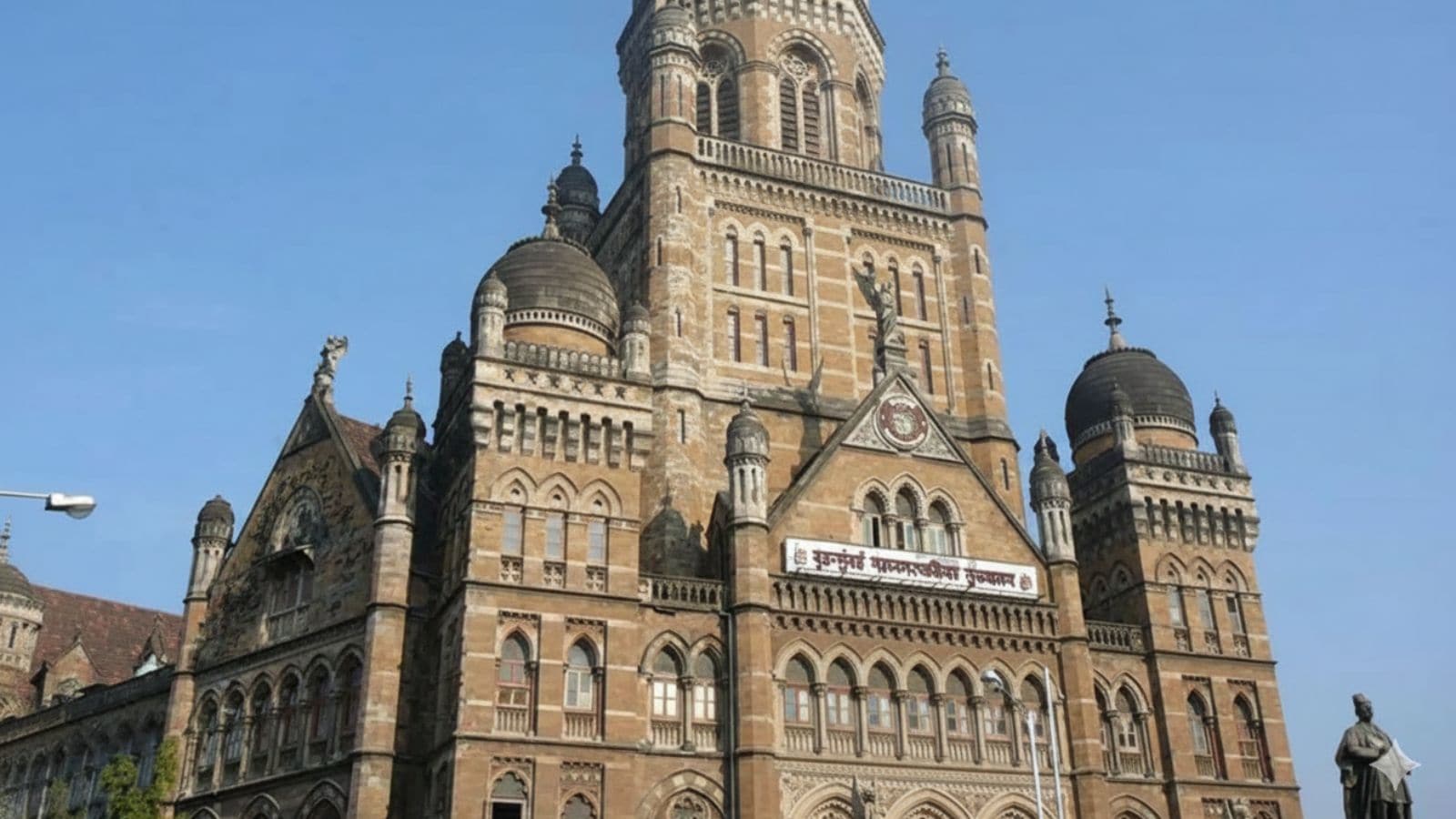
With the Brihanmumbai Municipal Corporation (BMC) polls in mind, which will be held on January 15, the Mahayuti government has announced a slew of Mumbai-centric urban renewal measures.
The announcements, most of which are linked to the regularisation of housing, redevelopment, and civic infrastructure, were made by Chief Minister Devendra Fadnavis and Deputy CM Eknath Shinde, who also holds the Urban Development portfolio, during the recent seven-day Winter Session of the Assembly in Nagpur.

Some of them are:
Amnesty for buildings without occupation certificates
The Occupation Certificate (OC) Amnesty Scheme is aimed at regularising around 20,000 buildings in Mumbai, which have not been granted OCs due to minor deviations from approved plans. According to the government, the scheme will benefit around 2.5 lakh families.
Residents of such buildings, who were forced to pay double the property tax, water and sewerage charges, will not be penalised once their buildings are regularised under the scheme.
Shinde told the Assembly that proposals submitted within six months would attract no penalty while those filed between six months and a year would attract a reduced premium. Hospitals and schools currently categorised as unauthorised will also be eligible for the amnesty.
‘Pagdi’ buildings
The government announced a regulatory framework for the redevelopment of “pagdi” buildings, around 19,000 of which are in Mumbai with over 13,000 of them awaiting redevelopment. Many of the buildings, largely built before the 1960s, are in a dilapidated condition.
The pagdi system is an old tenancy arrangement that became common in Mumbai before Independence. A tenant paid a one-time amount (a premium) to the landlord. In return, they could stay in the house almost permanently by paying a token rent as low as a few hundred rupees a month.
Story continues below this ad
Shinde said the new framework would protect the rights of both tenants and landlords, while making redevelopment viable. To speed up stalled projects, the government said fast-track courts would be set up to clear around 28,000 pending tenant-landlord disputes within three years.
‘Housing for all’
Fadnavis announced a “housing for all” scheme aimed at making redevelopment viable in areas, particularly in the city’s western suburbs, affected by restrictions due to the presence of defence establishments, funnel zones, radar installations, and other constraints.
It provides free floor space for economically weaker sections and free reconstruction of homes of those falling under the lower income groups, with unutilised development rights to be converted into transferable development rights.
In a move that is likely to unlock redevelopment, the government announced that the high-frequency radar centres at Dahisar and Juhu would be relocated. The Dahisar radar will be shifted to Gorai, with the state bearing the cost and transferring land free of cost to the Centre. In return, 50% of the Dahisar land will be developed as a public garden. The alternative site for the Juhu radar is under technical evaluation.
Slum cluster redevelopment
Story continues below this ad
The government has also approved the redevelopment of slums on plots larger than 50 acres. It zeroed it on 17 locations across the city, including Govandi, Antop Hill, Borivali, Dahisar, Chembur, Vikhroli, and Bhandup.
While the number of families to be rehabilitated has yet to be specified, the projects will likely be executed through joint ventures of state agencies and the BMC.
Shinde also announced the rehabilitation of 25,000 slum households and tribal families living inside or on forest land in and around the Sanjay Gandhi National Park. The proposed rehabilitation is within a five-km radius.
Faster grievance redress
The SRA Abhay Scheme, which allows regularisation of slum tenements caught in technical violations, has been extended till December 31, 2026, while MHADA’s amnesty scheme for OCs has also been extended.
Story continues below this ad
The government said the number of Apex Grievance Redressal Committees would be increased to clear over 2,100 pending slum redevelopment complaints.
Green projects
Hours before the poll announcement on Monday, Shinde unveiled an ambitious green roadmap for Mumbai and Thane.
He announced a 295-acre Central Park at Mahalaxmi, touted to be the largest urban park in the country.
For his home turf of Thane, Shinde outlined a series of large-scale projects, including a 260-metre viewing tower along the Thane Creek, convention centre at Kasarvadavli, a 25-acre town park at Kolsheth, an agri–Koli museum, aquarium and science centre, an international-standard snow park, an amusement and adventure park, a bird sanctuary spread over 12.5 acres, a 25-acre musical concert centre and a 50-acre ultra-modern sports complex.
Housing stock, mill lands and forest settlements
Story continues below this ad
The government also announced a creation of a state-level housing stock pool to rehabilitate project-affected persons, mill workers, dabbawalas, and mathadi workers (porters).
It also made amendments to development rules to accelerate redevelopment of old chawls on Mumbai’s textile mill lands in central Mumbai, which is an area dominated by Marathi-speaking population, seen as a core voter base of the undivided Shiv Sena.
A consideration of Green TDR to protect mangrove areas was also announced.
CIDCO housing relief
For Navi Mumbai, the government also announced a 10% reduction in prices of CIDCO (City and Industrial Development Corporation of Maharashtra Limited) homes, with 17,000 houses to be offered through a lottery, benefiting applicants from economically weaker sections and lower income groups.
Loosening purse strings
Story continues below this ad
Just before the polls were announced, the Urban Development Department sanctioned Rs 111.6 crore for basic civic works across municipal corporations, including Rs 57 crore for BMC, covering footpaths, sewerage and water-related works in several parts of Mumbai.


 5 min read