Journalism of Courage



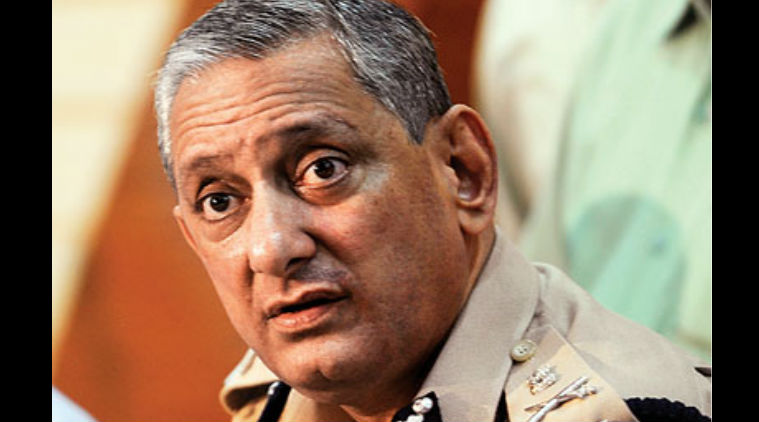 Police Commissioner Rakesh Maria and Milind Bharambe, Joint Commissioner of Police, were summoned by the High Court on June 10.
On Thursday, the Mumbai Police Commissioner, a rare visitor, was seen at the conference hall of the third floor of the High Court, after the Mumbai police was summoned by the judiciary to discuss ways to tackle Mumbai’s rising traffic mess. Police Commissioner Rakesh Maria and Milind Bharambe, Joint Commissioner of Police, were summoned by the High Court on June 10. In an attempt to control the heavy traffic flow in city, the HC has stressed on scrutiny to establish basic driving sense during issuance of licences.
Maria brought a presentation to show what the city traffic police needed. He said that the city’s traffic management was dependent on funds from the government. Maria, seated next to joint commissioner of traffic police Milind Bharambe, also said that the department was set to roll out the “e-challan” pilot project in the next one month.
[related-post]
With all the stakeholders in the room, along with the presence of civic officals, the Bombay Bar Association, the petitioner, was assisting Chief Justice Mohit Shah and Justice A K Menon in a suo motu public interest litigation dealing with city’s growing traffic concerns.
It will, however, take three months to implement the project in its entirety, he said.
“There will be no cash collection at ground level then,” said Maria. In addition, he said there will be 6,000 CCTV cameras installed in the city. Mumbai’s 1,238 junctions have been divided into three categories so that managing them gets easier.
Those include places which need manning round-the-clock, during peak hours and public functions. Delhi is ahead of Mumbai when it comes to deployment of traffic police personnel. While Mumbai has 3,418 people in its personnel for its 1,238 junctions, Delhi had 5,665 traffic policemen manning its 1,028 junctions.
City roads witnessed a marginal drop in accidental deaths between 2014 and 2015. There were 11, 484 deaths in 2014 compared to 11,229 in 2015. “We have identified black spots and are trying to study the reasons behind these accidents,” said Maria.
Filling up of 200 vacant posts in the traffic department will be done with lots of precautions.
“We have taken a conscious decision that the selection should be based purely on traffic sense, integrity and flare for traffic,” he said. Installation of 200 variable message sign boards in the city is also in the offing, said the police commissioner. State’s Additional Chief Secretary K P Bakshi had, earlier in the discussion, said the release of funds was the prerogative of the finance secretary and the chief minister.
Apart from Maria, Additional Municipal Commissioner K Srinivasan informed the court that vehicular movement had swelled in the city manifold. Therefore, signalisation of junctions was crucial, he said. The HC interrupted Srinivasan and asked why were not city roads being widened like Ahmedabad. Expressing displeasure, the HC also said that there were certain spots, such as Air India junction, where signals were not visible.
While disposing of the PIL, the court directed the RTO to provide database of vehicles registered before 2006 to the traffic department within six months.
aamir.khan@expressindia.com

 3 min read