4 min read
Stay updated with the latest - Click here to follow us on Instagram

Journalism of Courage



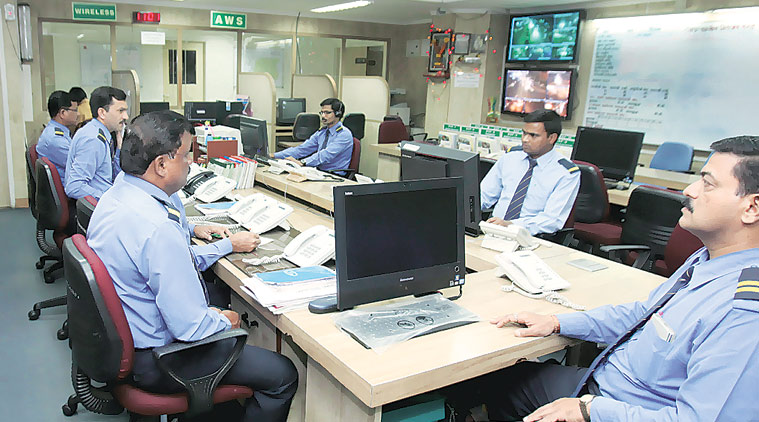 Officials say people who don’t get time to approach them during the day call them at night. From 5 am, they start getting calls about water problems. Vasant Prabhu
“Namaskar, disaster control room.” One will get to hear the operator speaking on phone as one enters the Brihanmumbai Municipal Corporation’s (BMC) disaster management cell at the basement at its headquarters near Chhatrapati Shivaji Terminus (CST).
Valmik Shirsat, a control room operator who has come for the night shift from 11 pm to 7 am, signs the attendance muster and takes the seat to receive calls. He gets a call about gutter issues and is seen taking down details, name and contact number. “We have forwarded your complaint to the concerned department,” he is heard telling on the phone.
As he turns to talk, Shirsat smiles and says that the disaster cell gets all kinds of civic complaints that include drainage issues, hawkers, encroachment, and water issues even during the night.
“Some people who are returning home or travelling on bikes call us to complain if they see something. And since some people don’t get time during the day, they call us late night,” said Shirsat, who joined the disaster cell six months back. Prior to that, he worked in the civic body’s security department at the KEM hospital for about six years.
Apart from Shirsat, there are seven-eight other people, including the in-charge of the cell for the night shift, and operators. While three television screens are there in the cell, two screens of CCTVs are installed to check traffic and other issues across the city.
Looking at the three television screens, he said “we continuously keep checking the news throughout the night. It is to keep track of happenings in the city. If there are any happenings, we immediately contact the authorities concerned such as fire brigade, railway, BEST, health department and others to get the details and to see whether they need help.”
In the meantime, he hears about the fire call and sees that another colleague is looking into it. “We continuously get calls throughout the night. From 1 am to 5 am, calls about civic complaints are few,” said Shirsat, who lives in Ghatkopar.
He adds, “After 5 am, we start getting calls about water issues. We also check whether city’s lifeline (local trains) are working smoothly before getting off duty,” he said. Once in a while Mahesh Narvekar, Chief Officer of Disaster Management Cell, makes a call randomly to check if things were peaceful.
Talking about the night shift and his daily schedule, he said, “We have to do night duty for 10 days every month. I used to do the night shift when I was in the security department. So, it’s not new to me. But there is a big difference in the nature of work. At the disaster cell, we are constantly on calls to solve citizens issues and deal with any calamities. There is huge work satisfaction. There is a lot of teamwork here and nobody misses family when they are on duty here.”
He also talks about adjustments he has to make in his family life. “I have a six-month-old boy. My wife wants me to stay at home when I am on night shift. But, I can’t do that and have to make some adjustments. My wife and parents understand that and are very cooperative,” said Shirsat adding that they also face some health issues like acidity. “But that’s normal and we have become used to it.
Stay updated with the latest - Click here to follow us on Instagram