Journalism of Courage



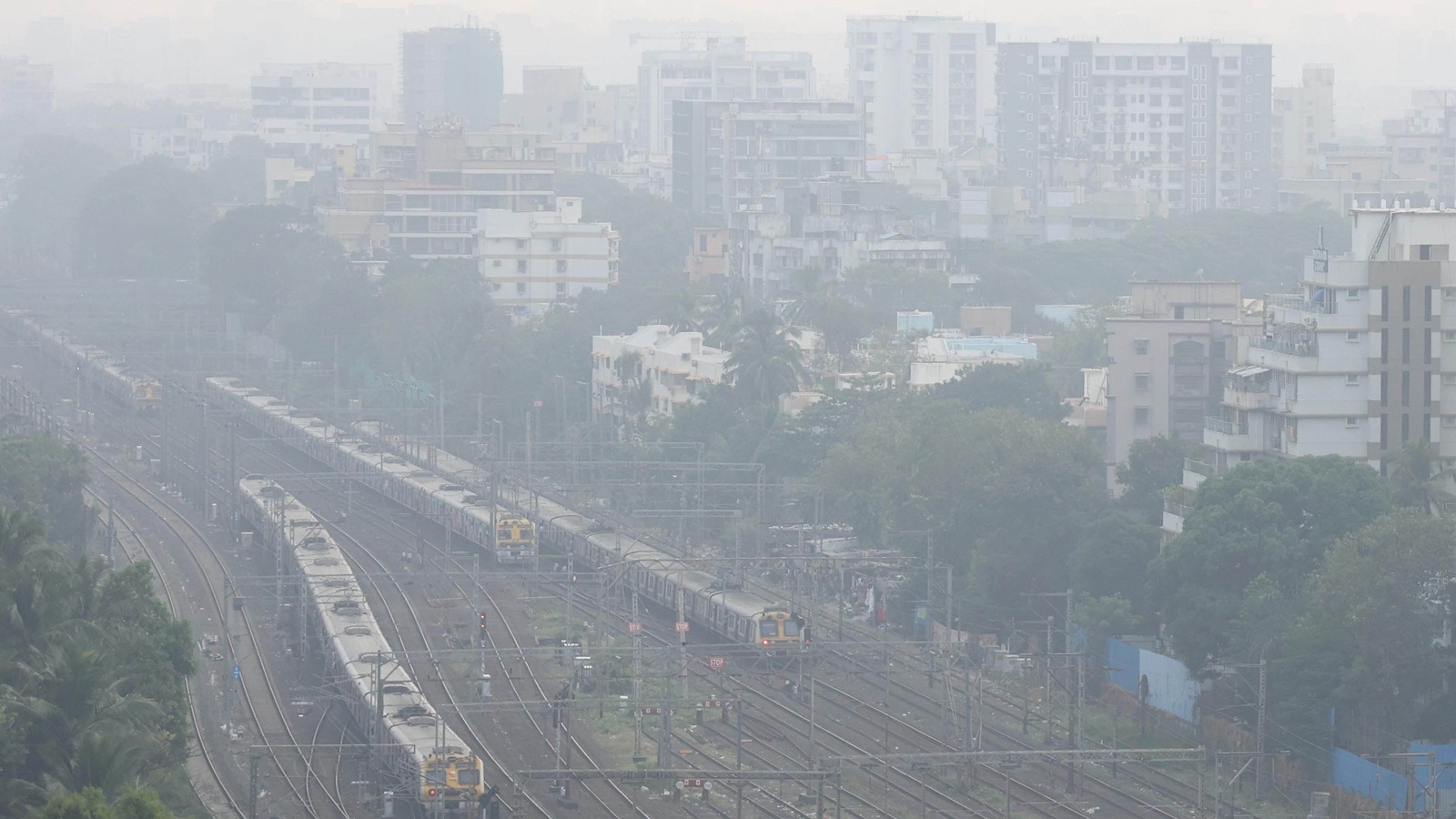 zMumbai has been experiencing AQI between 120 and 140 in December. (Express File Photo)
After recording ‘moderate’ air quality so far in December, Mumbai’s Air Quality Index (AQI) touched 199 on Saturday morning, rising sharply from Thursday’s 139. Attributing the rise to dipping temperatures, experts said the AQI will remain in ‘poor’ category for the next few days until the ‘reversal of winds’.
The worst AQI was recorded in Shivaji Nagar in eastern suburbs, where the AQI crossed the 300 mark touching 306, which falls in ‘very poor’ category. Of the 26 stations in Mumbai, 11 recorded AQI over 200, which falls in ‘poor’ category. After Shivaji Nagar, the worst AQI was registered in Sewri (298), followed by Ghatkopar (279), Malad West (277) and Kandivali West (268).
Speaking to The Indian Express, Dr Gufran Beig, senior scientist and project director of the System of Air Quality and Weather Forecasting and Research (SAFAR), said, “As the temperature is falling, the AQI levels are increasing.
Normally, when winter sets in and the temperature falls, the inverse air layer comes down. Therefore, the pollutants get trapped within a smaller column. Besides, when the temperature cools, the dispersion slows down, causing the pollutants to remain suspended in the air for a longer period.”
IMD data shows the minimum temperature dropped below 20 degrees Celsius, with the Santacruz observatory registering a minimum temperature of 19.6 degrees. The Colaba coastal recording station, meanwhile, recorded 22.2 degrees Celsius.
For the record, Mumbai has been experiencing AQI between 120 and 140 in December even as the temperature dipped below 20 degrees Celsius on several days. The season’s lowest temperature was recorded on December 7 when the Santacruz station registered 19.4 degrees Celsius.
On the sudden spike, Beig said, “Every five to seven days, Mumbai undergoes wind reversal. Earlier, cleaner air from land was blowing in but with a reversal, winds from the land start blowing towards the sea, the AQI increases. This will continue for the next few days until the next wind reversal.”

 2 min read