On August 30 this year, Judge Rakesh Syal of the Rouse Avenue court ordered framing of charges against Tytler under Sections 302 (murder), 109 (abetment), 147 (rioting), 153A (promoting enmity between groups) and 143 (unlawful assembly) of the Indian Penal Code.
A child is seen during the 1984 riots. (Express Archive/Praveen Jain)
Despite being named as a “key conspirator” before multiple commissions of enquiry set up to investigate the riots, Tytler will face murder charges in court for the first time. Over 3,000 Sikhs died in the riots that broke out across the country after the assassination of Prime Minister Indira Gandhi on October 31, 1984, by her Sikh bodyguards.
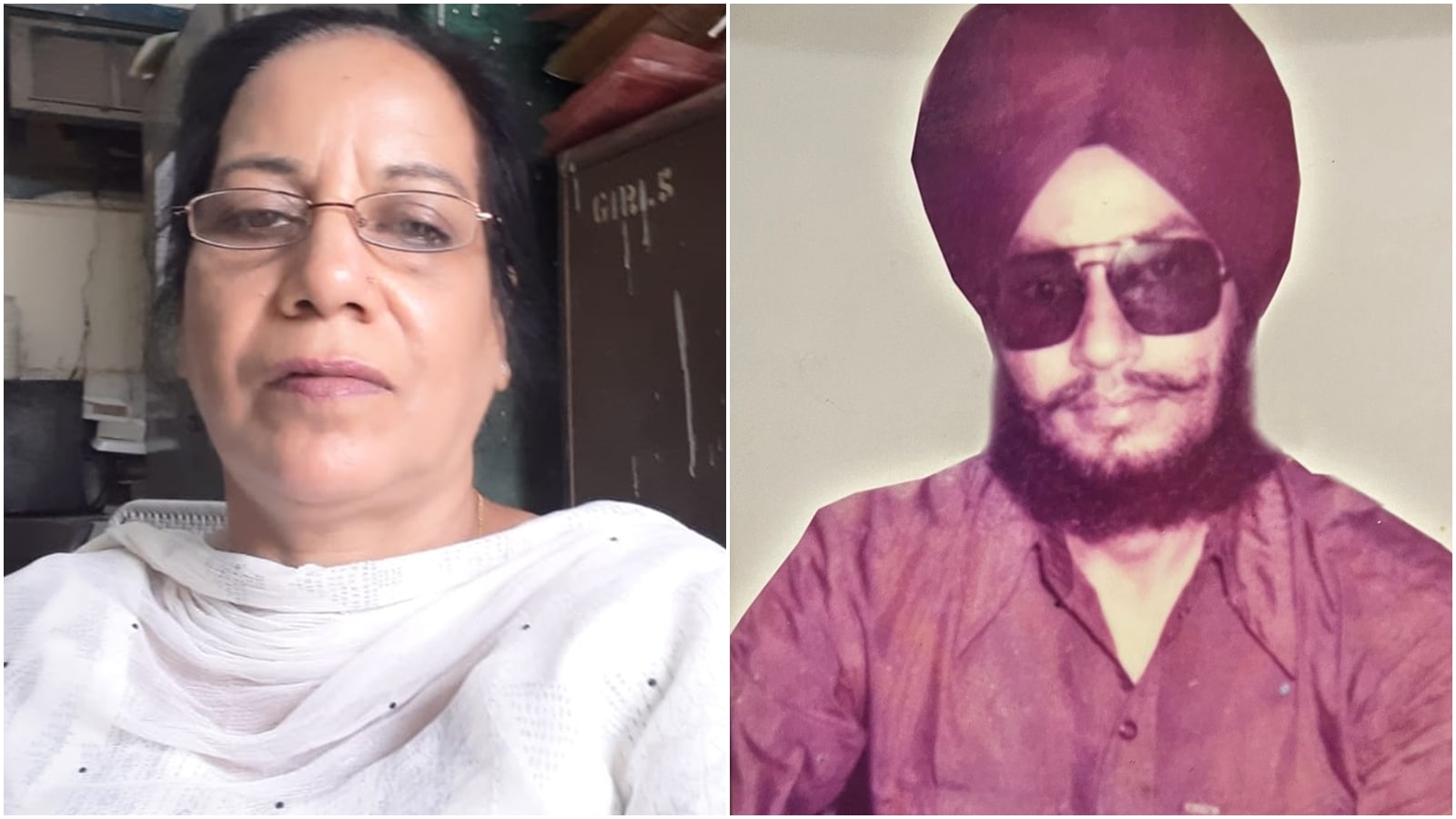
Nirpreet, who managed to track Lakhwinder down through the office of the Sub-Divisional Magistrate (SDM) near Azad Market, told The Indian Express, “I was aware that riot victims had gone there (the SDM’s office) to get compensation from the government. So I asked the office to look for a ‘Lakhwinder Kaur’ who may have approached them for compensation.”
The SDM’s office found a ‘Lokinder Kaur’ who had given them a Delhi address. That address took Nirpreet to Tilak Vihar’s Widow Colony, which was set up for the families of the riot victims.
Family members of the victims of the 1984 riots demonstrate against Congress leaders Jagdish Tytler and Sajjan Kumar at Bangla Sahib Gurdwara in New Delhi. (Express Archive/Arvind Yadav)
“I don’t think anyone tried looking for me before Nirpreet,” says Lakhwinder, adding that she burst into tears when she first met Nirpreet. “I didn’t even know that a case had been filed before I met her.”
Story continues below this ad
A day before her husband was murdered, Lakhwinder had gone to Dehradun with her child to visit her parents.
Lakhwinder’s husband performed kirtans (devotional songs) for a living and the family lived on rent in Vishnu Garden. Allegedly ill-treated and driven out of her marital house by her in-laws after her husband’s death, Lakhwinder lived with her parents in Dehradun for a while. She later moved to the Tilak Vihar colony.
The day after Nirpreet tracked down Lakhwinder, the two women went to advocate Phoolka’s chamber in the Delhi High Court, where he told the latter to consider him her “brother”. Lakhwinder filed a protest petition in court, which was accepted and the case was reopened in December 2007, says Phoolka, who is fighting the case. Between 2008 and 2015, two more closure reports were filed by the CBI, but both were rejected by the court.
Sikh leave a gurdwara during the 1984 riots. (Express Archive/Praveen Jain)
“Lakhwinder showed a lot of courage. It is only because of her protest petition that the closure reports by the CBI were rejected. There was a lot of pressure on her, but she didn’t succumb to it,” Phoolka says.
Story continues below this ad
From 2015 onwards, the court started monitoring the investigation. A hearing was held every two months and the CBI would hand over a status report in a sealed cover to the court. After multiple hearings and a lengthy investigation, in April 2023, the central probe agency said it had “fresh evidence” against Tytler — a corroboration of his voice sample with a speech he had made 39 years ago, allegedly connecting him to the events. On August 30, 2024, the court ordered framing of charges against him.
Meanwhile, Lakhwinder is thankful that “40 saal baad kum se kum system ko hamari yaad to aayi (at least the system remembered us 40 years after the riots)”. She says, “My life became a living hell after 1984. It is extremely difficult for a widow to survive in Indian society. Only I know how I raised my children.”
A woman seen outside her residence in Bhogal, New Delhi, during the 1984 riots. (Express Archive/Praveen Jain)
However, Nirpreet is apprehensive about Tytler moving the Delhi High Court against the trial court order. “We are scared that a stay will be granted (to him),” she says.
Witnessing her father’s death, Nirpreet says, drove her to fight for other victims like her. “I was extremely attached to my father. Watching him burn that day made me feel the most helpless I have ever felt. That sight is permanently etched in my memory forever. Had I been able to forget it, I would not have fought for other victims,” she says.
Story continues below this ad
In 2006, a report by the Nanavati Commission led to the reopening of multiple cases related to the 1984 riots, including that of Nirpreet’s father. She was also the key witness in a case where former Congress MP Sajjan Kumar was awarded life imprisonment for the murders of five members of a family based in Raj Nagar in 1984.
Riots accused Sajjan Kumar (right) and Jagdish Tytler (second from left) at a public meeting. (Express Archive/Hemant Mehta)
However, Nirpreet’s quest for justice was not straightforward. After her father’s death, she enrolled at Jalandhar’s Lyallpur Khalsa College for Women. There, she joined the All India Sikh Students Federation (AISSF) and eventually became its president. “Around that time, I was upset over the government supporting the riot accused instead of the victims. So I decided to use guns to avenge my father’s death,” she told The Indian Express.
Between 1988 and 1996, Nirpreet spent eight years in jail under the stringent Terrorist and Disruptive Activities (Prevention) Act (TADA). After her release, she started two businesses and an orphanage in Chandigarh. Families of the riot victims The Indian Express spoke to say Nirpreet has helped them financially over the years. She now runs a business from her house.
Calling Nirpreet a “force unto herself”, Phoolka says he came in contact with her in 2006, after the Nanavati Commission report. Just 16 years old in 1984, Nirpreet had witnessed a group set her father on fire in Delhi Cantonment’s Raj Nagar locality. The case related to her father’s murder is still pending before the court. “I have been in close contact with Nirpreet ever since we met. She volunteered to help us track many victims and witnesses. She also gave these victims and witnesses courage to keep fighting,” says Phoolka.
Story continues below this ad
Nirpreet talks of strong will and desire in the heart. “Agar koi chaahe, to sab kuch mumkin ho sakta hai. Mann me chaahat honi chahiye. Saalon tak system bahaana lagata raha ki hume witnesses mile nahi (If one truly wills, everything becomes possible…you must have a desire in your heart. The system kept giving excuses to say that they couldn’t find the witnesses)… It wasn’t easy to find anyone. When everyone else failed, I was handed over the difficult tasks,” she says.


 8 min read



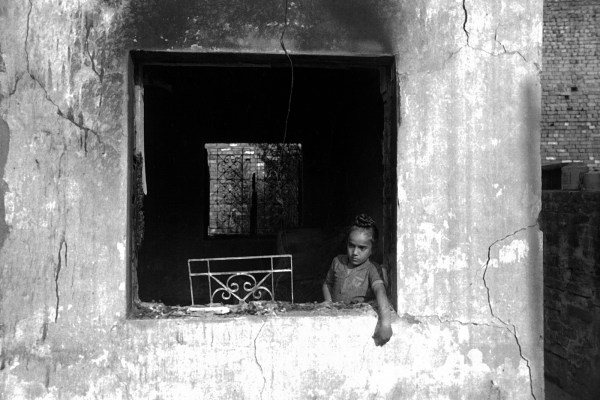 A child is seen during the 1984 riots. (Express Archive/Praveen Jain)
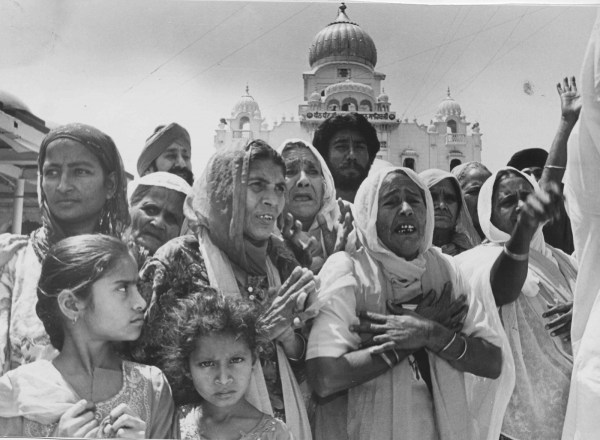 Family members of the victims of the 1984 riots demonstrate against Congress leaders Jagdish Tytler and Sajjan Kumar at Bangla Sahib Gurdwara in New Delhi. (Express Archive/Arvind Yadav)
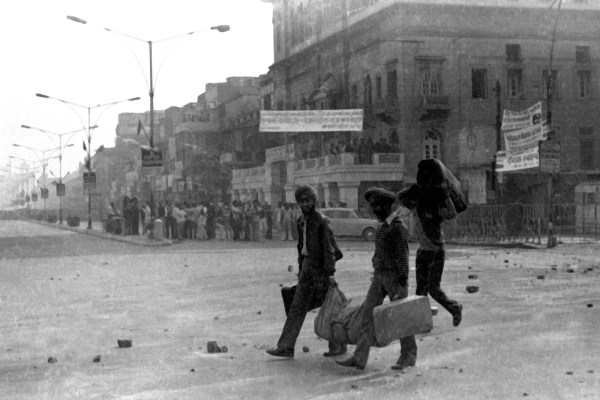 Sikh leave a gurdwara during the 1984 riots. (Express Archive/Praveen Jain)
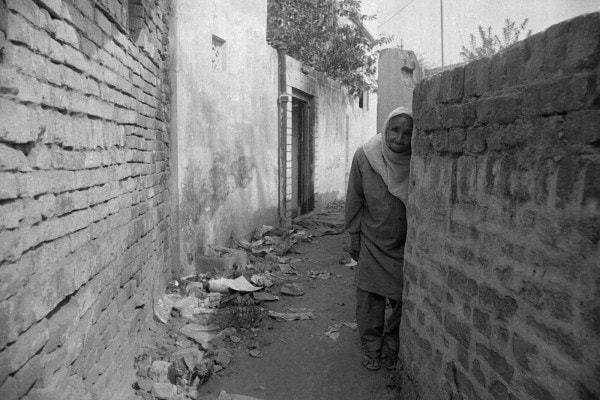 A woman seen outside her residence in Bhogal, New Delhi, during the 1984 riots. (Express Archive/Praveen Jain)
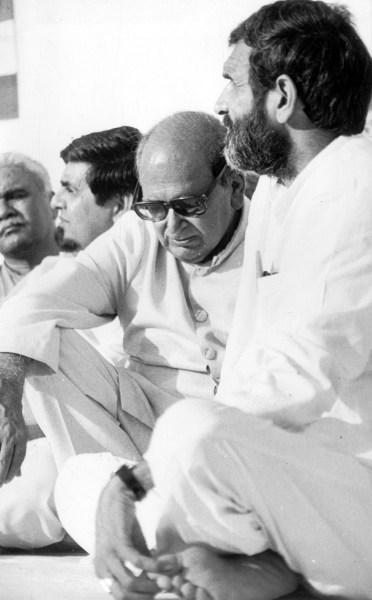 Riots accused Sajjan Kumar (right) and Jagdish Tytler (second from left) at a public meeting. (Express Archive/Hemant Mehta)
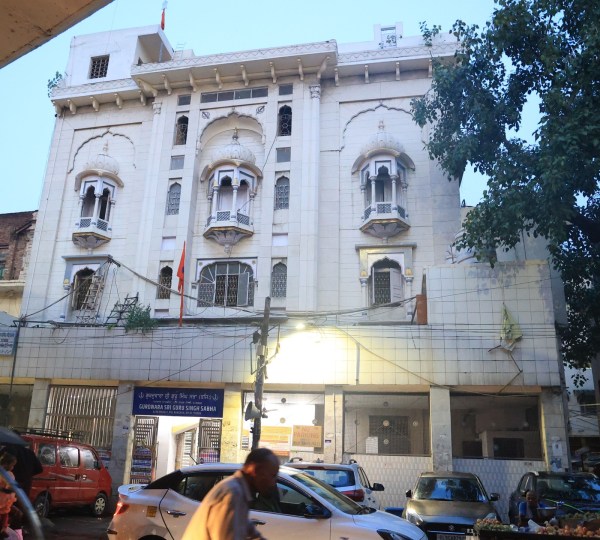 Gurdwara Pul Bangash, where three Sikh men died, during the 1984 anti-Sikh riots. (Express Photo by Amit Mehra)