Journalism of Courage



 Kashmir Singh, 76 and his wife Nanki Bai, 74 get emotional while narrating their ordeal.
(Express photo: Gurmeet Singh)
Kashmir Singh, 76 and his wife Nanki Bai, 74 get emotional while narrating their ordeal.
(Express photo: Gurmeet Singh)Fifty-three years after the Simla Agreement between India and Pakistan was signed on July 2, 1972, to “normalise relations after the 1971 war”, several senior citizens in Punjab’s border villages remember how the peace accord had paved the way for their safe homecoming.
During the 1971 war, Pakistan detained at least 300 civilians from Bakhu Shah and Muhammad Peer villages in Punjab’s border district of Fazilka. These villagers were only released months later, after the Simla Agreement was inked. According to the agreement, it was mutually agreed that “prisoners of wars and civilian internees” detained by both countries during the war would be released by both sides.
“We were lodged in Sahiwal jail for four months (December – April 1972) before being shifted to a camp in Harappa. My wife went into labour at the camp and was taken to the Sahiwal district hospital in a jeep. I was not allowed to accompany her. A Pakistani policeman informed me about my son’s birth after returning to the camp. I was elated, but we had no means, no money, or even a spoonful of sugar to celebrate the moment. All detainees in the camp had collectively named him Rawel Singh,” recalls Kashmir Singh, 76, from Bakhu Shah village.
Kashmir’s wife, Nanki Bai, 74, remembers how Pakistanis would gather around her to catch a glimpse of her son. “At Sahiwal government hospital, where I delivered my son, locals would say ‘India ka bachha paida hua (An Indian baby is born here). They would just gather to see him. We were hopeful that we would return to our country someday,” she says. Rawel died a few years ago.
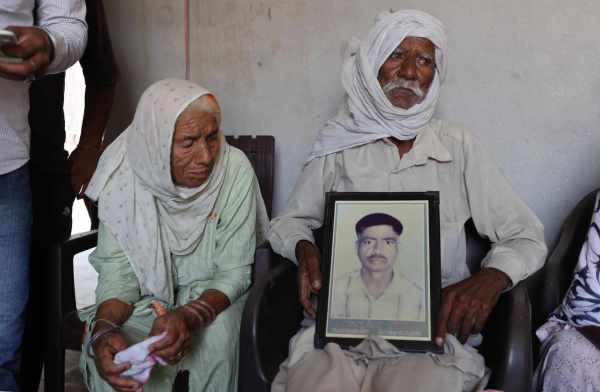 The couple with the framed image of their son Rawel Singh who was born in Sahiwal. (Express photo: Gurmeet Singh)
The Simla Agreement, signed by then Prime Minister Indira Gandhi and then Pakistan President Zulfikar Ali Bhutto, now lies in abeyance following the recent tension between the two neighbours after the Pahalgam terror attack, and Operation Sindoor.
However, for the Fazilka villagers who spent months in detention camps in Pakistan, the accord was the only ray of hope to return to their homes and reunite with their families.
“We returned to India via the Wagah border on September 16, 1972. We can never forget that day. Those scenes still roll in front of my eyes every night. All the hopes to return home were lost, but we finally made it,” says Kashmir.
Kashmir Singh was among the first batch of 273 Indian civilians released by Pakistan and handed over to Indian authorities at Wagah on September 16, 1972. In return, India had agreed to repatriate all 700 Pakistani civilians in its custody, according to a Reuters report dated September 16, 1972. The war ended with India’s victory, the creation of Bangladesh, and the surrender of 93,000 Pakistani soldiers.
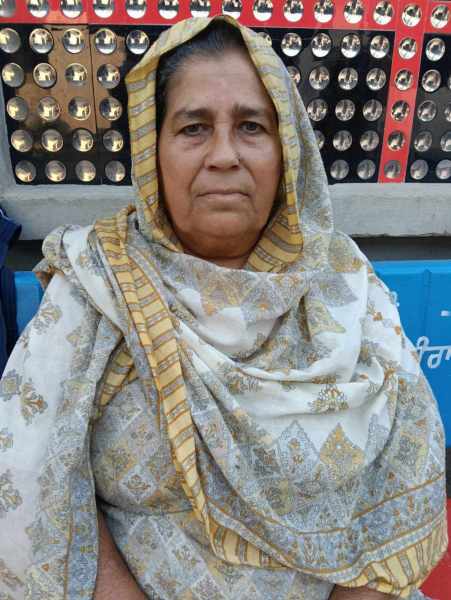 Chindo Bai, sarpanch of Muhammad Peer village. (Express Photo: Gurmeet Singh)
Like Singh, Channo Bai, 70, was also detained. “My son was left behind in Fazilka with his grandparents, but my husband and I were taken away. They had taken away all the jewellery we were wearing, and it was never returned to us even after our release. They looted everything we had,” she says.
Chindo Bai, in her sixties, who is the current sarpanch of Muhammad Peer village was around seven or eight years old at the time. “Firing had started, and an officer came. We were all captured and taken to Pakistan. We were lodged in Sahiwal jail. Half of the village was with us. Our elders said that it was only due to then PM Indira Gandhi that we were released and could return home,” says Chindo.
Dalip Singh, the lambardar (revenue official) of Bakhu Shah village, says that of nearly 300 people who were detained by the Pakistan Army in 1971, around 111 were from Bakhu Shah and the rest from Mohammad Peer and Pakka Chishti. “Very few of them are alive now. A 10-member committee from border villages, led by then panchayat member late Guradita Ram, had met Gandhi, demanding the release of our people. She had promised that she would secure their release, as we had 93,000 Pakistani soldiers in our captivity. She kept her word,” says Dalip.
Satnam Singh, 70, also from Muhammad Peer, says that he was detained along with his deceased parents, Nain Singh and Kartaro Bai. “I was around 16-17 then. They looted all our belongings. We were only left with the clothes we were wearing. I can never forget Sahiwal jail. We used to get roasted chana (chickpeas) once a week. Assi museebat badi vekhi hai (We have been through a lot),” he says.
Military historian Mandeep Singh Bajwa’s father, the late Major General K S Bajwa, was the head of the repatriations of the civilian internees and prisoners of war exchanged between India and Pakistan after the 1971 war ended. “Fazilka was the epicentre of the 1971 war, where the Pakistani Army had launched its offensive, but we had defended it successfully. The Pakistan Army had plundered these villages in Fazilka,” he says.
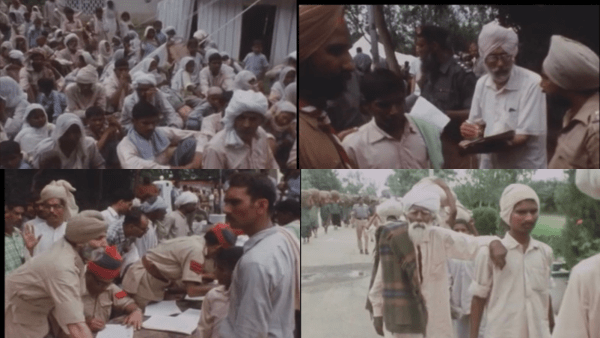 Screenshots from the Reuters archive video report when the first batch of Indian civilian detainees were released by Pakistan at Wagah on September 16,1972.
On their return from Pakistan, all that was left behind was “devastation”, the villagers recall, adding that their lives had to be rebuilt, brick by brick. “The Pakistan army had even looted doors and windows and uprooted handpumps. Our houses were razed; farms were reduced to barrenness. They left nothing behind. We had to restart our lives and rebuild everything. We never really came out of that trauma and poverty. Our children are still without jobs. We are still the first to be on the edge whenever there is India-Pakistan tension,” says Kashmir Singh.
Even after five decades, the border villages of Bakhu Shah and Muhammad Peer lack basic facilities such as proper roads, clean drinking water and a bridge for easy evacuation.
Chindo’s son Kulwinder Singh, 31, says, “We are always at the frontlines whenever there is tension between India and Pakistan, but even now we do not have a bridge to evacuate easily if there is a war-like situation again. We have written multiple letters demanding better roads and infrastructure in case there is a war again, but no one listens.”
“Even the thought of leaving our homes and rebuilding them gives us nightmares. We request the government to give us land in safer areas to build our homes, and then fight as many wars as they want. But who will hear us now when no one did for five decades? No one remembers what we endured for our country,” rues Kashmir.
Leela Dhar Sharma, 71, a Fazilka native and president of the Border Area Vikas Front, says: “Governments should have focused on the development of these villages as the villagers have endured a lot, but they have been forgotten like they never existed.”

 7 min read