Premium
This is an archive article published on October 15, 2024

India focused on pro-Khalistan elements in Canada, says report on foreign interference

Submitted in May, the report by a Canadian judge also highlighted how Government of Pakistan meddled in Canada to counter India’s growing global influence

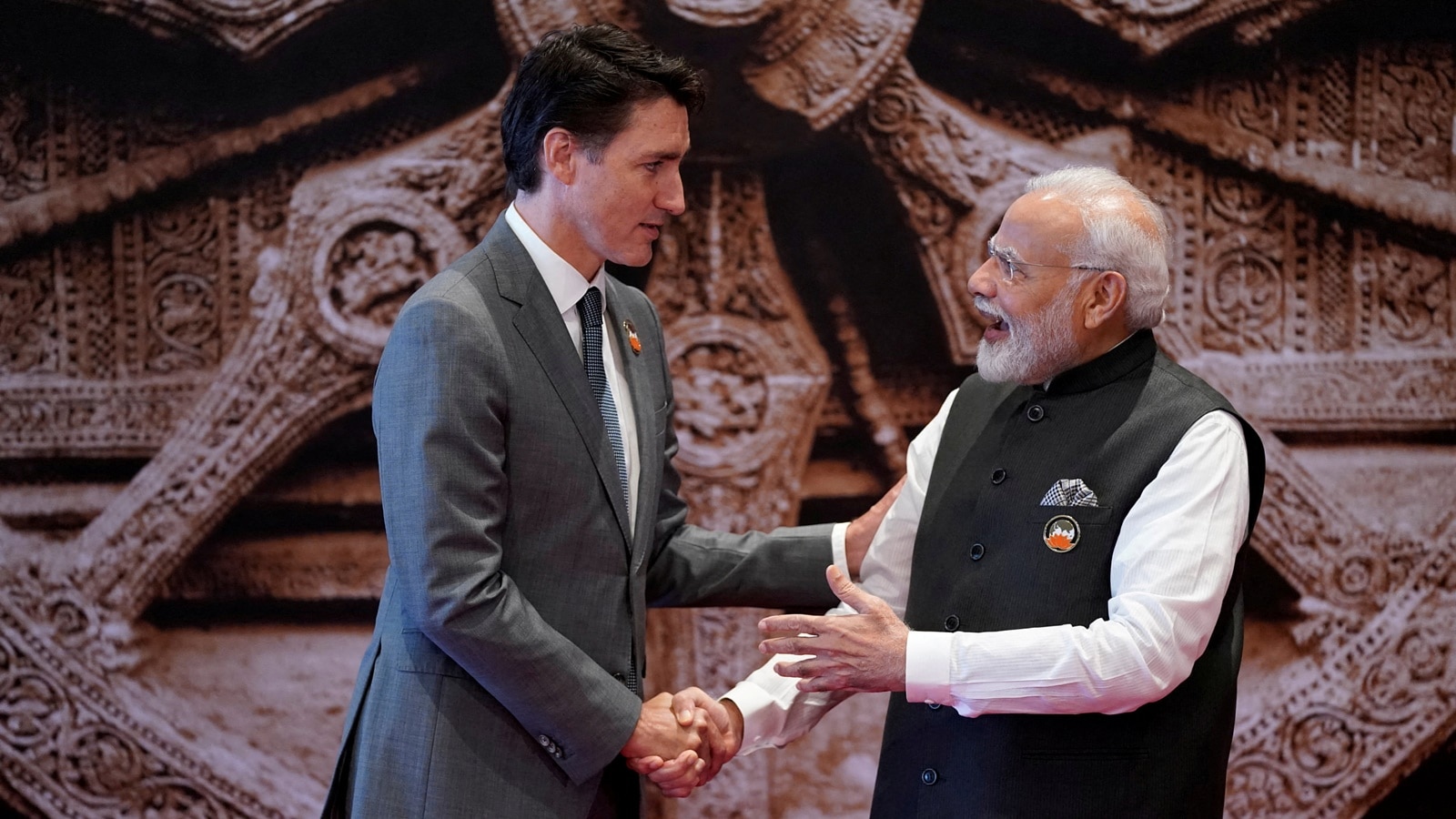
pm modi, justin trudeauPrime Minister Narendra Modi and Canada Prime Minister Justin Trudeau. (Reuters)

“Indian officials, including Canada-based proxies, engage in a range of activities that seek to influence Canadian communities and politicians.” These activities largely focus on “Canada-based supporters of an independent Sikh homeland (Khalistan).”

This was part of the findings in a report tabled in May this year by Justice Marie-Josée Hogue, who heads the Public Inquiry into Foreign Interference in Federal Electoral Processes and Democratic Institutions.

Prime Minister Justin Trudeau is slated to appear before the committee on Wednesday, where he is likely to put on record the latest findings by the Royal Canadian Mounted Police (RCMP) regarding the alleged interference by Indian officials.

Notably, Trudeau’s deposition comes a week after a document tabled before the commission said the RCMP is struggling to address the threat of foreign interference from countries such as India due to inadequate funds, lack of trained staff, and “a muddled mandate.”

For long, China and Russia were mainly on Canada’s radar for allegedly interfering in domestic politics. However, this changed on September 7, 2023, when the Trudeau government set up this commission, which was also mandated to look into interference by both India and Pakistan. Its formation coincided with Trudeau’s accusation that the Indian government was behind the killing of Sikh separatist Hardeep Singh Nijjar in Surrey last June.

India and ‘Khalistan’

The commission’s findings mainly highlighted the Indian government’s alleged preoccupation with pro-Khalistan elements, what

Foreign Minister Mélanie Joly termed as “transnational aggression” at a press briefing yesterday.

Story continues below this ad

The commission’s report observed that India’s interest in Canada relates to the country’s large South Asian community and alleged, “India views part of these communities as fostering anti-India sentiment, which represents a threat to Indian stability and national security. India does not differentiate between lawful, pro-Khalistani political advocacy and the relatively small Canada-based Khalistani violent extremism. It views anyone aligned with Khalistani separatism as a seditious threat to India. Targets of Indian foreign interference are often members of the Indo-Canadian communities, but prominent non-Indo-Canadians are also subject to India’s foreign influence activities.”

The report alleges that Indian officials in Canada increasingly rely on Canadian and Canadian-based proxies, as well as their network contacts, to conduct foreign interference, making it difficult to establish a direct link between India and these activities.

Proxies, the report alleged, liaise with Indian intelligence officials in both India and Canada, taking direction from them.

On India’s alleged interference in the 2019 and 2021 general elections, the report states: “A body of intelligence indicates that Indian proxy agents may have attempted to interfere in democratic processes, reportedly including through the clandestine provision of illicit financial support to various Canadian politicians as a means of attempting to secure the election of pro-India candidates or gaining influence over candidates who take office. In some instances, the candidates may not even know that their campaigns received illicit funds.”

Story continues below this ad

Under a subhead titled “Suspected Foreign Interference by the Government of India,” the report alleged that Indian officials had “continued to conduct FI (foreign interference) activities in Canada, both directly and through their Canadian proxies. During GE44, Indian officials were observed expressing interest in individual electoral contests and likely hoped pro-India candidates would prevail or, at least, that perceived anti-India candidates would not be (re-)elected.”

It further alleged that “a Government of India proxy agent may have attempted to clandestinely provide financial support to candidates in 2021.”

Interestingly, in 2018, the National Security and Intelligence Committee of Parliamentarians published a special report into the allegations associated with Prime Minister Justin Trudeau’s official visit to India in February 2018.

Hunting ground for Pakistan looking to pin India

The report also indicted the Government of Pakistan for foreign interference aimed at countering India’s growing global influence. “Canada is an attractive target for Pakistan because of its significant South Asian community and the presence of Canada-based groups and individuals that can be leveraged as proxy agents against India.”

Story continues below this ad

Pakistan, it said, targets specific Canadian communities as well as Canadian media entities. “Pakistan engaged in foreign interference by, for example, attempting to clandestinely affect the selection of politicians and candidates who are perceived to be more pro-Pakistan than pro-India.”

Chinese police stations in Canada

The inquiry also found that Ottawa had been unaware that China had set up illegal police stations in Canada until it learned of these activities from the Spain-based human rights organization, Safeguard Defenders.

Although the RCMP had claimed they shut down the police stations, Global Affairs official Weldon Epp testified that the Chinese embassy informed them in November 2022 that the stations were closed after Canada complained.

Manraj Grewal Sharma is a senior journalist and the Resident Editor of The Indian Express in Chandigarh, where she leads the newspaper’s coverage of north India’s most politically and institutionally significant regions. From Punjab and Haryana to Himachal Pradesh and the Union Territory of Chandigarh, she oversees reporting at the intersection of governance, law, politics and society. She also reports on the diaspora, especially in Canada and the US. With a career spanning journalism across several countries, academia and international development, Manraj brings a rare depth of perspective to regional reporting. She is widely regarded as a leading chronicler of Punjab’s contemporary history and socio-political evolution, particularly its long shadow of militancy, federal tensions and identity politics. Her book, Dreams after Darkness, remains a definitive account of the militancy years and their enduring aftermath. Professional Background & Expertise A gold medalist in mass communication and a post-graduate in English literature, Manraj has a multifaceted career spanning journalism, academia, and international development. She was also awarded a fellowship by National Foundation of India and did several in-depth pieces on Manipur. Internationally, she has reported from Israel, US, UK, Myanmar, and Mauritius Her key focus areas include: Regional Politics, History, Agriculture, Diaspora, and Security. Of late, she has started focusing on Legal & Judicial Affairs: Much of her recent work involves reporting on high-stakes cases in the Punjab and Haryana High Court, ranging from environmental policy to civil rights. International Consulting: She previously served as a consulting editor for the Asia Pacific Adaptation Network and a publishing consultant for the Asian Development Bank (ADB) in Manila. Academia: For five years, she was the managing editor of Gender, Technology and Development, a peer-reviewed international journal at the Asian Institute of Technology, Bangkok. Recent Notable Articles (Late 2025) Her recent reportage focuses heavily on judicial interventions and regional governance: 1. Environment & Governance "‘NGT can’t test legality of policy’: HC hears challenge to Punjab’s ‘Green Habitat’ plan" (Dec 22, 2025): Covering a critical legal battle over whether the National Green Tribunal has the authority to strike down a state policy regularizing farmhouses on delisted forest land. "High court pulls up Punjab poll panel over audio clip probe" (Dec 10, 2025): Reporting on judicial concerns regarding the transparency and fairness of local body elections. 2. Legal Rights & Social Welfare "HC issues notice to Punjab, Haryana over delay in building old age homes" (Dec 22, 2025): Reporting on a contempt petition against top officials for failing to establish government-run homes for the elderly as promised in 2019. "Victims can appeal acquittals in sessions court without seeking special leave" (Dec 19, 2025): Highlighting a significant procedural shift in criminal law following a Supreme Court ruling. "HC upholds benefits for Punjab FCI officer acquitted in 20-year-old bribery case" (Dec 19, 2025): A report on the concept of "honourable acquittal" and its impact on employee benefits. 3. Human Rights & Identity "As Punjab denies parole to MP Amritpal Singh, HC asks it to submit ‘foundational material’" (Dec 1, 2025): Covering the legal proceedings regarding the radical preacher and sitting MP's request to attend Parliament. "Protecting life paramount: HC backs Muslim woman in live-in after verbal divorce" (Nov 6, 2025): Analyzing judicial protections for personal liberty in the context of traditional practices. Signature Beats Manraj is recognized for her ability to decode complex judicial rulings and relate them to the everyday lives of citizens. Whether it is a 30-year-old land battle in Fazilka or the political implications of Kangana Ranaut’s candidacy in Mandi, her writing provides deep historical and regional context. Contact @grewal_sharma on X manrajgrewalsharma on Instagram ... Read More

Stay updated with the latest - Click here to follow us on Instagram

Latest Comment
Post Comment
Read Comments
Advertisement
Loading Taboola...
Advertisement