Premium
This is an archive article published on May 18, 2020

How to sanitise essential items at home, PGI doctor explains

Virus cannot survive or remain stable on newspapers, cash or books for long. one should keep them outside for 2-3 hours before using them.

How to sanitise essential items at home, PGI doctor explains Plastic or metal items like pen or pencil box can be sanitised as there is evidence that sanitisers work on them. (Source: File Photo)

During the pandemic, as people bring essentials or other items home, the fear of contracting coronavirus from the same also looms large. PGIMER’s Department of Community Medicine and School of Public Health Professor Dr Sonu Goel explains why sanitisers are not recommended for use on fruits and vegetables and handling of cooked food can be a cause of concern. While busting myths, Professor Goel also sheds light on the protocol to be followed while bringing essentials to one’s home.

How can we ensure safety as we get vegetables and fruits from the vendors?

This virus is likely to remain on fruits and vegetables for 6-8 hours and if they are exposed to heat, the virus stays on it for less than four hours. In any case, when one get vegetables from vendors, the general protocol should be that they should keep it outside for four hours within the packet itself.

After the said time, dispose of the packet and put the eatables in warm water or wash them with warm water and baking soda to ensure complete safety.

There are many who use sanitisers on vegetables and fruits. Is it a suitable method?

Sanitisers are completely not recommended for vegetables and fruits, rather they can be harmful because of the presence of chemicals. Moreover, there is no evidence that the sanitisers can kill virus on vegetables and fruits.

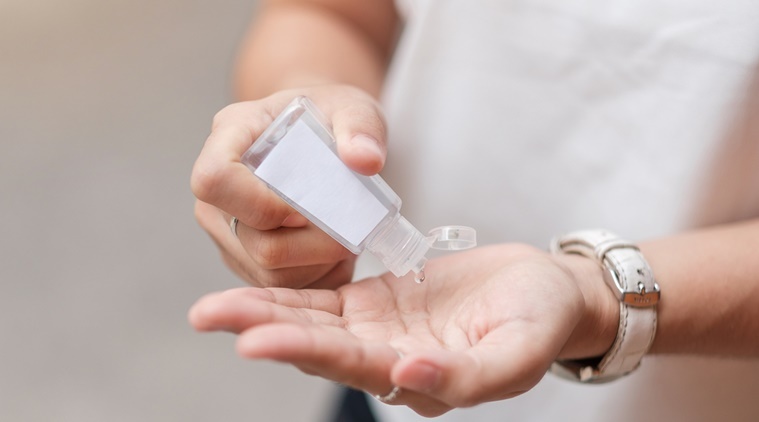
Sanitisers are useful only for our hands, body and metal or steel surfaces. Spraying chemicals on vegetables and fruits, becomes all the more harmful as it is chemicals being sprayed on things which one will consume.

Warm water is sufficient or put just a drop of KMnO4 or potassium permanganate in the warm water and dip the eatables in it. It is the safest to use and also pocket-friendly.

If one does not have potassium permanganate, baking soda can be used in warm water. Wear a mask while doing it.

Story continues below this ad

What should be done in case of items such as bananas or onions which cannot be dipped in warm water or washed?

It is like a catch 22 situation especially now when the temperature outside is soaring and there are perishable items also. Such items should be put in a closed space where heat does not reach it directly.

The aim is to not expose yourself to these things and keep them outside for 3-4 hours before consuming them. Do not immediately cook these vegetables or consume the fruits.

How to sanitise medicine strips?

In case of medicines strips too, there is no evidence that sanitisers work on them. Keep them in a closed box at room temperature. One should not get exposed to them immediately after buying them as they too have changed hands several times.

Story continues below this ad

Ensure that you does not put these medicines under direct sunlight as it could affect its efficacy.

Many companies have launched vegetable sanitisers. Do you recommend them?

I am not aware of the composition of these sanitisers. If these vegetable sanitisers have KMnO4 or potassium permanganate, then it is fit for use or else not.

What should one do in case of grocery items such as cheese and milk which cannot be kept outside for four hours?

If cheese and milk are packed, one should wash them with soap water and immediately dispose of the outer packet (all while wearing ones mask). However, these packets should not be disposed of in an open dustbin.

They should be discarded in a way that they are not directly exposed to any human being. In case of items in plastic, metal or cold drink cans, the virus may remain for 24-48 hours.

Story continues below this ad

Thus, such items should not be refrigerated, but kept at room temperature where there is no human exposure.

Is cooked food that is ordered from outside safe? What about cooked food that comes packed in boxes?

There is no problem with cooked food because it is already heated at boiling temperature which the virus will not survive. Cooked food is not the issue but its handling is a cause of concern as someone must have packed it and then delivered.

It changes hands several times in the process. Ideally, one should avoid cooked food from outside. If there are unavoidable circumstances, ensure that the packet it is coming in, such as the pizza box or cake box, are discarded immediately.

There is no evidence that sanitisers are effective on cardboard surfaces, thus, using it may prove futile.
What to do in case of cash, newspapers or stationery items? Many governments are sanitising books and recommending the same.

Story continues below this ad

Virus cannot survive or remain stable on newspapers, cash or books for long. one should keep them outside for 2-3 hours before using them.

Sanitisers may be of no use on these. Plastic or metal items like pen or pencil box can be sanitised as there is evidence that sanitisers work on them.

How should the purchased garments or shoes be sanitised? Should the received letters and courier be sanitised?

One should make sure that the shoes worn outside are not used inside the house, as there is a possibility that one could have stepped on an infected person’s spit or similar contaminated surface, while outside.

In case of purchase of new garments and shoes, they should be kept in the verandah or balcony for 48 hours. It is recommended that one should wash the new garments before wearing it.

Story continues below this ad

Courier or post received should also be kept in the sunlight before being accessed- if paper-based, it should be kept under sunlight for 3-4 hours, while if it is plastic or metal based, it should be disinfected.

One must also ensure that they use their own pen while signing on receipt letters brought by the postman.

Hina Rohtaki is a Special Correspondent at The Indian Express, based in Chandigarh. She is one of the most prominent journalists covering the Chandigarh Administration, civic issues, and the unique political status of the Union Territory. Professional Background Experience: She has been in the field for over a decade and is known for her investigative reporting on administrative waste and urban governance. Awards: She is a recipient of the prestigious Ramnath Goenka Excellence in Journalism Award, which was presented to her by the President of India in January 2020. She was also awarded the Jethmalani prize (The Will of Steel Awards) in 2025 in the Empowerment category for a series of articles that highlighted the struggles of Covid widows. Core Beat: Her primary focus is the Chandigarh administrative structure, the Union Territory's financial management, and urban development projects. Recent Notable Articles (Late 2025) Her recent work highlights a focus on government accountability, administrative expenditures, and civic trends: 1. Investigative & Financial Reporting "Fuelling power: Senior UT IAS officers guzzled petrol worth Rs 30 lakh in 2 yrs" (Dec 14, 2025): An investigative report detailing the high fuel bills of top bureaucrats, including the Finance Secretary and Chief Secretary’s staff. "Admn spends Rs 1.5 crore on dismantling road railings and fixing again after increasing height" (Dec 8, 2025): Highlighting administrative waste on "non-viable" solutions for pedestrian control. "Chandigarh’s finances under ministry’s watch now" (Nov 27, 2025): Reporting on the new requirement for MHA approval for all new projects in the UT. 2. Governance & Constitutional Status "What will it mean for Chandigarh if it is brought under Article 240?" (Nov 24, 2025): An "Explained" piece on the potential constitutional shift that would grant the President more power over the UT's governance. "MP Manish Tewari moves Bill seeking directly elected Mayor with 5-year tenure" (Dec 6, 2025): Covering the legislative push to reform Chandigarh's municipal leadership structure. "No proposal to increase Mayor's term in Chandigarh by 5 years: Centre" (Dec 10, 2025): Reporting on the Union government's response to demands for a longer mayoral term. 3. Urban Infrastructure & Environment "Chandigarh admn cuts power to India's tallest air purifier, asks firm to dismantle it" (Nov 17, 2025): A critical report on the failure of a high-cost environmental project deemed "of no use" by experts. "UT rethinks 24/7 water supply project as costs soar" (Nov 26, 2025): Detailing the financial challenges and delays in modernizing the city's water network. "Centre 'obfuscating, covering up' MC's shifting deadlines for clearing Dadu Majra dump" (Dec 12, 2025): Reporting on the ongoing controversy surrounding the city's major waste dump. 4. Lifestyle & Local Trends "Chandigarh turns into a Thar city as women fuel the surge" (Dec 2, 2025): A feature on a unique automotive trend in the city, with a record 600 registrations by women drivers this year. "After fivefold spike in 2023, EV sales struggle to pick pace in Chandigarh" (Dec 2, 2025): Analyzing the slowdown in electric vehicle adoption despite previous surges. Signature Beat Hina is known for her meticulous tracking of RTI (Right to Information) data to expose administrative inefficiency. Her "Ground Zero" reporting on the Dadu Majra garbage dump and her scrutiny of the Chandigarh Smart City projects have made her a key figure in the city’s civil society discourse. X (Twitter):  @HinaRohtaki ... Read More

Stay updated with the latest - Click here to follow us on Instagram

Latest Comment
Post Comment
Read Comments
Advertisement
Loading Taboola...
Advertisement