Premium
This is an archive article published on October 22, 2020

We are all playing our part, says assistant professor at PGIMER

According to the professor, the last six months have proved to be a both a new learning and challenging experience amid the pandemic as he works out new strategies and schedules to ensure seamless coordination for effective and smooth operations at the institute and care for patients.

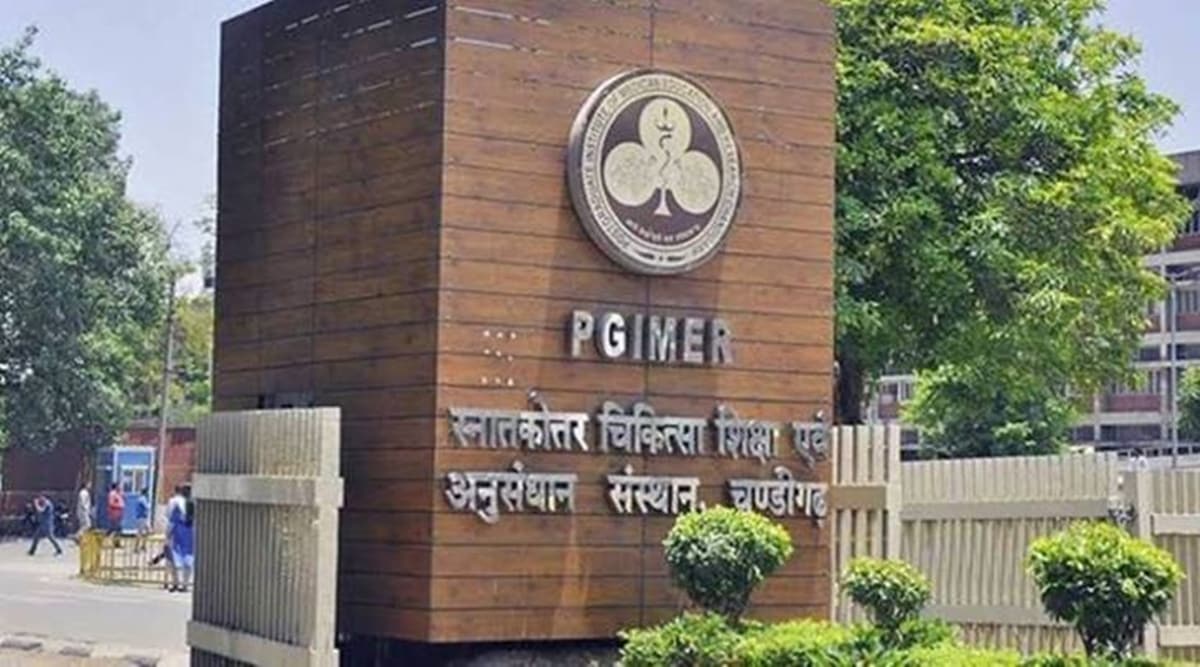
PGIMER, ChandigarhThere was a significant drop in firecracker eye injuries during this Diwali reported at PGIMER.

For someone handling the responsibility of the Medical Emergency and Advanced Trauma Centre at PGIMER, Chandigarh, a day at work is anything but predictable.

And due to the coronavirus pandemic, the last six months have proved to be a both a new learning and challenging experience for Dr Raman Sharma, Assistant Professor, Department of Hospital Administration, as he worked out new strategies and schedules to ensure seamless coordination for effective and smooth operations at the institute and care for patients.

“We can never work in isolation and it is all a team effort. For the last few months, we have received constant guidance from our seniors to prepare ourselves to deal and face an unknown situation. Covid-19 introduced a brand-new dimension to our work in the Emergency, which is really the face of the hospital– one that is constantly dealing with a lot of pressure on every front and also a large number of patients. While attending to patients and providing them first aid, each patient had to go through a Covid test, which required quick decision making, involvement of various departments and depending on the result, shifting the patient to the NHE and then providing treatment,” shared Dr Sharma, who did his MD in Hospital Administration from PGIMER.

“Initially, we felt a lot of pressure, but the field of hospital administration prepares you for crisis situations, and the need of the hour is to keep your cool, follow guidelines and deal with issues with clarity. Initially, there was a lot of stigma attached to the disease, which made it tougher for patients, but now I think, many of us know we have to live with it. All we can do now is be safe, protect ourselves and others,” he added.

He agreed that doctors, who are in the middle of it all, are concerned about the safety and health of their families, but the only way is out to take all protective measures, avoid exposure, wear masks and wash hands.

“We cannot avoid overcrowding in emergency and trauma. The only option is to be cautious. I have been quarantined and tested also, but the result was negative and so far, we all are working together to ensure the best for our patients, no matter what the challenge.”

Dr Sharma is also responsible for handling the bodies of people who had tested positive for the virus, and he agreed that mortuary management is a sensitive matter and does take an emotional toll on him.

Story continues below this ad

With many fears attached to the disease, Dr Sharma said for many whose loved ones had passed on, it was a traumatic experience, as many felt they should not touch the body, come close to it and counselling them was a part that he took over.

“There are protocols about how to handle the body, which are followed very strictly, and our first concern is the correct identification of the body, making sure it is wrapped properly and sanitised. The Administration has provided us a vehicle to take the body to the crematorium, with the Red Cross and our health workers giving their best.”

As for what we can expect in the coming weeks in regards to Covid-19, Dr Sharma said prevention is better than cure, and this is the time to be extra cautious, wear masks, wash hands, and avoid crowding to check the spread of disease.

Parul is a Principal Correspondent at The Indian Express in Chandigarh. She is a seasoned journalist with over 25 years of experience specializing in public health, higher education, and the architectural heritage of Northern India. Professional Profile Education: Graduate in Humanities with a specialized focus on Journalism and Mass Communication from Panjab University, Chandigarh. Career Path: She began her career covering local city beats and human interest stories before joining The Indian Express in 2009. Over the last decade and a half, she has risen to the rank of Principal Correspondent, becoming the publication’s primary voice on Chandigarh’s premier medical and academic institutions. Expertise: Her reporting is deeply rooted in the institutional dynamics of PGIMER (Post Graduate Institute of Medical Education and Research) and Panjab University. She is highly regarded for her ability to navigate complex administrative bureaucracies to deliver student-centric and patient-centric news. Recent Notable Articles (Late 2024 - 2025) Her recent work highlights critical reporting on healthcare infrastructure, academic governance, and urban culture: 1. Public Health & PGIMER "PGIMER expands digital registry: Centralized patient records to reduce wait times by 40%" (Nov 20, 2025): A detailed look at the digital transformation of one of India's busiest medical institutes to tackle patient influx. "Robotic Surgery at PGI: Why the new urology wing is a game-changer for North India" (Oct 12, 2025): Reporting on the acquisition of state-of-the-art medical technology and its impact on affordable healthcare. "Shortage of life-saving drugs: Inside the supply chain crisis at government pharmacies" (Dec 5, 2025): An investigative piece on the logistical hurdles affecting chronic patients in the tri-city area. 2. Education & Institutional Governance "Panjab University Senate Election: The battle for institutional autonomy" (Dec 18, 2025): In-depth coverage of the high-stakes internal elections and the friction between traditional governance and central reforms. "Research funding dip: How PU’s science departments are navigating the 2025 budget cuts" (Nov 5, 2025): An analysis of the fiscal challenges facing researchers and the impact on India's global academic ranking. 3. Art, Culture & Heritage "Le Corbusier’s legacy in peril: The struggle to preserve Chandigarh’s Capitol Complex" (Dec 22, 2025): A feature on the conservation efforts and the tension between urban modernization and UNESCO heritage status. "Chandigarh Art District: How street murals are reclaiming the city’s grey walls" (Oct 30, 2025): A cultural profile of the local artists transforming the aesthetic of the "City Beautiful." Signature Style Parul is known for her empathetic lens, often centering her stories on the individuals affected by policy—whether it is a student navigating university red tape or a patient seeking care. She possesses a unique ability to translate dense administrative notifications into actionable information for the public. Her long-standing beat experience makes her a trusted source for "inside-track" developments within Chandigarh’s most guarded institutions. X (Twitter): @parul_express ... Read More

Stay updated with the latest - Click here to follow us on Instagram

Latest Comment
Post Comment
Read Comments
Advertisement
Loading Taboola...
Advertisement