4 min read
Stay updated with the latest - Click here to follow us on Instagram

Journalism of Courage



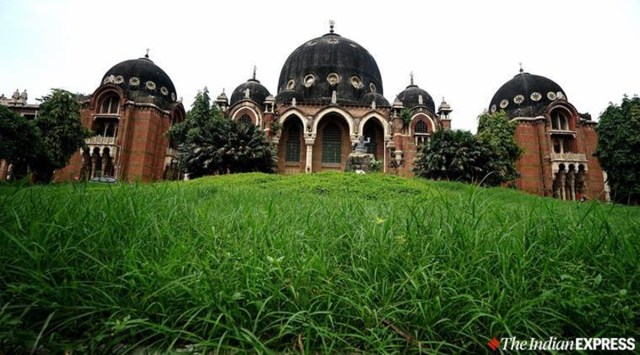 The decision to withdraw the field tours at the MSU had sparked critcism. File
 Two weeks after the Faculty of Social Work of Maharaja Sayajirao University (MSU) in Vadodara drew criticism for replacing the mandatory field tours – rural camps and study exposure – with summer internships, the Faculty has now decided to “defer the agenda” and continue with its old course outline. The decision to defer the revision in the module was communicated by Bhavna Mehta, the Dean of the Faculty, to senate member Kapil Joshi, who has been demanding minutes of the meeting where the decision to scrap the rural camp and study tour was made.
On May 10, at a meeting of the Faculty of Social Work held at the university office, the management and the faculty members “unanimously” decided to eliminate the study tours and rural camp from the mandatory modules of the Master of Social Work (MSW) and Master of Human Resource Management Programme (MHRM), citing “safety issues”, “logistical challenge”, “increased financial cost”, “lack of faculty members” and “behavioural issues among the students”.
Speaking to The Indian Express, Mehta confirmed the Faculty has decided to continue with the field tours “keeping in mind the sentiments” of many people. “There will be no change in the course outline for this year. The students will have their rural camps and study tours as the course module requires… We have taken the decision in consultation with the experts and deferred the agenda back to the Board of Studies,” Mehta said.
Earlier on Monday, Mehta informed senate member Kapil Joshi about the decision of the Faculty via a text message to “rest our differences” as Joshi had been demanding the minutes of the meeting of the board.
Joshi, who had raised objection to the decision of the FSW to eliminate the camp and tour, told The Indian Express, “I have been asking the University, including the Registrar to share the minutes of the meeting where this decision was finalised. They have been putting it off and so, I told them today that I will have to make it public that the University is unwilling to even share the minutes of the meeting… I received a text from the Dean immediately after that informing me that the decision had been withdrawn. It is indeed necessary that the students coming to the faculty benefit from the field exposures.”
Joshi shared a screenshot of the text message from Mehta, which read, “With reference to the Faculty Board agenda item related to replacing Rural Camp and Study tour with Summer Internship and Block Placement in MSW and Summer Internship and Tutorials in MHRM program, this is to inform you that keeping the sentiments of you and many others, the Faculty members and experts have agreed to defer the agenda back to BOS. Thus, Faculty will continue with its existing pattern related to Rural Camp and Study tour and there will be no change. Hope this rests our differences.”
The rationale submitted by the faculty, with the proposal to eliminate the tours, earlier in May, had underlined, “Considering the lack of staff members in the faculty… four faculty coordinators are required for the rural camp – two each for MSW and MHRM programmes. With the increase in the number of students in both MSW and MHRM courses, it becomes a challenge for the faculty members to identify modest and suitable accommodation and travel arrangements for both boys and girls… the coordinators face a lot of challenges in identifying and seeking permissions from the agencies to permit students for the visits… as well as behavioural issues among the students.”
The Rural Camp Exposure is 2 credit assignment, where first-year students of MSW and MHRM programmes are expected to stay for 8 to 10 days in rural areas of Gujarat. The study tour exposure is about 8 to 10 days of visits to other metro cities.
The students are expected to visit and understand the functioning of different organisations rendering their services in social work and human resources, such as industrial, hospitality, medical and psychiatric as well as correctional organisations. Both the rural camp and the study tour exposure require the expenses of travel, accommodation, food and other necessary arrangements to be borne by the students.
Stay updated with the latest - Click here to follow us on Instagram