A full-scale trade war between the US and China is brewing, after American President Donald Trump threatened to impose tariffs of more than 100 per cent on Chinese goods imports from April 9. For the world, the impending slugfest between the world’s two biggest economies is indeed bad news, especially when there is already widespread upheaval in the trade world and analysts are upping the odds of an American recession .
Tariffs of over a 100 per cent on Chinese exports of goods by the US would essentially translate into a trade embargo, and could potentially set off an unmanaged decoupling of direct trade between the world’s two biggest economies. The US is the single biggest importer in the world, while China is its biggest seller of goods. An escalatory spiral in the trade war between the two, inextricably interlinked economies would, in the short term, bring back market volatility after a short breather of sorts.

In the longer term, if this were to fester, this tariff war will lead to a more bifurcated world. Trump’s economic vandalism could also be a huge opportunity for China to stamp its influence over a larger sphere of countries, given that most nations in the world have a strong reason now to distrust America. All of this, as analysts are saying, does make a post-American world a reality.
While it is still unclear how tariffs imposed by the US on other countries will pan out, there is always the possibility of some goods from China getting into the United States through third countries, say Vietnam or Mexico. So while American consumers might still get to buy Chinese goods, what is clear is that, one way or the other, inflation in the US is set to go up. The big question, though, is whether this is going to end up hurting the Chinese more than it hurts the US, especially as Trump signalled his openness to talking to other countries for de-escalating his tariff threat?
American tariffs and Sino-US trade
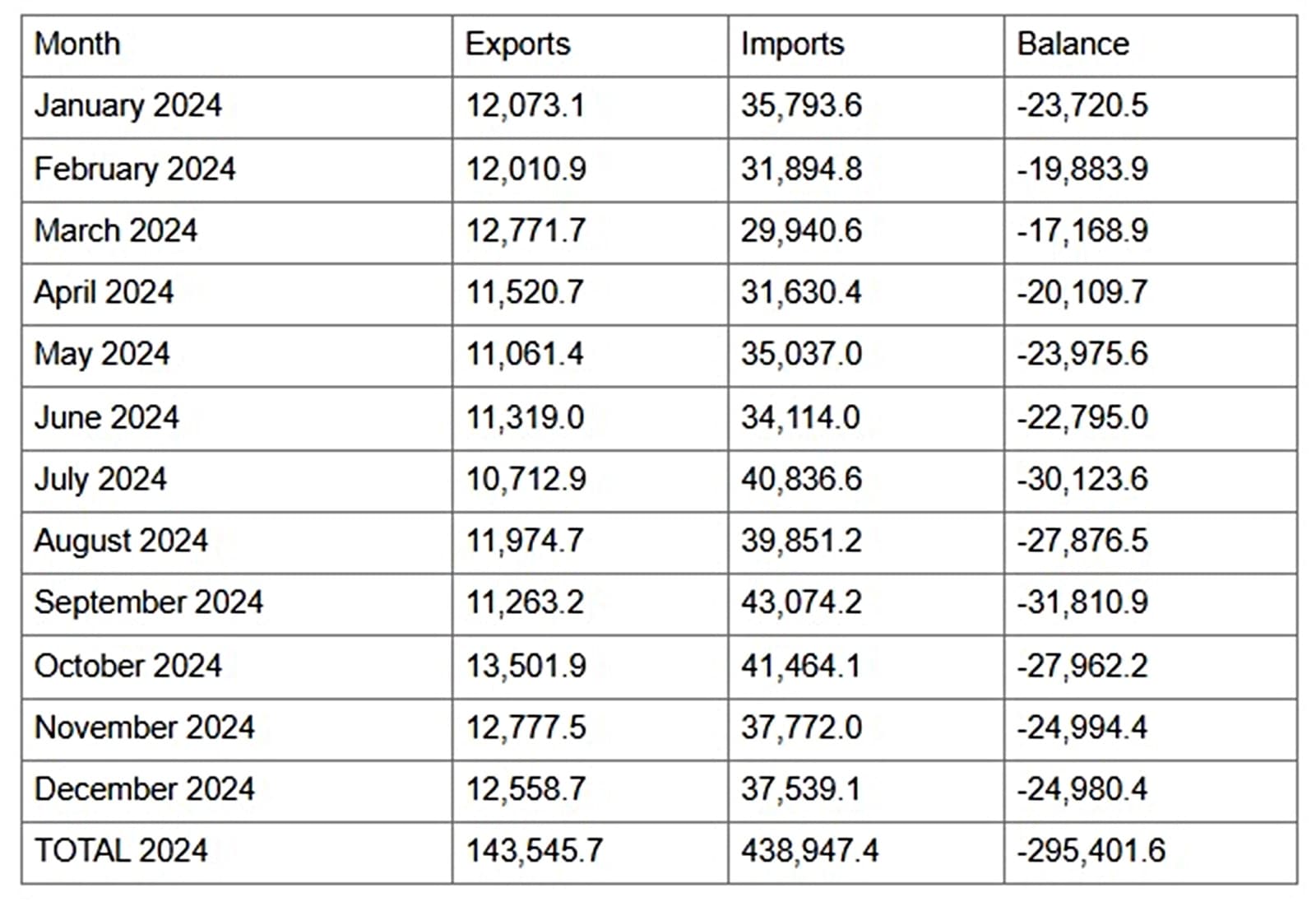
America’s total goods trade with China was estimated at $582.4 billion in 2024. US goods exports to China in 2024 were $143.5 billion, down 2.9 per cent ($4.2 billion) from 2023 while US goods imports from China in 2024 totaled $438.9 billion, up 2.8 per cent ($12.1 billion) from 2023. That left the US running a trade deficit with China – the difference between what it imports and exports – of around $295bn last year, which is a considerable trade deficit amounting to nearly 1 per cent of the US economy, but far less than the $1trillion figure that Trump has repeatedly claimed this week.
So far, neither China nor the US are backing down on their respective tariff actions. China has said it will “fight to the end” rather than capitulate to what it sees as US coercion, and has hiked its own trade barriers against the US in response to American tariff increases.
In the short term, there is a likelihood that these tariffs will go through because Washington DC is prioritising negotiations with Japan, South Korea and others in China’s vicinity, before it may sit down with Beijing.
Story continues below this ad
The tariffs on China have been progressively mounting, with Trump imposing a 10 per cent tariff on all Chinese goods in February, which was doubled to 20 per cent in March last week, and then he announced another 34 per cent to take effect on April 9. Trump then threatened an additional 50 per cent levy if China did not pull back reciprocal tariffs of its own, bringing total US taxes on Chinese imports to a whopping 104 per cent from April 9. With a cumulative 104 per cent tariffs, two things could happen. One, these taxes could make a lot of things too expensive, and it will be prohibitive to import a lot of items from China into the US. Two, there are many things that the US only imports from China. These tariffs, if they stay, would mean Washington DC will either have to develop alternative sourcing options or make do without these items, which include critical drug ingredients, key rare earth elements used in military hardware and avionics, and high-end consumer items.
For the US, in this problem of fair trade with China, tariffs have historically not been the biggest bugbear. The more serious issues have been the constant currency manipulations by Beijing, of pegging the renminbi lower than what its intrinsic value ought to be, to incentivise its exports. The other issue includes a raft of non tariff barriers – barriers to trade imposed by Beijing on foreign companies in sectors such as consumer banking and high-end manufacturing.
More power, greater leverage
All this triggers a question: who has greater leverage between the two and more staying power? That could hold the key to the question of who backs down first.
Theoretically, the US has more economic power, because it imports more from China than the other way around. Also, with Chinese domestic consumption still in the doldrums, Beijing is excessively dependent on external demand for its goods.
Story continues below this ad
But in some other aspects, it does seem that Beijing could have greater leverage and the staying power in managing an escalatory tariff spiral, at least in the short term. Unlike Trump, Chinese President Xi Jinping is not faced with elections anytime soon, there is very little internal opposition to his management of the economy at this point in time, and the country is already in the middle of a stimulus package roll out that includes a combination of fiscal and monetary measures. China has far more staying power when it comes to continuing its fiscal stimulus package well into the future. Beijing also has the option of stepping up its internal project of deepening the country’s domestic consumption market, something that will take in some of its export surpluses if the tariff war were to be long drawn out.
The US is at a disadvantage in all of this. Apart from strategic imports, Americans also buy a lot of everyday items from China – clothing, shoes, consumer goods. A lot of the cost of higher tariffs on these goods are already being passed through to American consumers with the first round of Trump tariffs, and people generally on lower incomes are hit harder than the well off. So, it is only a matter of time that pressure from domestic constituents would pile on the Trump administration.
For Washington DC, there is little firepower on the fiscal side, except the prospect of an extension of corporate tax concessions that Trump had promulgated in his last term. Worryingly, there is also an impending showdown that the Trump administration is likely to have with the US Federal Reserve on the issue of cutting interest rates, which Fed Chair Jerome Powell has indicated is unlikely to happen anytime soon. It might be tougher for the US to play the long game with China on this escalatory spiral.
The Chinese evidently feel that this is a sort of bullying situation, and in terms of the perception of their domestic constituents, strongman Xi would not want to appear to be seen as yielding. Especially after Beijing has ratcheted up the rhetoric, it will be hard to back down until perhaps the US offers an olive branch.
Story continues below this ad
The unsaid advantage that goes without saying is that in all of this, Trump is extremely malleable and could pivot suddenly, especially if he gets a symbolic victory in his stated project of moving manufacturing back into the US.
Problems with tariffs
Once tariffs come, they’re very difficult to remove. The tariffs on China imposed by Trump in his first term as president were kept in place and added to by his successor President Joe Biden. A study by economists at MIT, Harvard, University of Zurich and the World Bank had concluded that Trump’s tariffs in his last term neither raised or lowered US employment. Despite Trump’s 2018 taxes on imported steel, for instance, the number of jobs at American steel plants was barely impacted. On the other hand, the retaliatory taxes imposed by China and other nations on US goods had “negative employment impacts,’’ especially for farmers, the study found. These retaliatory tariffs were only partly offset by government aid that Trump was forced to dole out to farmers, partly funded by the incremental revenues raised by the tariffs.
This time around, China, after some initial restraint, has reacted to the tariffs almost in full. A protracted trade war with the US would mean China would look for alternate markets for its products, which, according to research firm GTRI, increases the possibility of dumping into other consumer markets such as the European Union and India.
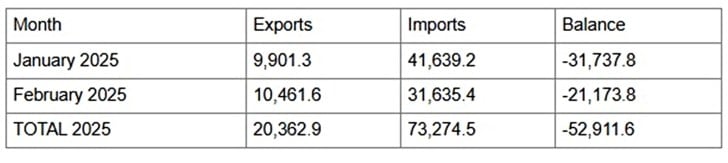
2025: US trade in goods with China.
Source: US Census Bureau
2024: US trade in goods with China
Story continues below this ad


 9 min read



 Source: US Census Bureau
 Source: US Census Bureau