5 min read





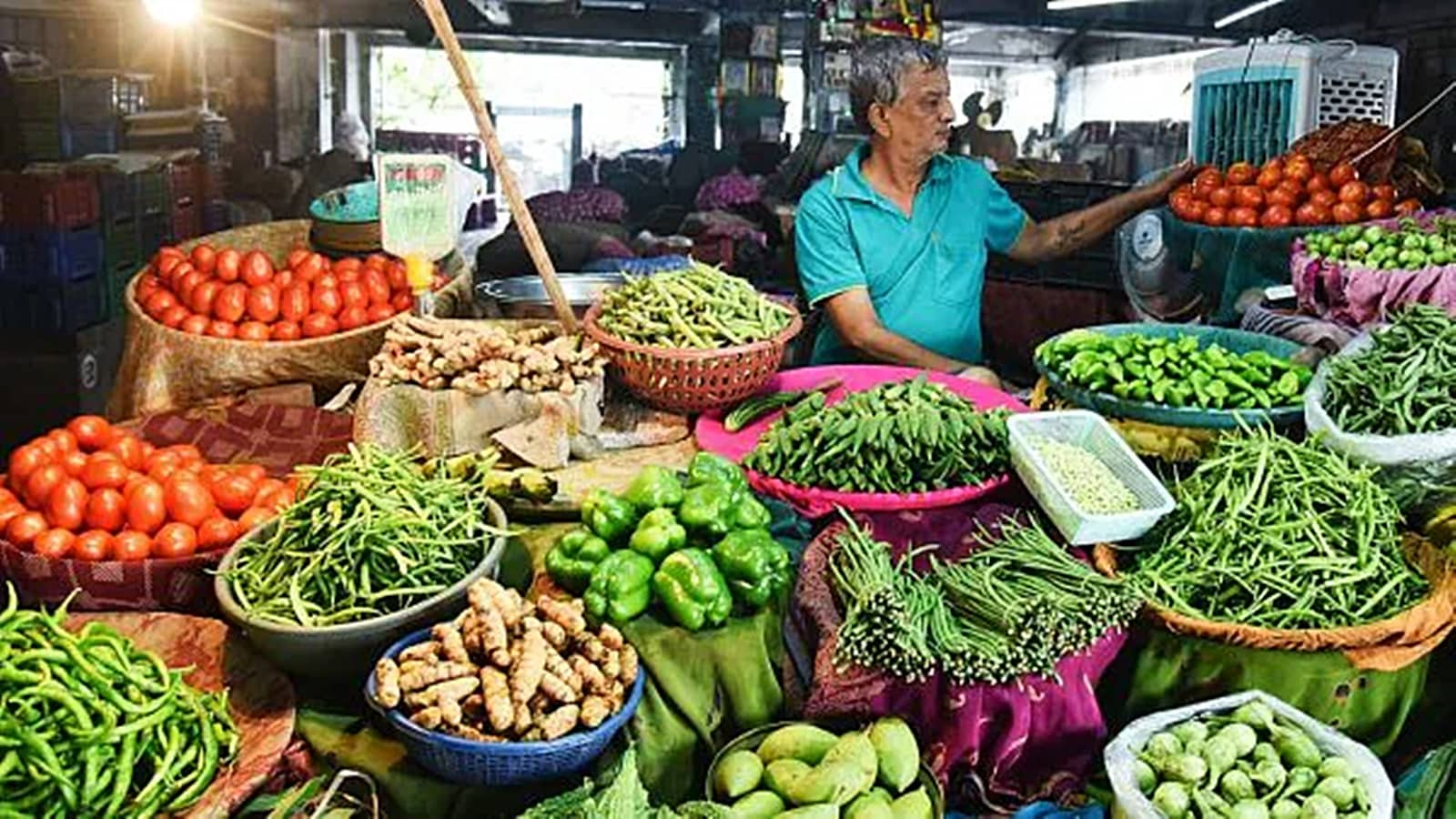 Inflation in the food basket was 9.36 per cent in June, up from 8.69 per cent in May, according to the data released by the National Statistical Office (NSO). (Express file)
THE RETAIL inflation rate rose to a four-month high of 5.08 per cent in June as food inflation jumped to over 9 per cent, the highest level in six months, data released by National Statistical Office (NSO) on Friday showed. Data released separately showed the country’s factory output, as measured by the Index of Industrial Production (IIP), rose to a seven-month high of 5.9 per cent in May with a pickup in manufacturing along with higher electricity output reflecting the surge in power demand amid heatwave conditions.
Friday’s data release is the last official print before the presentation of the Union Budget on July 23 and the next Monetary Policy Committee (MPC) meeting to be held in August.
The rise in inflation rate in June after a downward slide over the last five months came as food prices, mainly vegetables, showed a spike amid possible damage from the extended heatwave episodes across major parts of the country. Vegetables inflation rate was at 29.32 per cent in June and has remained in double-digits for eight months. This is seen as limiting the scope of any immediate rate cut by the Reserve Bank of India (RBI) in the near future, which was also echoed by RBI Governor Shaktikanta Das on Thursday.
He had said that with retail inflation still above the 4 per cent target, any talks about cut in interest rates would be too premature. The headline inflation in June marked the 57th month of staying above the 4 per cent mark in the 4+/- 2 per cent band of medium-term inflation target set by the RBI. Consumption recovery is also seen as facing headwinds from high food inflation.
The retail inflation surge is mainly triggered by higher food inflation, even as the non-food segment has recorded a moderation. The Consumer Food Price Index-based inflation rose to 9.36 per cent in June from 8.69 per cent in May and 4.55 per cent in the year-ago period, with urban areas showing a higher increase in food inflation than rural areas. The slow pace of disinflation was flagged by Das in the minutes of the MPC meeting held from June 5 to 7, where he stated that it is due to the elevated food inflation which has been impacted by recurring supply-side shocks.
Core inflation — non-food, non-fuel segment — remained broadly steady at 3.14 per cent in June compared with 3.12 per cent in May, a note by India Ratings said. “On a quarterly basis the core inflation has declined to 3.16 per cent in April-June 2024 from 5.12 per cent in April-June 2023. This suggests the inflation decline is mainly coming from the demand compression, as evident from the 4 per cent growth of private final consumption expenditure in 2023-24,” it said.
State-wise data showed that more than half of the 22 major states/UTs registered inflation over the headline rate of 5.08 per cent, with Odisha recording the highest 7.22 per cent, followed by Bihar 6.37 per cent and Karnataka 5.98 per cent. Uttarakhand and Delhi recorded inflation rates less than 3 per cent each in June.
India’s factory output jumped to a seven-month low of 5.9 per cent in May as manufacturing and electricity output improved. Manufacturing, which accounts for 77.6 per cent of the weight of the IIP, grew 4.6 per cent in May, up from 3.9 per cent in April and down from 6.3 per cent in the year-ago period. Factory output growth was 5 per cent in April and 5.7 per cent in May 2023. Cumulatively so far in the financial year 2024-25, industrial growth has been recorded at 5.4 per cent against 5.1 per cent in the previous financial year.
THE HEADLINE or total CPI-based inflation in June is above 4 per cent for the 57th month in a row. The high 5 per cent rate in June is because of a vegetable price spike, but there is a risk that high food inflation becomes more generalised, and this can put a spoke in the recovery of consumption demand.
As per the latest data, electricity output increased by 13.7 per cent in May against a 0.9 per cent growth in the corresponding period in the previous year and 10.2 per cent in the previous month. The mining output growth inched higher to 6.6 per cent in May from 6.4 per cent in the year-ago period but was slightly lower than 6.8 per cent growth in the previous month.
As per use-base classification, the capital goods segment, a key indicator of the investment sentiment, showed slower growth of 2.5 per cent in May from 8.1 per cent in the year-ago period. Consumer durables output — an indicator of consumption demand — expanded to a three-month high of 12.3 per cent in May as against 1.5 per cent in the year-ago period. Consumer non-durable goods output, which reflects fast-moving consumer goods, grew at a slower pace of 2.3 per cent in May as against 8.9 per cent in the year-ago period.
Consumption recovery is seen facing headwinds from high food inflation, Rajani Sinha, Chief Economist, CareEdge Ratings said. “From the rural demand perspective, prospects of good monsoon and beginning of Kharif sowing augur well for the demand scenario. However, the distribution of rainfall remains critical going forward,” she said.