5 min read


© The Indian Express Pvt Ltd



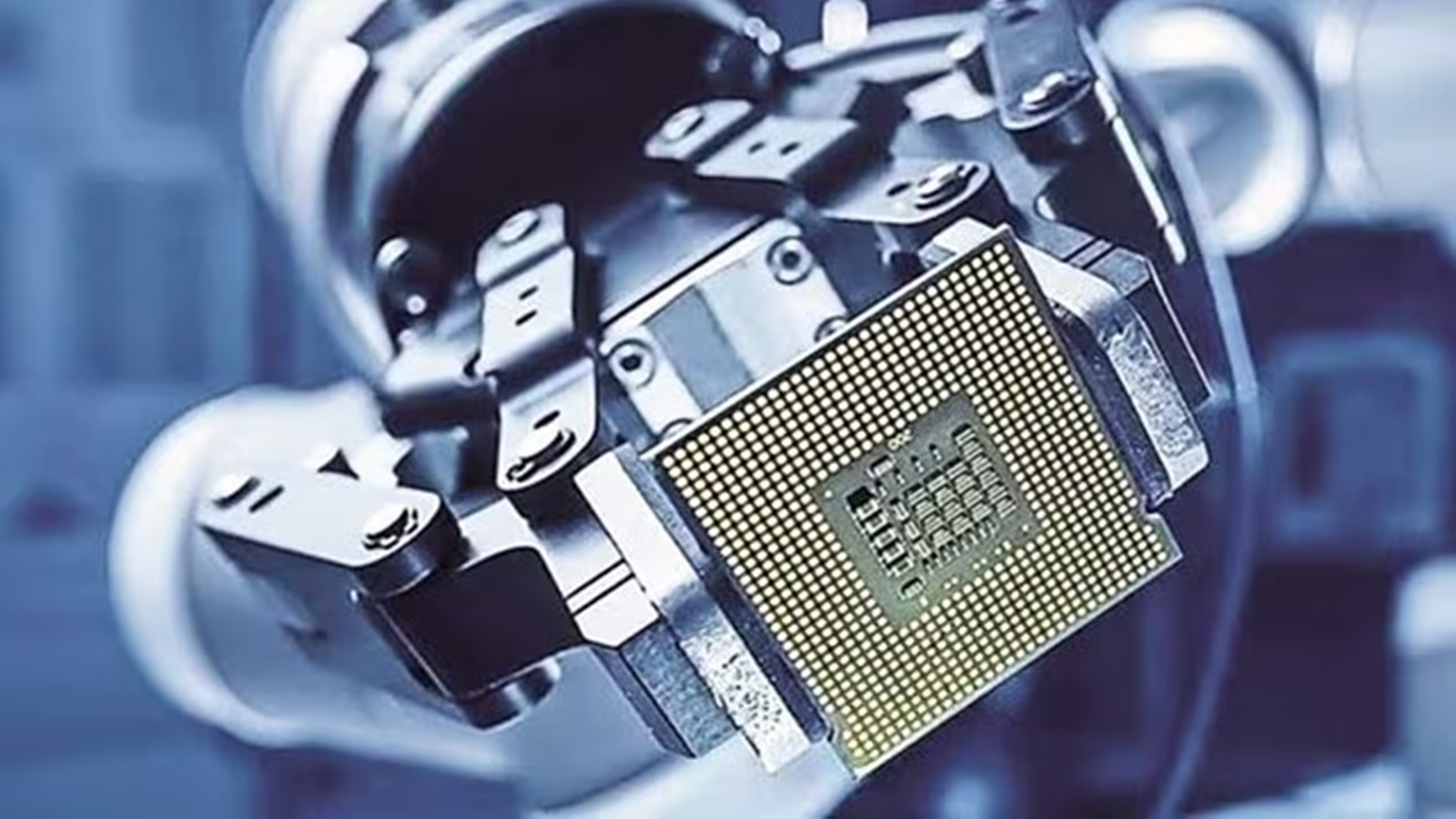 India’s chip incentive plans are focused on boosting all three aspects of the semiconductor ecosystem – packaging, assembly and testing facilities (called ATMP and OSAT units), and full-scale foundries that can manufacture chips. (File Photo)
As Taiwanese businesses and government officials take a cautious approach towards India’s semiconductor ambitions, New Delhi has mobilised officials to the island territory bearing a key message: an explicit assurance of policy stability. The Indian Express has learnt that senior officials from the IT Ministry have met with industry executives in Taipei and government officials, to assure them of policy stability, especially with regard to changes in rules governing imports and tweaks in customs duties on inputs.
“IT Ministry representatives met Taiwan government officials and representatives of (Powerchip) PSMC in June. Assurances regarding policy stability, New Delhi’s continued support for investments in the chips’ space were made, and we conveyed to them that there will not be any ad-hoc changes to rules regarding material imports and customs duties” a senior government official said, requesting anonymity.
The first commercial fab in India, which is being opened by Tata Electronics in Gujarat, will start operations due to technology support from Taiwanese chipmaker PSMC. But, PSMC does not have any equity stake in the operations as its partnership is limited to a technology collaboration. It is also one of Taiwan’s smaller chipmakers that fabricates legacy logic and memory chips.
The Indian Express had earlier reported that the reason the company has taken this conservative approach is because key players want to play it safe. PSMC is a relatively smaller company and so has “negotiated a model where they would not need to put money on the table. I’m not sure how this model progresses,” a Taiwanese executive had said.
New Delhi hopes that with constant engagement with Taiwanese chip firms and the government, there could be a possibility in the future that some companies enter the Indian market with more skin in the game, and take equity partnership in a chip joint venture with an Indian company, or open up an independent operation in the country.
There is a major reason behind New Delhi’s outreach to Taiwanese officials: the strategic island territory is home to some of the leading names in chipmaking, including the likes of Taiwan Semiconductor Manufacturing Company (TSMC), which counts Apple and Nvidia among its clients, and United Microelectronics Corporation (UMC). More than 90 per cent of the world’s most advanced chips required for almost all electronic equipment such as smartphones, car components, data centres, fighter jets and AI technologies, are made in Taiwan.
Chips, or integrated circuits, that are at the heart of most modern-day semiconductors, are essentially a set of minute electronic circuits comprising transistors and diodes, capacitors and resistors, and the interconnections between them, layered on a thin wafer sheet of silicon. Fabs are the highly-specialised semiconductor manufacturing facilities that print the miniaturised integrated circuits from the chip design onto the silicon wafers. The fabrication process is intricate and the cleanrooms are required to maintain sterile conditions to prevent contamination by particles in the air. There could be between 500 and 1,500 steps in the overall manufacturing process of semiconductor wafers, requiring multiple inputs, including silicon wafers, commodity chemicals, specialty chemicals, and other infrastructural prerequisites such as clean water supply and uninterrupted power supply.
India’s chip incentive plans are focused on boosting all three aspects of the semiconductor ecosystem – packaging, assembly and testing facilities (called ATMP and OSAT units), and full-scale foundries that can manufacture chips.
From a Taiwanese perspective, there are yawning gaps in the policy support extended by New Delhi, which is a major reason firms from the territory are yet to commit serious investments in India.
Joseph Wu, Taiwan’s Minister of Foreign Affairs, had earlier cited the issue of a “cumbersome” administrative structure, lack of experienced engineers, high tariffs for electronics component imports, as challenges that India needed to address before chip companies from the island nation can commit serious investments to New Delhi.
“India is known to be very cumbersome in its administrative structure and it would require for the Indian government to look at that too, to streamline all kinds of laws and regulations to help semiconductor investors coming to the country… In order to get the major semiconductor production to move to India, we need to think about the whole supply chain coming together… a whole cluster, rather than just one company. If it is only one company and nobody else, that is not going to help. We need to have IC design, testing, packaging, and material supply,” Wu had told The Indian Express earlier. IT Ministry officials have, however, consistently maintained that India has the “talent and deep expertise” to become a global player in the semiconductor value chain and that more interest is expected to come in from global players in fab investments.
Taiwan’s Deputy Minister for Taiwan’s National Development Kao Shien-Quey had said in July last year that there was “huge scope” for collaboration between New Delhi and Taipei in areas of emerging and critical technologies, and that major Taiwanese technology giants were looking at India as a key destination to strengthen their global supply chains. In reality, all that has not translated into actual investment pledges yet.