3 min read

Journalism of Courage



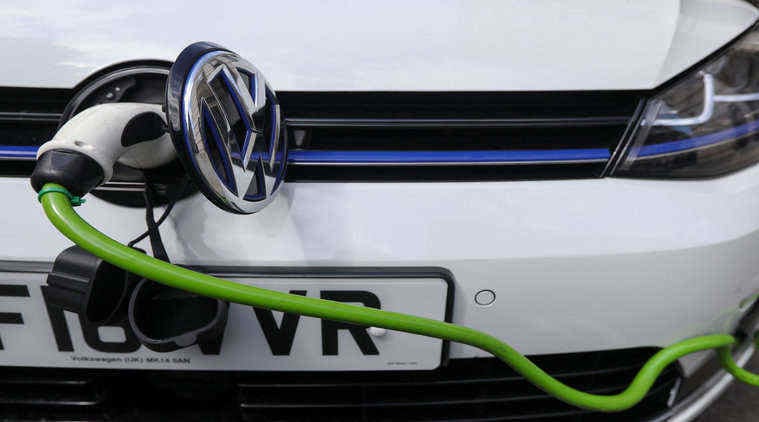 Globally, EV sales have been rising at a “fast” pace to over 10 lakh units being sold in 2017 from just over 2,000 in 2008. (Image Source: Bloomberg/File)
With adoption of electric vehicles in being India slow despite their increasing demand, the NDA-II government’s Economic Survey has called for a “policy push” to devise universal charging standards and provide adequate charging infrastructure.
“Electric vehicles (EVs) represent the next generation in sustainable mobility and need to be encouraged. The adoption rate of electric vehicles has been slow, largely due to the lack of charging infrastructure in the country and the time taken for completely charging the EVs,” said the survey.
Globally, EV sales have been rising at a “fast” pace to over 10 lakh units being sold in 2017 from just over 2,000 in 2008. Over half of the sales were in China, which had a market share of around 2 per cent for electric cars. In comparison, the Indian market share of electric cars is a “meagre” 0.06 per cent, stated the survey.
Given India’s “large” import dependence for petroleum products, the survey stated that it is “imperative” that there be a shift of focus to alternative fuels to support the country’s mobility in a sustainable manner. India could emerge as a hub for manufacturing EVs, it added.
However, limited availability of charging infrastructure for the batteries of these EVs, which provide limited driving range, was pegged as a major impediment to increasing their adoption. The time taken to completely charge these EVs, anywhere between half an hour to eight hours, depending on how fast the charger is, is also an impediment, as per survey.
“It is, therefore, an important policy issue to come up with universal charging standards for the country as a whole to enable increased investment in creation of such infrastructure. It is equally important to provide information on public chargers to the users of EVs through online maps and other means such as physical signage,” it stated. “Also, since the battery is the heart of any EV, development of appropriate battery technologies that can function efficiently in the high temperature conditions in India need to be given utmost importance.”
“Future policy direction should orient itself to enhanced energy efficiency programmes in different sectors of the economy as well as technological solutions to better utilise India’s natural resource endowments,” it added.