Journalism of Courage
 4 min read


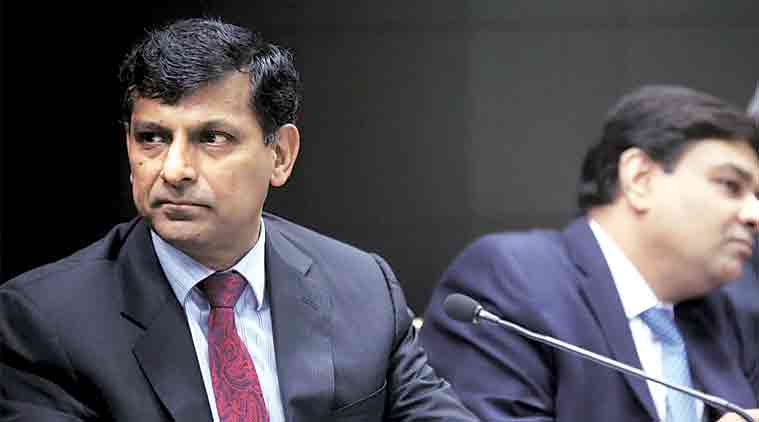 Reserve Bank of India Governor Raghuram Rajan at the bi-monthly monetary policy announcement in Mumbai on Tuesday. (Express Photo: Nirmal Harindran)
GST IMPACT: It is premature to talk about inflationary impact of GST when we don’t know what the rates would be. The experience of other countries, like Malaysia, has been that the inflationary impact was short lived. We have to see that price adjustment, if there is one, doesn’t become generalised inflation. While timely implementation of GST will be challenging, there is no doubt that it should raise returns to investment across much of the economy, even while strengthening government finances over the medium term.This should boost business sentiment and eventually investment.
CLEAN-UP OF BANK NPAs: Broadly speaking we are comfortable with the recognition process that banks have certainly taken. Some banks have taken more steps than we required them to take. So, the culture of cleaning up (of balance sheet) seems to be well embedded as well as a culture of recovery on some of the loans. I want to put something like March 2017 on the table as when we hope that a full clean-up will be done.
FCNR REDEMPTIONS: Earlier, some bankers said it was lack of liquidity that was holding the rates high. Now, I hear from some that it is the fear of FCNR redemptions that is making them reluctant to cut rates. I have a suspicion that some new concern will crop up once FCNR redemptions are behind us. The RBI will continue with both domestic liquidity operations and foreign exchange interventions that should also enable management of the FCNR(B) redemptions without market disruptions.
INFLATION: The recent sharper-than-anticipated increase in food prices has pushed up the projected trajectory of inflation over the rest of the year. Moreover, prices of pulses and cereals are rising and services inflation remains somewhat sticky. There are early indications that prices of vegetables are edging down. Going forward, the strong improvement in sowing on the back of the monsoon’s steady progress, along with supply management measures, augers well for the food inflation outlook.
LIQUIDITY: Easy liquidity conditions are already prompting banks to modestly transmit past policy rate cuts through their MCLRs and pro-active liquidity management should facilitate more pass-through. The refinements to the liquidity management framework effected in April 2016 were intended to smooth the supply of durable liquidity over the year using asset purchases and sales as needed, and progressively lower the average ex ante liquidity deficit in the system to a position closer to neutrality. The RBI intends to continue with this strategy, with the intention of closing the underlying liquidity deficit over time.
POLICY PANEL: My hope is the next monetary policy statement will be by the proposed Monetary Policy Committee (MPC). The committee to select outside members of the MPC has commenced the process. On the RBI’s side, the Board has selected Michael Patra to be the RBI Board nominee on the MPC. The other two members from the RBI will, of course, be the Governor and the Deputy Governor in charge of monetary policy.
GROWTH: Looking ahead, the momentum of growth is expected to be quickened by the normal monsoon raising agricultural growth and rural demand, as well as by the stimulus to consumption spending that can be expected from the disbursement of pay, pension and arrears following the implementation of the 7th Pay Commission award.