3 min read


© The Indian Express Pvt Ltd



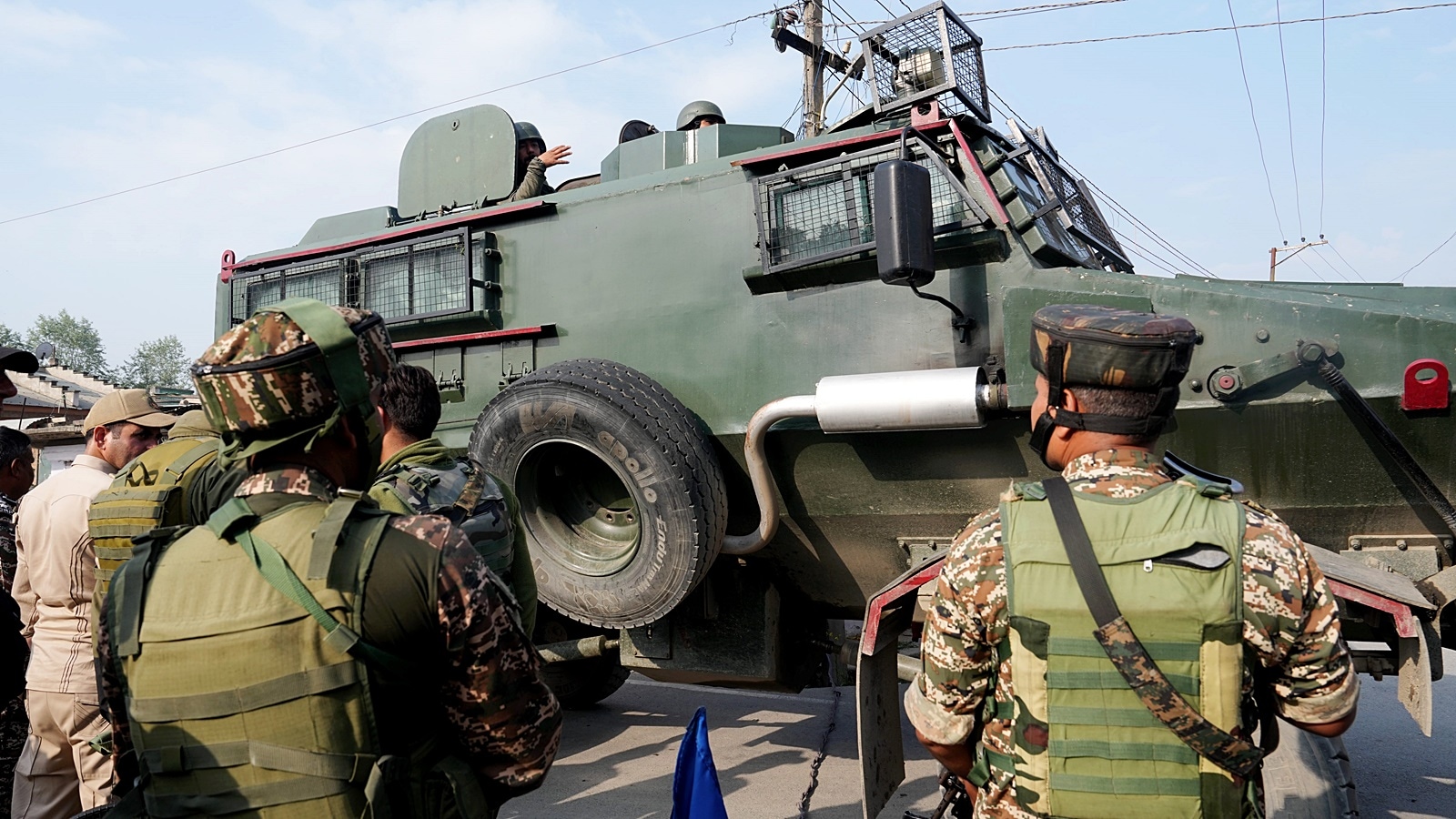 An armoured vehicle of the Indian Army in Pulwama. (Photo: PTI)
The government is learnt to have reached out to multiple private companies that are into defence equipment production, including Bharat Forge and Mahindra & Mahindra’s defence division. This is linked to specific instructions being issued to private vendors for upscaling supplies of certain ammunition, including for anti-drone and smart ammunition, alongside equipment such as armored vehicles that can be integrated with different weaponry — loitering munitions and guided missiles.
Instructions have been issued to these private players to step up output of some items, including designated ammunition, over and above what is already being produced by the ordnance factories. Sources in the industry said these suppliers are likely to be summoned for a follow-up meeting shortly.
The directive preceded the decision to stop firing and military action from 5 pm on May 10 after an understanding between India and Pakistan. But, there were drone activities reported in several parts of Kashmir and Gujarat subsequent to the announcement.
Bharat Forge has a large defence manufacturing facility in Jejuri, near Pune, dedicated to the assembly and integration of guns, vehicles, small and medium arms, and systems. The company had, earlier this year, signed a landmark contract with the Ministry of Defence for supplying 184 indigenously developed Advanced Towed Artillery Gun Systems (ATAGS). The 155/52 mm calibre ATAGS was jointly developed with the Defence Research and Development Organisation.
The indigenously developed ATAGS can fire projectiles up to 48 km and operates on an all-electric drives that makes it maintenance-free in comparison to regular hydraulic drives. it can move at a speed of 18 kmph, unlike towed guns, which typically move at around 8 kmph. Additionally, the ATAGS has a firing rate of six shells, compared to three for towed guns. Existing ammunition can be successfully fired from the ATAGS without requiring special modifications.
Mahindra too had obtained a licence from the government to produce small arms and associated ammunition, along with its specialisation in making armoured carriers and non-armoured mobility solutions for the Indian Army. The company also produces the Marksman, a military vehicle designed for urban warfare, and the Rakshak, an armored military utility vehicle. Queries sent to Bharat Forge and Mahindra, and the Ministry of Defence, did not elicit a comment.
The Indian Army had earlier issued a request for information seeking vendors to manufacture 23mm anti-drone ammunition under the “Make in India” initiative, which is being overseen by the Directorate General of Army Air Defence. The country’s defence production has grown sharply since the launch of the “Make in India” initiative, reaching a record Rs 1.27 lakh crore in FY24. Currently, something like 65 per cent of defence equipment is now manufactured domestically, as compared to a 65-70 per cent import dependency around a decade ago.
The private sector including companies such as Bharat Forge, Mahindra and the Tata Group are playing an increasingly important role, contributing 21 per cent to total defence production in FY24, alongside fostering innovation and efficiency. India’s defence industrial base, apart from the 16 PSUs, now includes over 430 licensed companies, and approximately 16,000 MSMEs.